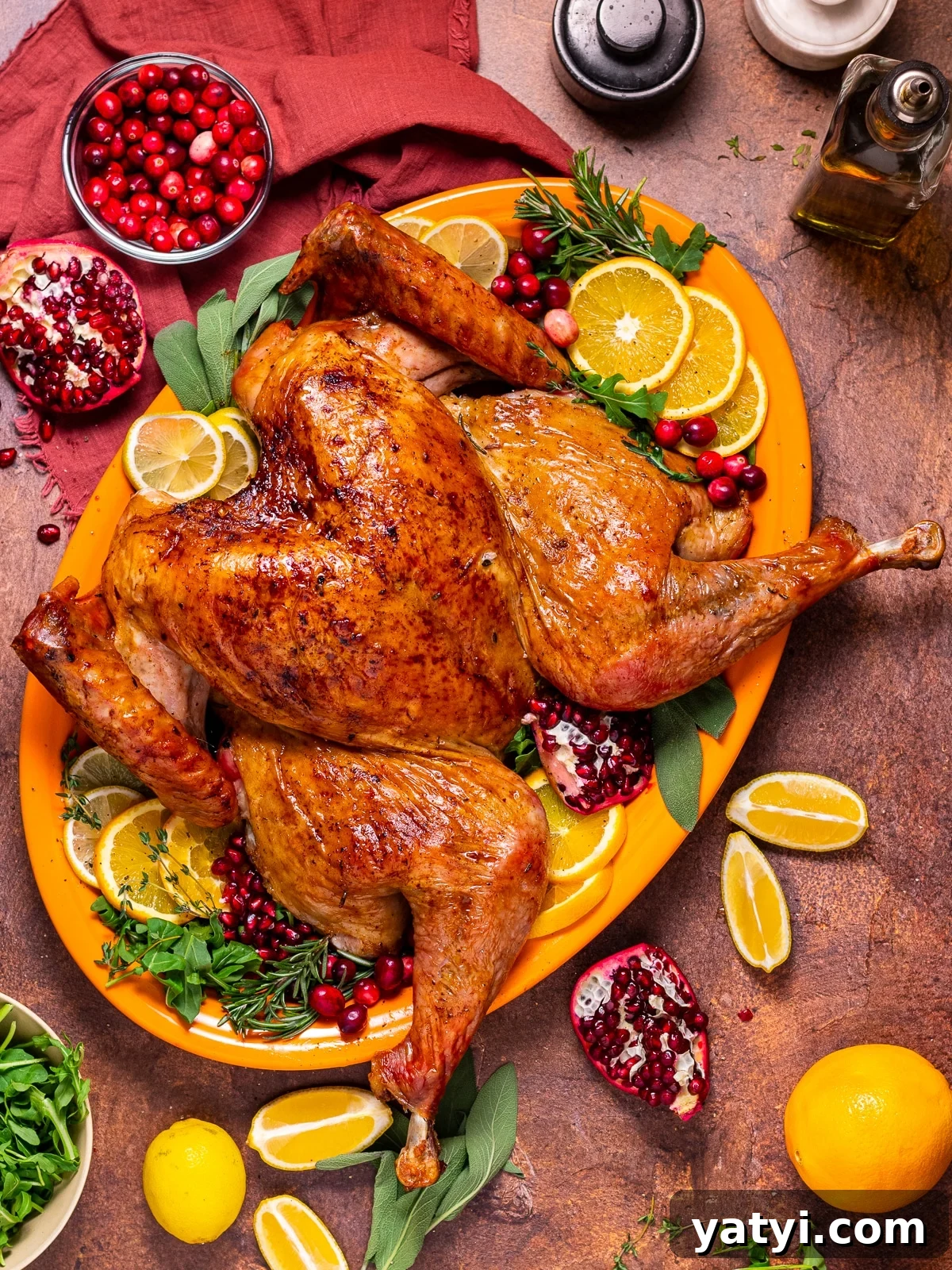
A dry-brined spatchcock turkey is the key to a juicy, flavorful, and crispy bird for Thanksgiving or any holiday meal. Combining a dry brine with the spatchcock method yields even, faster cooking, extra-crispy skin, and tender meat—once you try it, you’ll likely never roast a whole turkey the old way again.
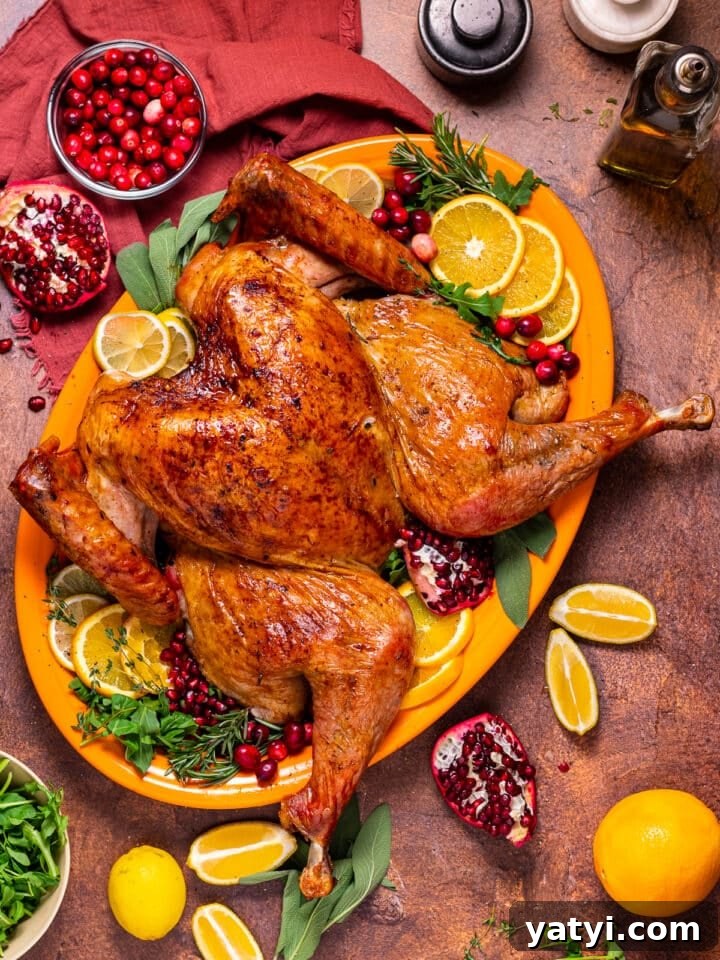
Erica’s Notes
I’ve loved Thanksgiving my whole life. When Ka-La and I moved into our first house I decided to host and learned how to make the whole meal. My early attempts followed the old-school method—stuffing the cavity and roasting the bird whole. After reading about spatchcocking, I tried it and was hooked: faster, more even cooking and much crispier skin.
What does spatchcocking mean?
Spatchcocking refers to removing the backbone of a bird and flattening it before roasting. That simple change helps the turkey cook more quickly and evenly by exposing more surface area to heat.
Why spatchcock?
Safety & even cooking: All parts of the turkey must reach 165°F to be safe to eat. Dark meat (thighs and legs) typically takes longer than breast meat. When roasting a whole bird, the breast can overcook while waiting for the dark meat to reach temperature.
The fix: Spatchcocking flattens the turkey so white and dark meat finish at roughly the same time. It shortens roasting time, improves browning, and delivers crispy skin and juicy meat without overcooking.
Brine thoughts
I prefer a dry brine: it’s low-maintenance, doesn’t require a large container, and delivers the same benefits as a wet brine. A dry brine is salt (plus zest, herbs, and a touch of sugar if you like) rubbed into the skin and left for hours to improve flavor and moisture retention.
What is a dry brine?
A dry brine draws juices to the surface, dissolves the salt and seasonings, and then those seasoned juices are reabsorbed into the meat. The result is better-flavored, more tender, and juicier turkey without soaking it in liquid.
How is it different from regular salting?
Dry brining is deliberate: you press a measured amount of salt into the skin and let it sit for at least 6 hours and ideally up to 48 hours. Adding citrus zest, a bit of brown sugar, and fresh herbs takes the flavor to the next level.
Cooking thoughts
Spatchcocked turkeys roast much faster than whole birds. Start at high heat to crisp skin, then reduce temperature for the remainder of the roast. A 12–14 lb turkey usually cooks in about 80–95 minutes in a convection oven; my 14 lb turkey took 80 minutes. Use an instant-read thermometer and remove the turkey as soon as the deepest part of the thigh reaches 165°F.
Most of the work happens ahead of time—1–2 days before the meal—so you won’t be racing on the big day. A spatchcocked turkey is also easier to carve and makes a striking centerpiece.
Ingredients You’ll Need to Make This Dry Brined Spatchcock Turkey
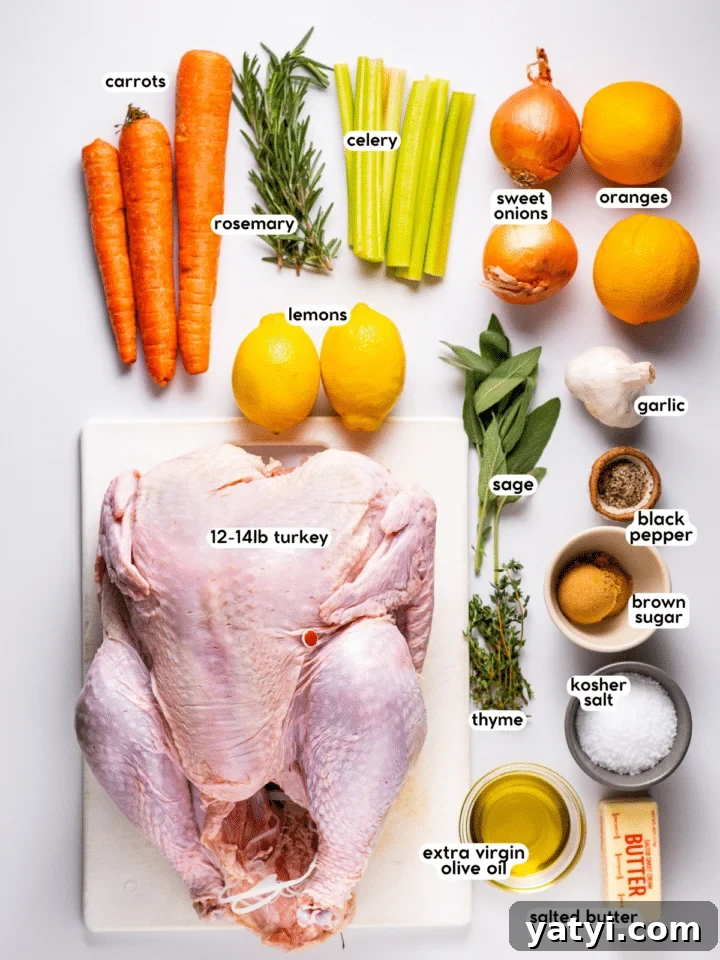
Kosher salt: essential for the dry brine.
Brown sugar: balances the salt with a touch of sweetness.
Orange zest: adds bright citrus flavor.
Fresh herbs: rosemary, thyme, and sage pair beautifully with turkey.
Turkey: a 12–14 lb turkey is ideal for spatchcocking; larger birds are harder to handle.
Mirepoix vegetables: onions, carrots, and celery roast beneath the turkey and collect flavorful drippings for stock and gravy.
Garlic: whole heads halved or smashed cloves add depth to the roasting pan.
Citrus: orange and lemon slices go under the bird and flavor the oil/butter for basting.
Olive oil + butter: an herb- and citrus-infused oil and butter mixture bastes the turkey, crisps the skin, and adds richness.
Equipment You’ll Need to Spatchcock a Turkey:
- Good poultry shears
- A sharp chef’s knife
- Large cutting board
- Rubber gloves (optional)
- Roasting pan with rack
- Instant-read meat thermometer
- Sheet pan and stockpot for making turkey stock
How to Make Dry Brined Spatchcock Turkey
Make the dry brine:
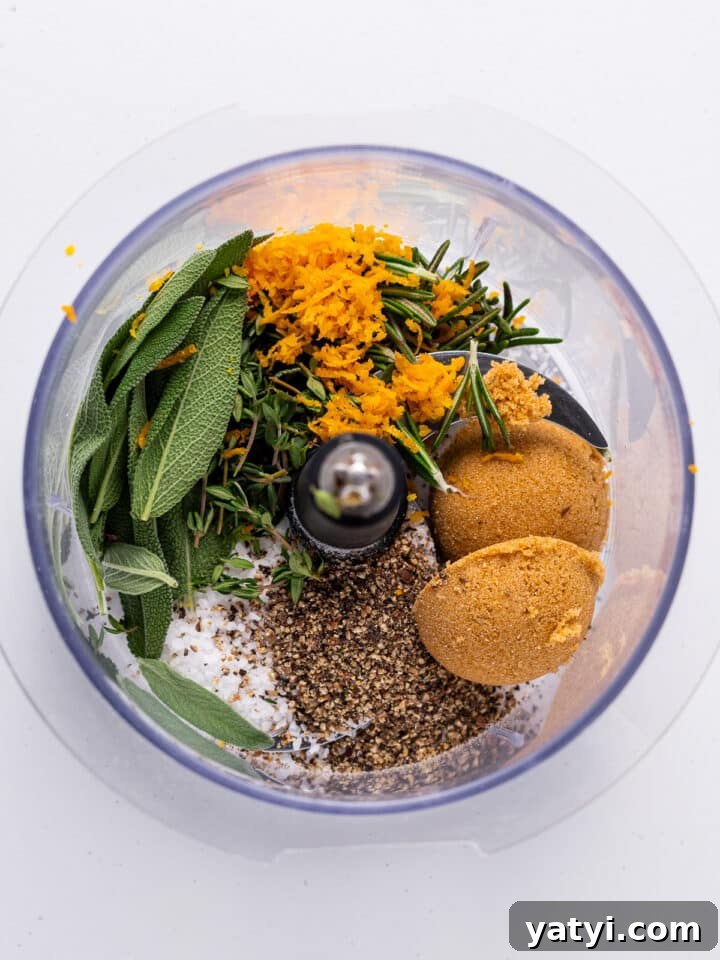
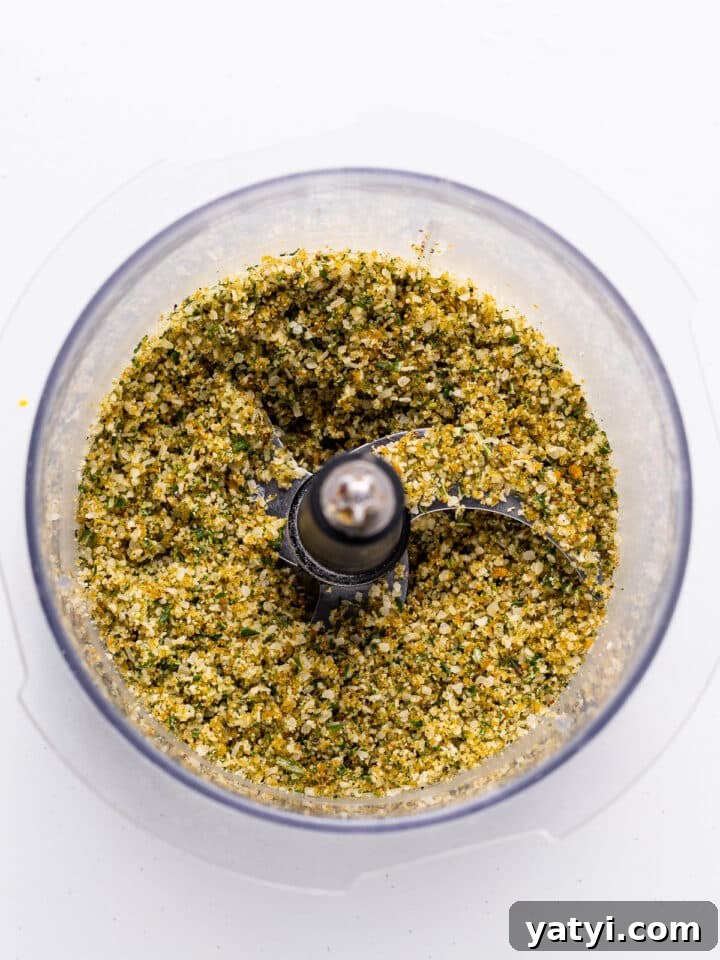
Combine kosher salt, brown sugar, orange zest, black pepper, and the leaves from rosemary, thyme, and sage in a food processor and pulse until well blended (10–15 seconds). Save the herb stems for stock. If you don’t have a food processor, finely chop the herbs and mix the ingredients by hand.
Spatchcock turkey
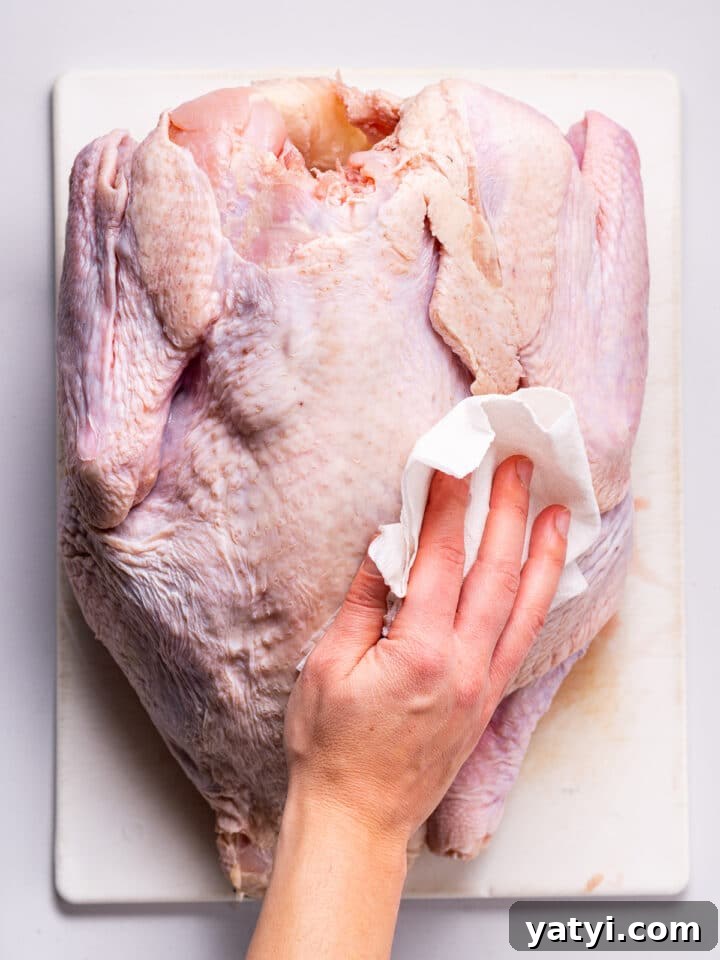
Set up: Remove the neck and giblets and set them aside for stock. Pat the turkey dry, place it breast-side down (backbone up) on a cutting board, and gather paper towels, a sharp knife, and poultry shears.
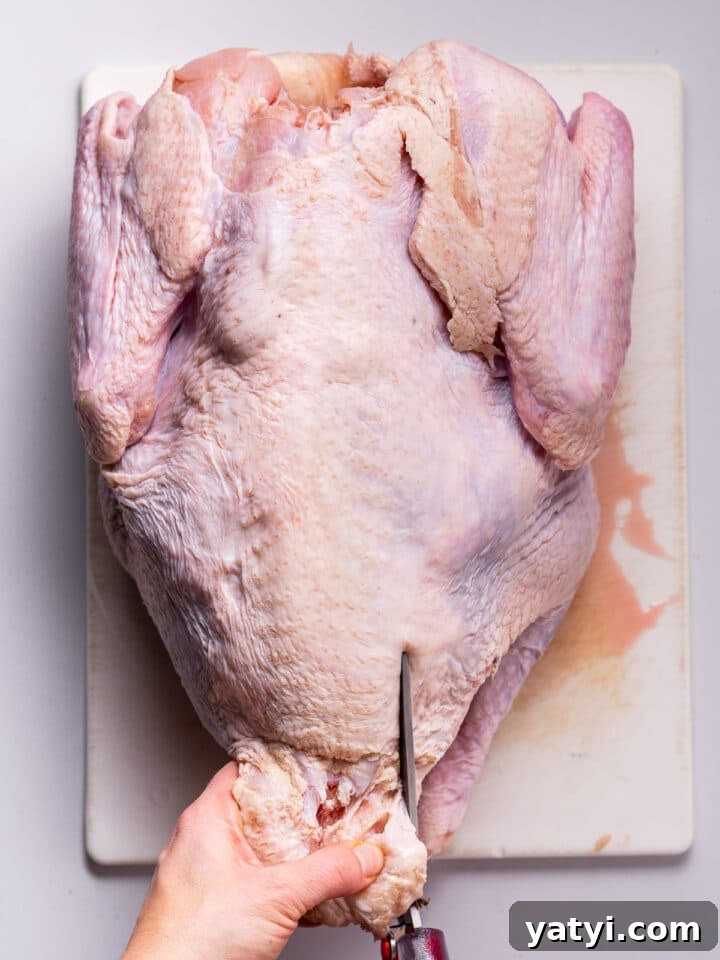
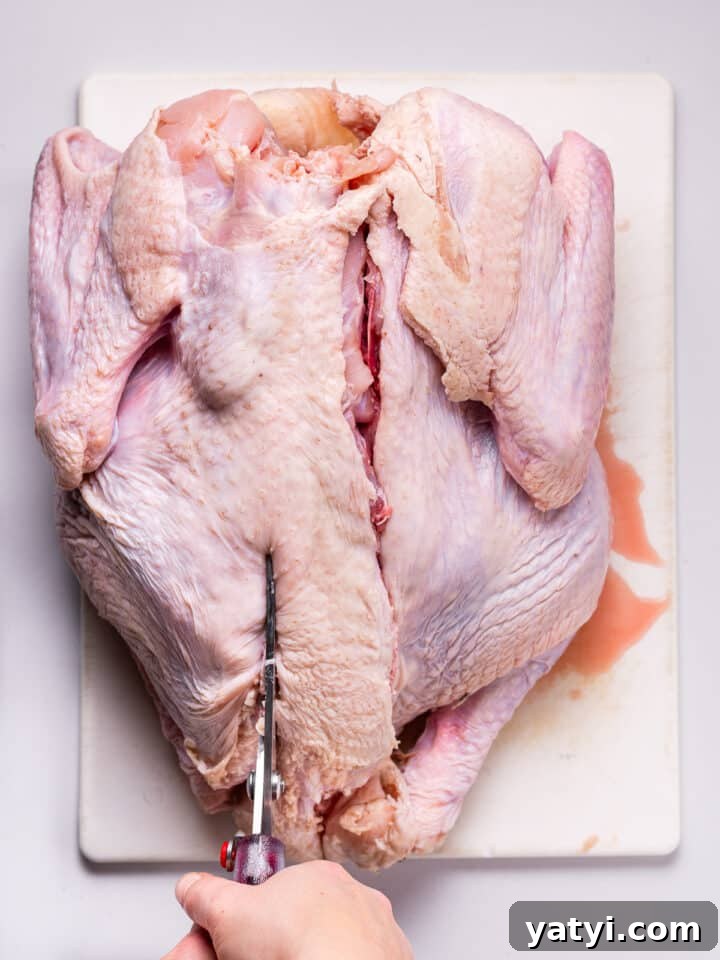
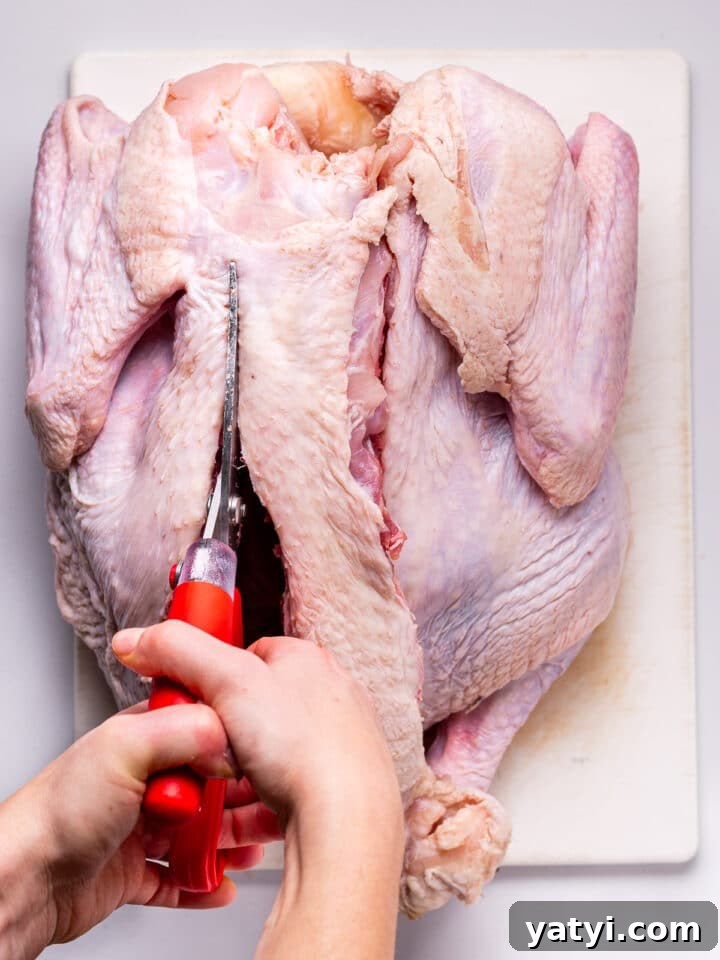
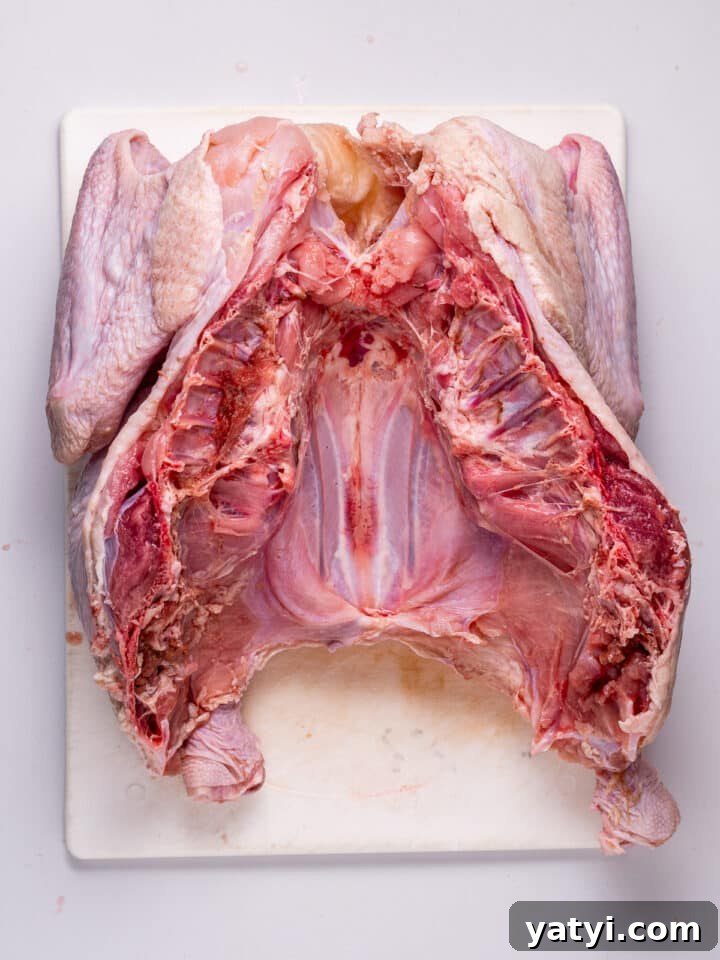
Remove the backbone: Feel along the center of the back to find the backbone. Starting at the tail, cut along one side of the backbone with poultry shears, cutting through ribs up to the neck. Repeat on the other side to remove the backbone completely. Keep the backbone and giblets for stock.
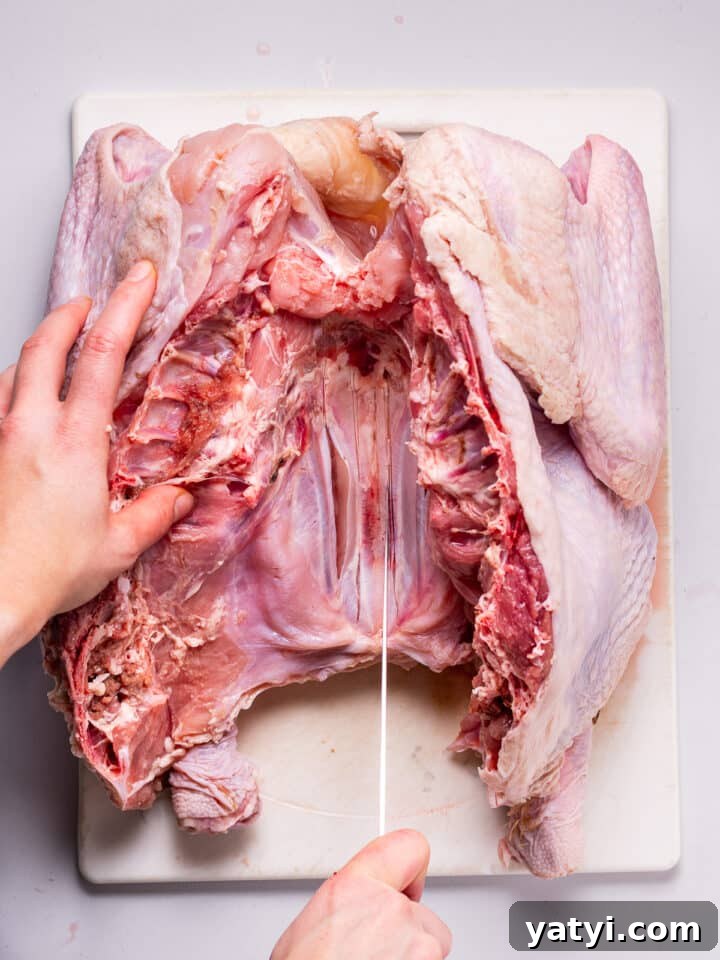
Score and flatten: Score the breastbone with a sharp knife, flip the turkey breast-side up, and press firmly on the breastbone with both hands until it cracks and the bird flattens.
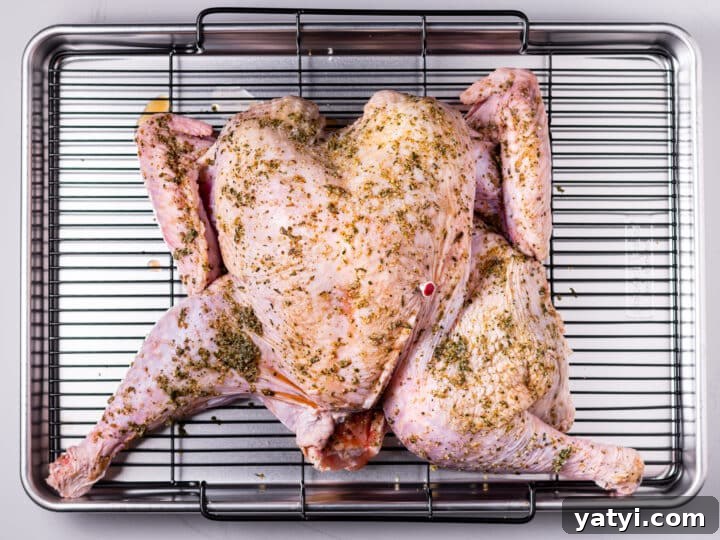
Apply the dry brine: Trim excess fat or skin if desired. Press the dry brine mixture over both sides of the turkey so it adheres. Place the turkey on a rack in a roasting pan and refrigerate uncovered for 6–48 hours.
Cook turkey
Prep: Pat off any excess dry brine with paper towels—do not rinse. Let the turkey rest at room temperature for 30 minutes. Position the oven rack in the middle or lower-middle and preheat to 450°F (232°C). Use convection bake if available.
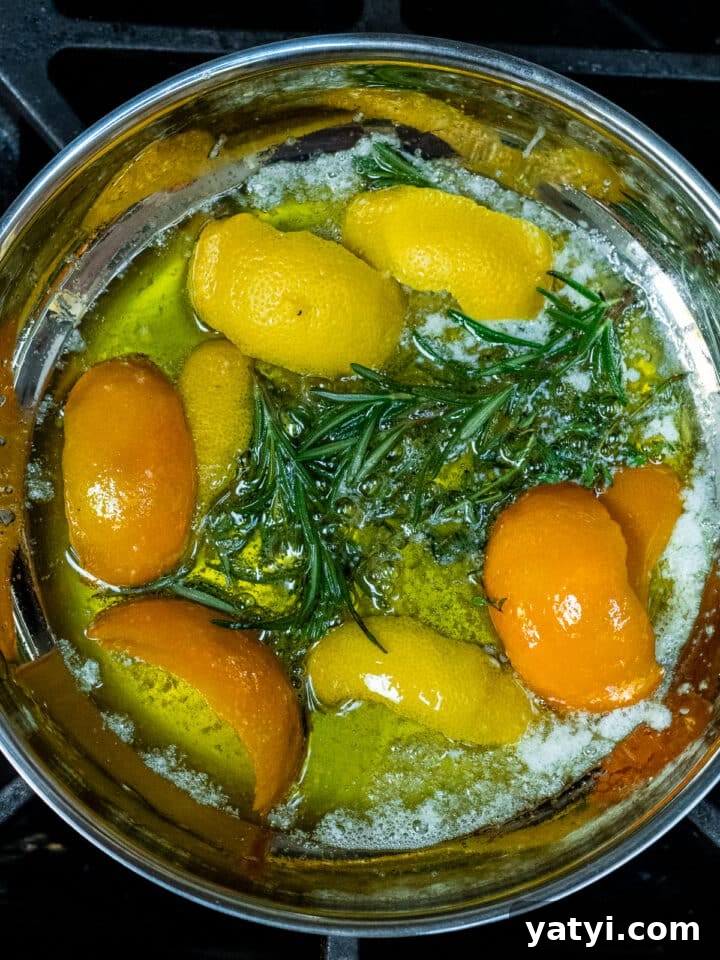
Make the herb butter & oil: Warm olive oil and butter in a skillet with orange and lemon zest strips, rosemary, and thyme to infuse the fat. Keep warm for basting.
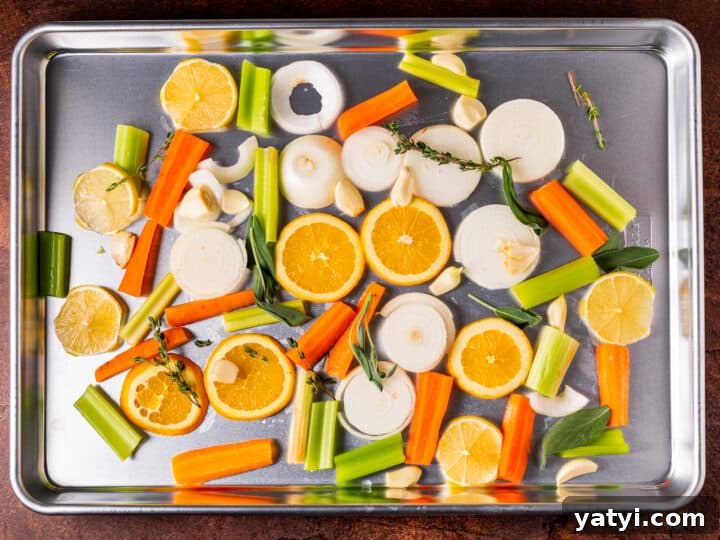
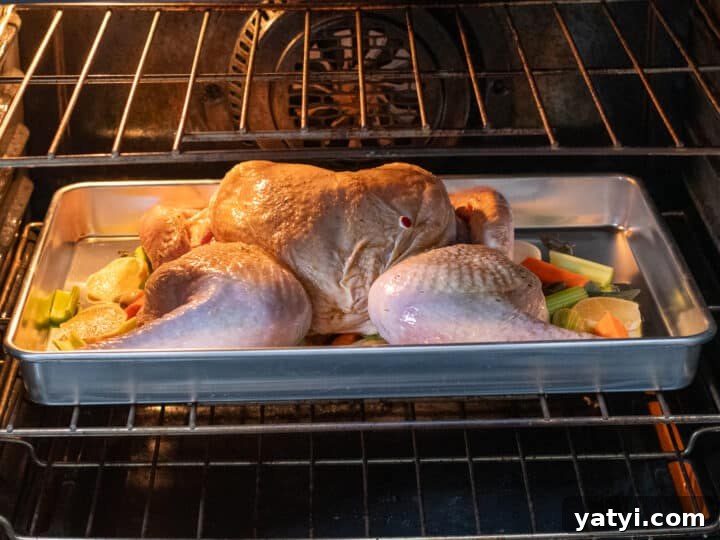
Prepare the roasting pan: Arrange onions, carrots, celery, garlic, lemon, and orange in an even layer in the pan. Set the turkey breast-side up on top of the veggies, tuck the wings under, and add about ¾ cup water to prevent scorching.
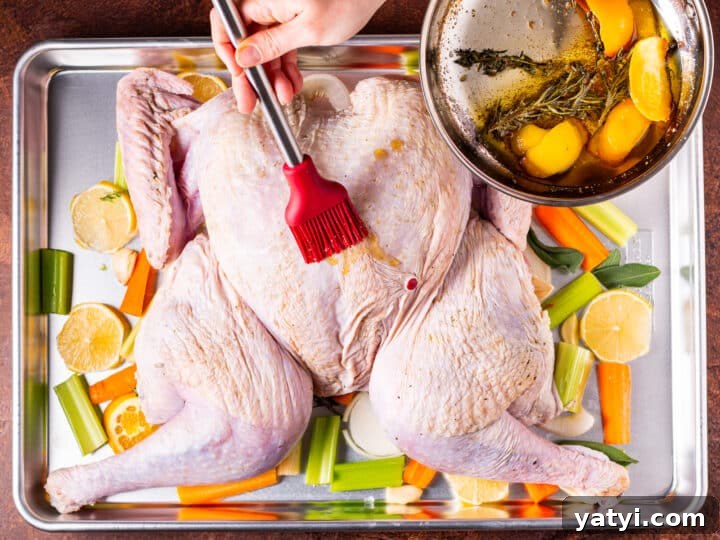
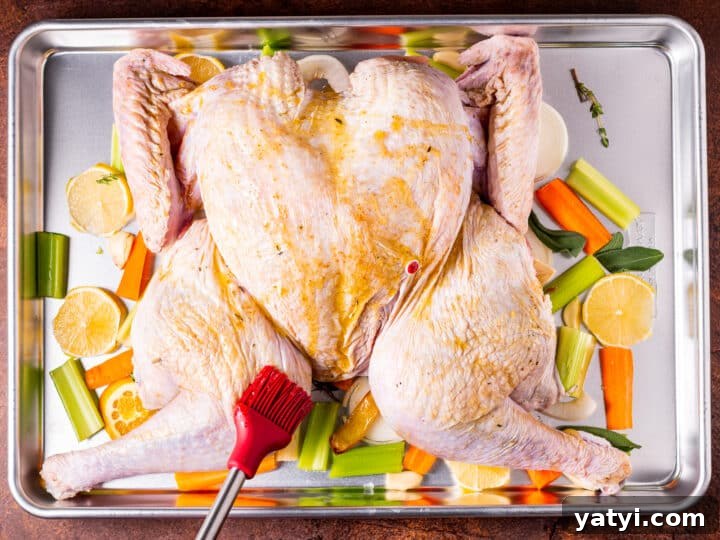
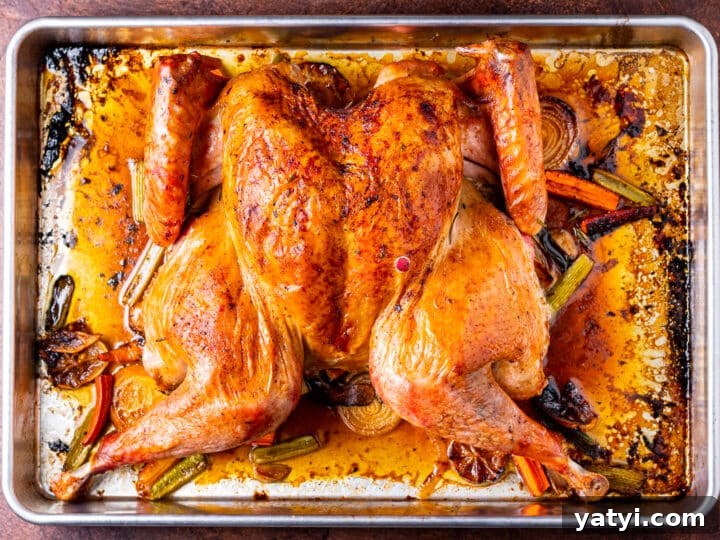
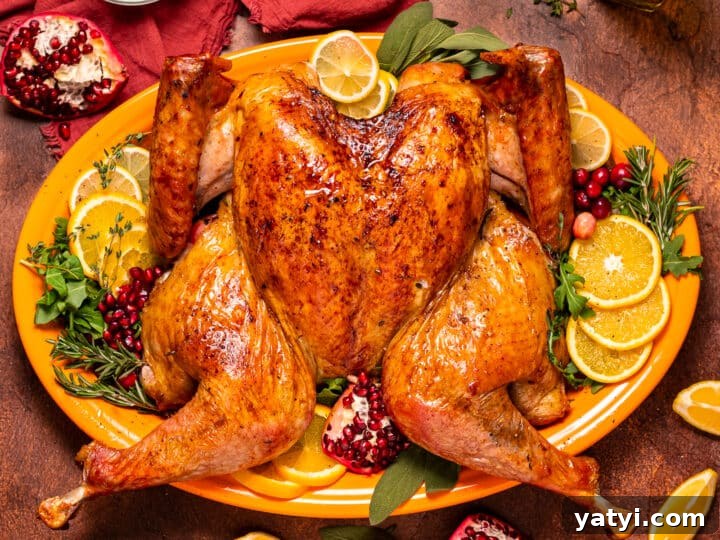
Roast and baste: Brush about one-quarter of the infused oil over the turkey. Roast at 450°F for 20 minutes to jump-start browning, then reduce the oven to 350°F (177°C). Brush the bird with oil and pan juices every 20 minutes. Roast until an instant-read thermometer inserted into the thickest part of the thigh reaches 165°F (65°C). Total roast time usually ranges from 80–100 minutes depending on size and oven; aim for 80–95 minutes for a 12–14 lb turkey. The skin should be deep golden and crisp.
Carve turkey
Transfer the turkey to a cutting board, tent loosely with foil, and rest for 30 minutes before carving. Use the backbone, neck, and giblets to make stock for gravy.
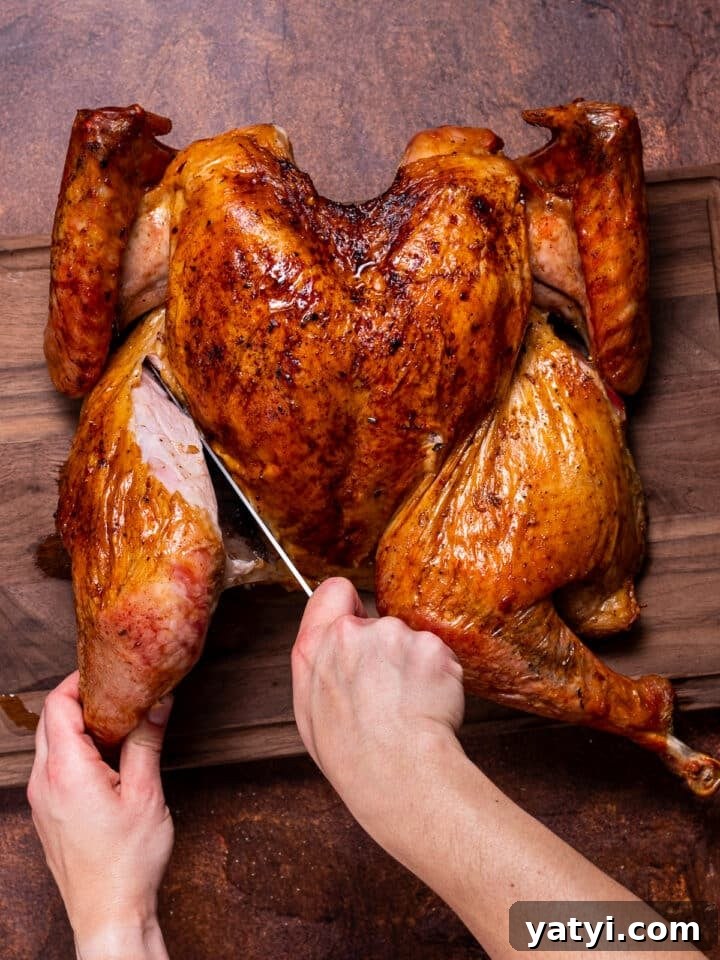
Legs and thighs: With the turkey breast-side up, cut the skin between the leg and body, expose the joint, pop it out of the socket, and remove the entire leg. Separate drumstick from thigh at the joint.
Thigh meat: Slide a knife under the thigh meat and work along the bone, pulling the meat away until the thigh is boneless; slice thinly.
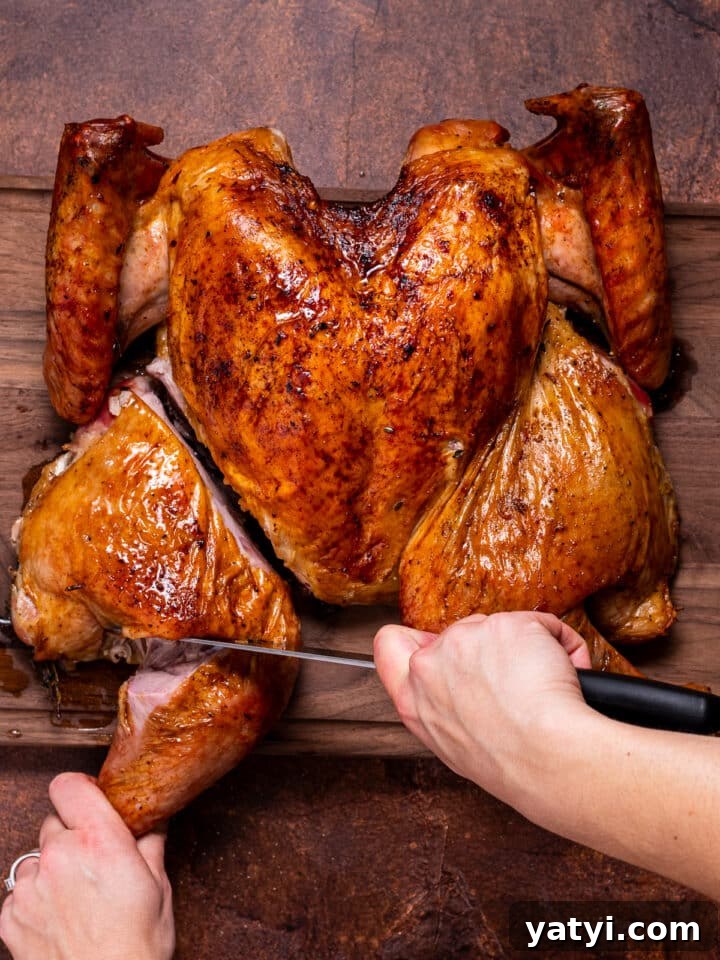
Wings: Find the wing joint, pull outward, and cut through the joint to remove each wing.
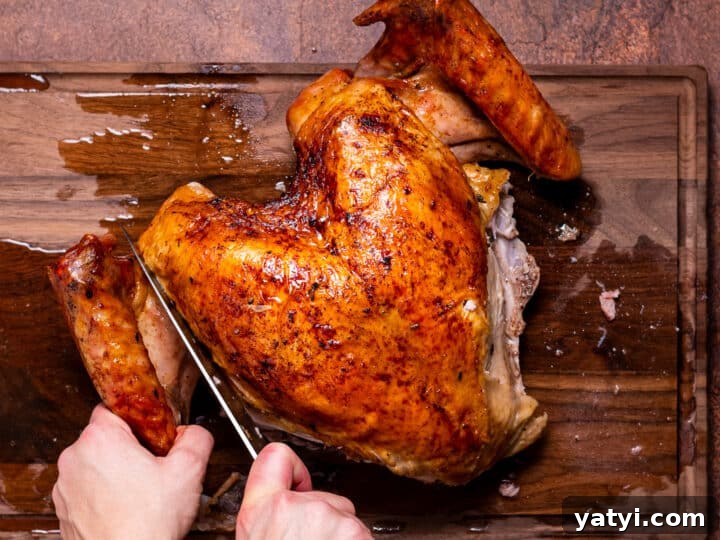
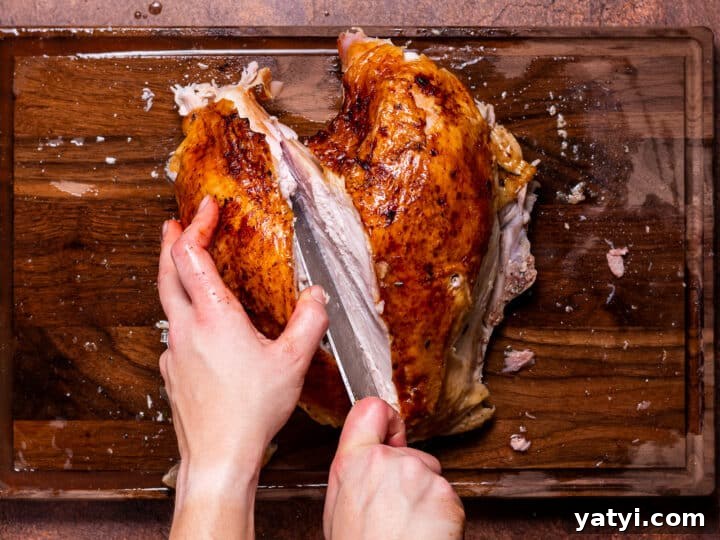
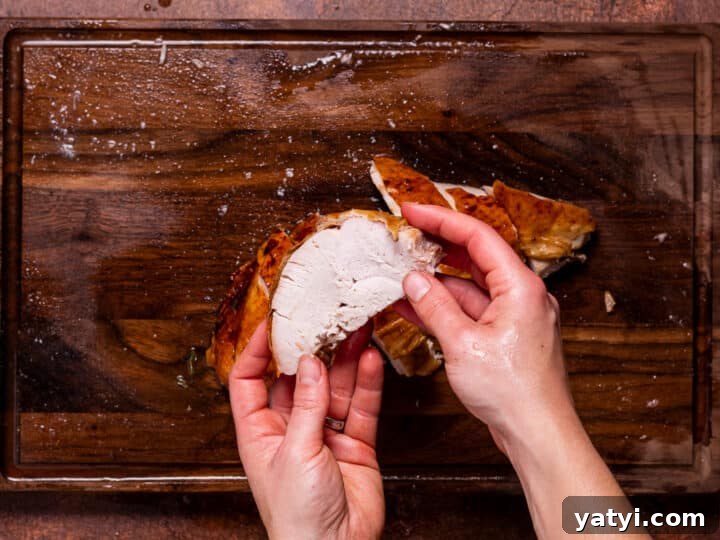
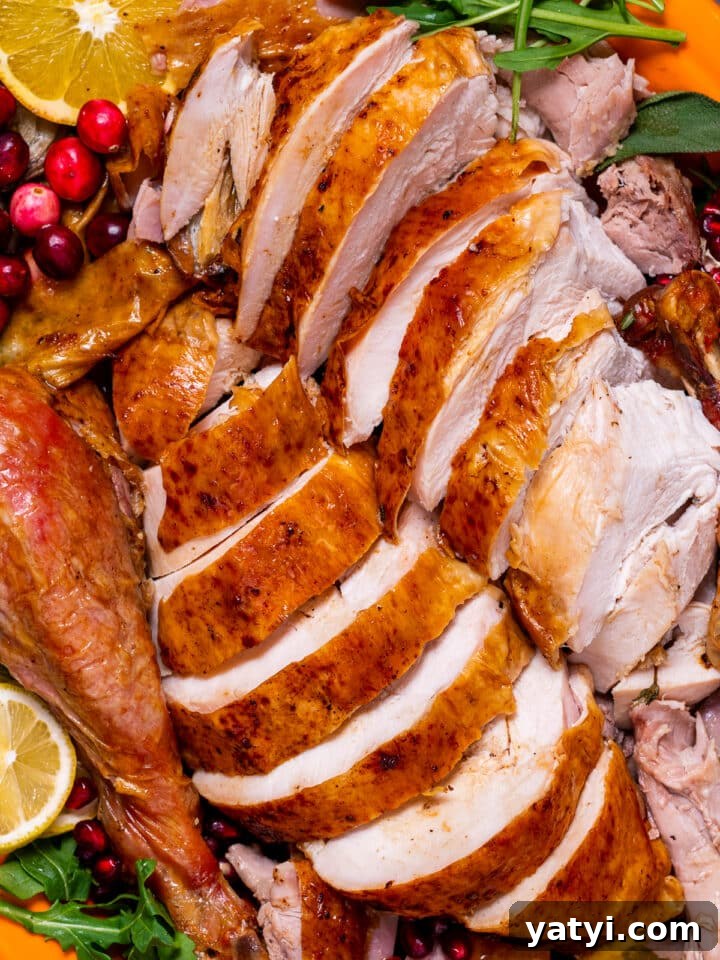
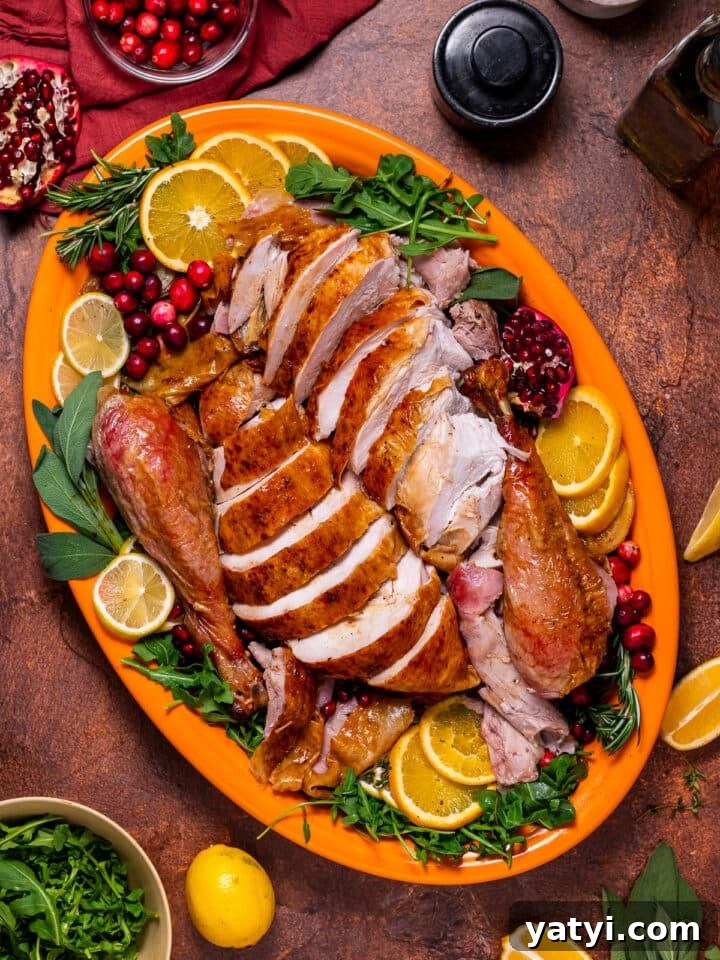
Breast: Starting at the center over the breastbone, slice down one side following the ribs to remove the whole breast. Place on a cutting board and slice crosswise into even pieces.
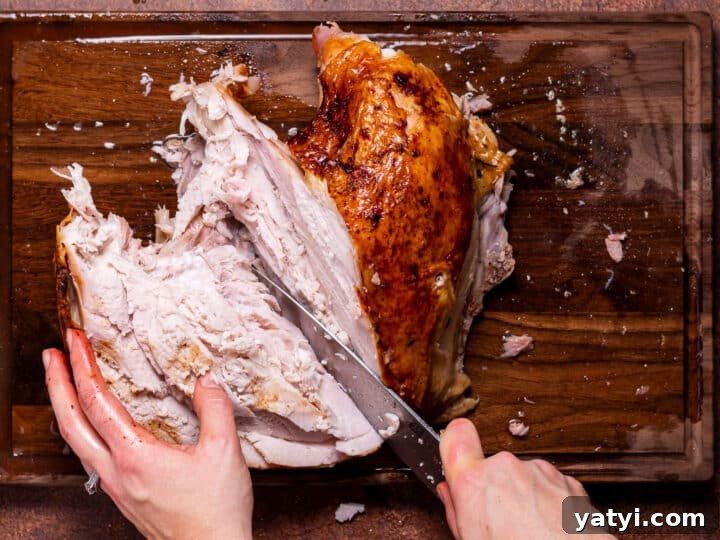
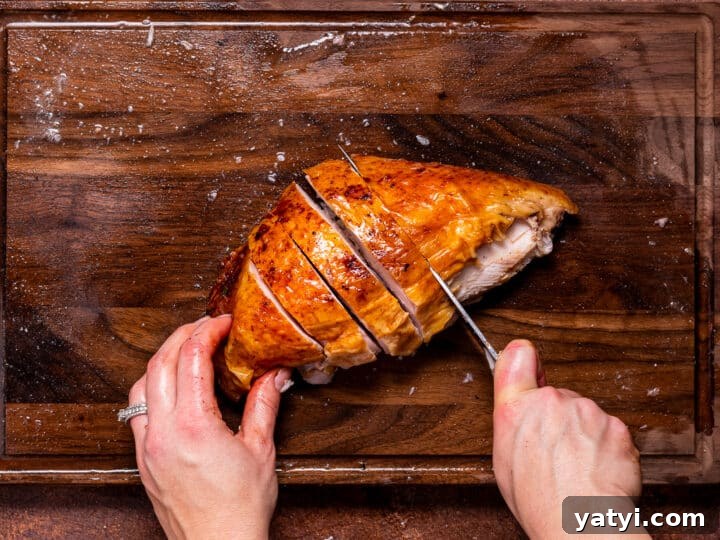
Serve turkey
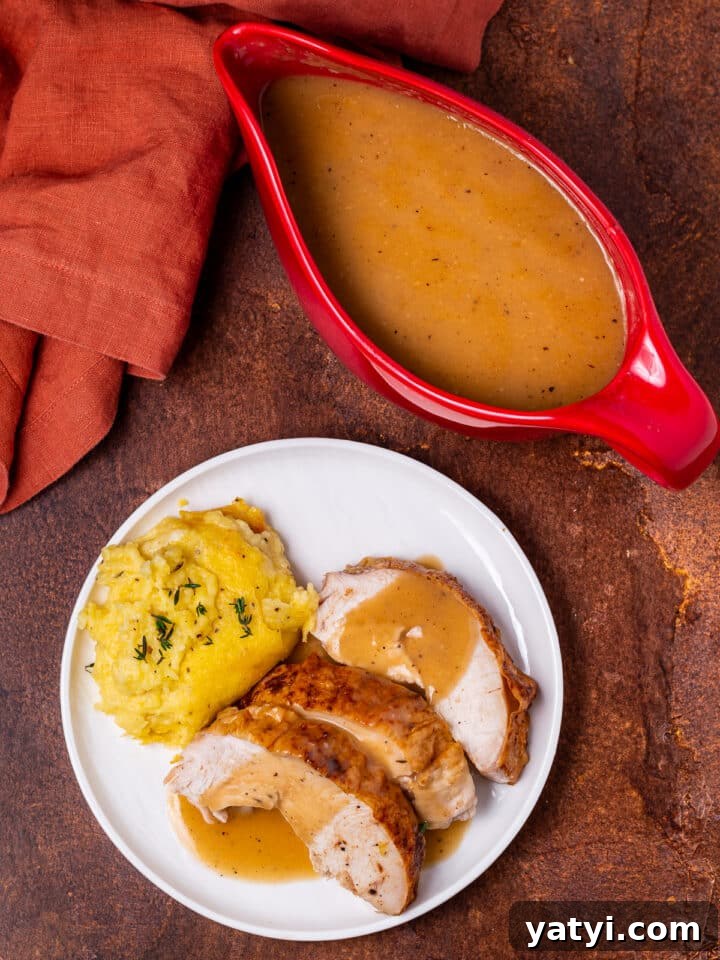
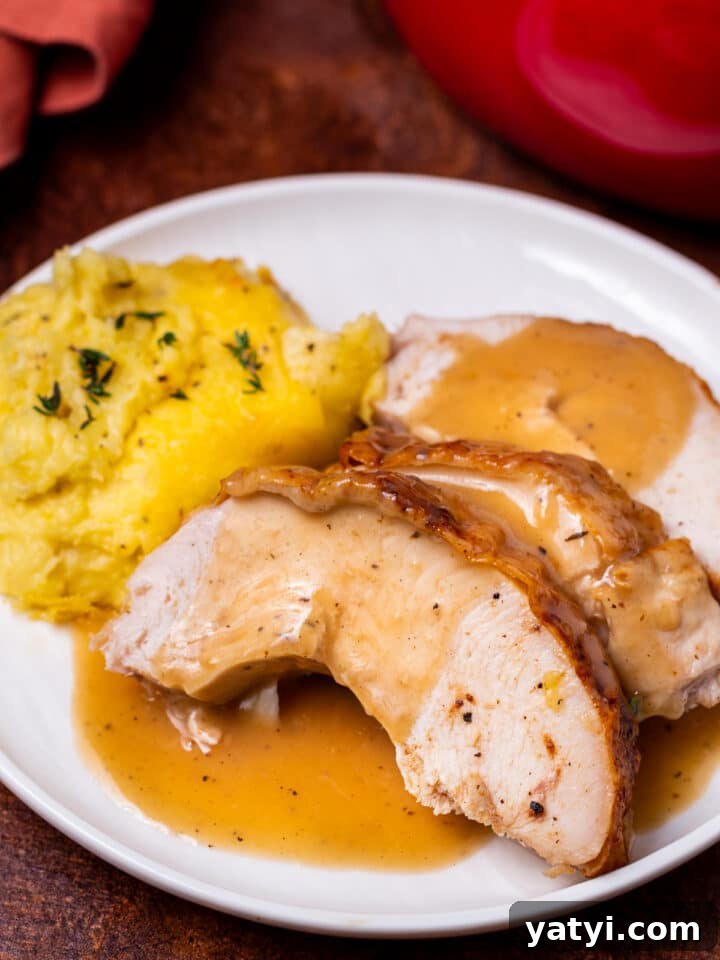
Arrange the breast slices, drumsticks, thighs, and wings on a large platter and garnish with lemon or orange slices, fresh herbs, arugula, cranberries, or pomegranate for color. Serve with gravy and your favorite sides.
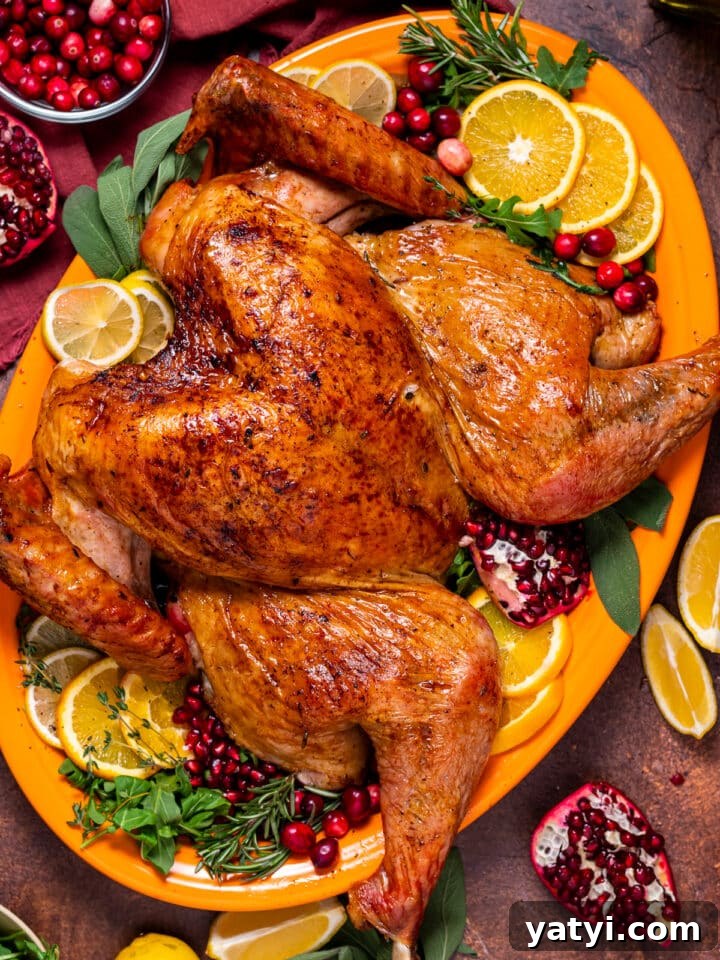
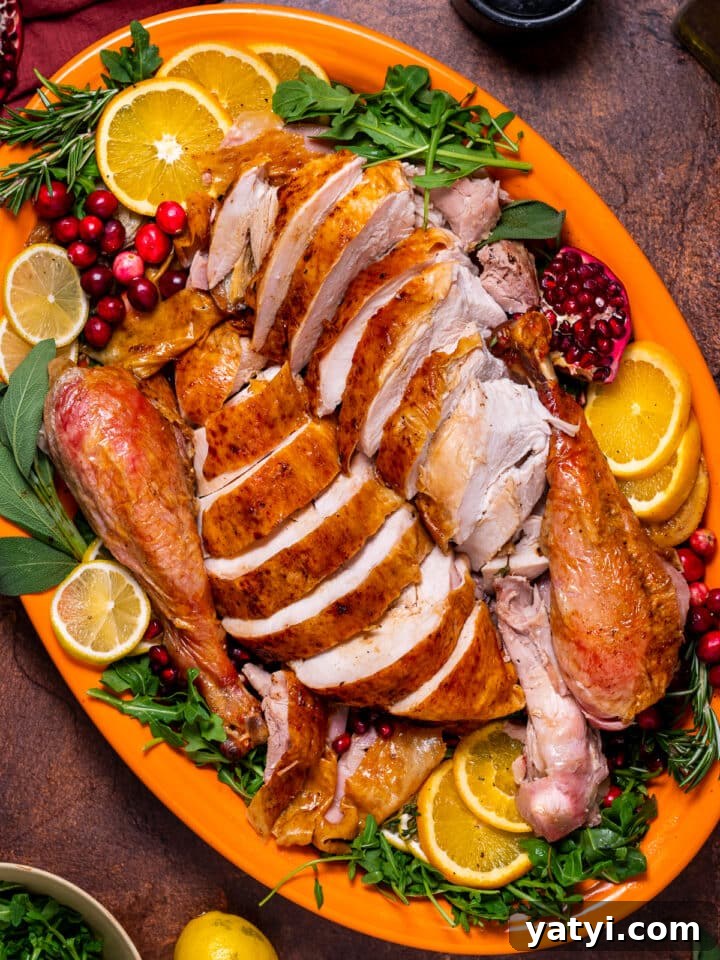
Serve the turkey with gravy and Thanksgiving sides. The drippings and roasted vegetables make excellent stock and gravy—don’t discard them.
Expert Tips to Ensure the Best Dry Brined Spatchcock Turkey
- Use the backbone, neck, and giblets to make turkey stock for gravy and stuffing.
- Make sure the turkey is fully thawed before spatchcocking.
- Do not rinse the dry brine. Pat off excess with paper towels; the turkey won’t be overly salty.
- Leave the turkey uncovered in the refrigerator during brining to dry the skin for extra crispiness.
- If you have a convection oven, use convection bake for more even roasting and faster cook time.
- Save the drippings: skim and separate the fat from juices for gravy, and use the pan vegetables for stock.
- Use an instant-read thermometer and start checking around the 80-minute mark for a 12–14 lb bird. Remove at 165°F.
- Let the turkey rest for 30 minutes before carving so the juices redistribute and the meat stays moist.
FAQs
Use the backbone, neck, giblets, and roasted vegetables from the pan to simmer a rich turkey stock. Simmer with water, aromatics, and herbs for several hours, then strain. Use that stock for gravy and soups.
Dry brine for at least 6 hours; 24–48 hours is ideal for the best flavor and texture.
Make homemade broth. Simmer the carcass with vegetables and herbs to extract flavor, strain, and freeze the stock for later use.
Keep the turkey in its original packaging on a tray in the refrigerator. Allow about 24 hours of thawing per 4–5 lb of turkey—expect 2½–3 days for a 12–14 lb bird.
Yes—a large disposable aluminum roasting pan works fine. Consider using one pan for brining and a clean one for roasting to minimize cleanup.
It’s best to leave the turkey uncovered so the skin dries and crisps during roasting. You can place it on a bottom fridge shelf uncovered or cover loosely if needed.
Yes, but larger birds are harder to handle. Use heavy-duty poultry shears and adjust cook time: spatchcocked turkey often takes about 6–8 minutes per pound. A 20 lb bird may take around two hours, but always rely on temperature rather than time alone.
Absolutely. Halve the dry brine quantities and reduce cooking time accordingly—spatchcocking works great for whole chickens.
Thanksgiving side dishes to serve with your dry brined spatchcock turkey:
Roasted garlic mashed potatoes
Classic turkey gravy
Lemon-butter green beans
Roasted sweet potatoes and carrots with crispy sage butter
Arugula salad with delicata squash and pomegranate
Hot honey Brussels sprouts
Kale and spinach salad with apples and white cheddar
Brussels sprout salad
Are you ready to make the perfect turkey? Try this method and enjoy crispy skin, juicy meat, and a faster roast that’s easier to carve and serve.
If you try this recipe and enjoy it, leave a comment and rating below. For more behind-the-scenes content, follow Erica on social platforms.