In this article we explain wet brining versus dry brining in straightforward, practical terms, with just enough science to make sense without getting overly technical.
Definitions:
- Wet Brining – Submerging meat, poultry, fish, or seafood in a saline solution (usually water) that may include other flavorings. A reliable ratio to start with is 1 gallon of liquid to 230 grams (about 1 cup by volume for some kosher salts) of salt.
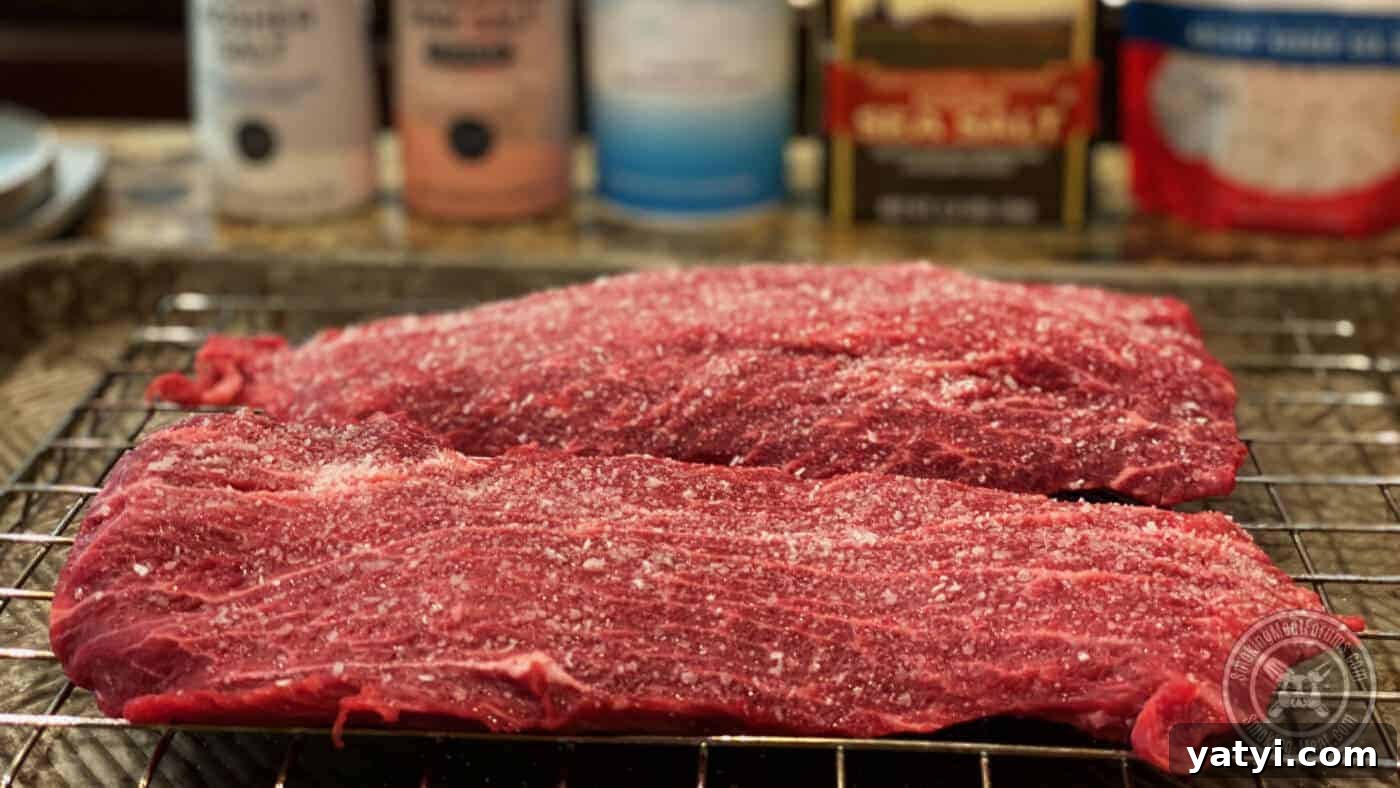
- Dry Brining – Sprinkling salt directly onto the surface of the meat to season and encourage the meat’s own juices to rearrange and be retained. A common guideline is roughly ½ to ¾ teaspoon of kosher salt per pound of meat, adjusting by experience and salt type.
Salt has always been central to seasoning and preserving food. Both wet and dry brining use salt to improve flavor and juiciness, but they do so in different ways and are suited to different cuts and cooking methods.
General recommendations: wet brining tends to work very well for lean, delicate proteins such as poultry, fish, and seafood because it both seasons and adds moisture. Dry brining is often preferable for fattier, robust cuts like beef, pork, lamb, and game. Poultry with skin can be an exception: added surface moisture from a wet brine can cause rubbery skin when cooked low and slow, so dry brining or allowing the bird to air-dry in the refrigerator after brining usually produces crisper skin.
Both methods are flexible and can be applied to most proteins depending on your goals. Experimentation will help you determine what you prefer for each cut and recipe.
The core mechanism is denaturing. When salt contacts meat, it affects the proteins: the strands unwind and then tangle as they reorganize. Moisture becomes trapped among those protein strands. During cooking, moisture would normally be pushed out of the meat, but with this trapped water the meat holds onto more juice.
In wet brining tests, poultry and other cuts usually gain weight during the brine stage and remain heavier than non-brined counterparts after cooking. That retained weight is trapped water, and it translates to noticeably juicier meat at the table.
Practical tip: always brine in non-reactive containers such as glass, stainless steel, or food-grade plastic. If you use a zip-top bag, set it in a bowl to catch leaks before placing it in the refrigerator.
To make a basic wet brine, combine 1 gallon of liquid with 230 grams of salt in a glass, plastic, or stainless container and stir until the salt dissolves. If using water, the liquid will clear once the salt is dissolved.
Adding sugar and other ingredients
Sugar is commonly added for flavor and to help with browning; brown sugar, white sugar, or alternatives like maple syrup or honey can be used. Other flavorings—beer, herbs, spices, aromatics—can be included as well. While many of those additions don’t penetrate as deeply as the saltwater, they influence the overall flavor and are worth experimenting with. Keep notes so you can repeat successes or tweak less-favored combinations.
Measure salt by weight if you switch salt types or brands: different salts have widely varying densities. For consistency, the recommendation is 1 gallon of water with 230 grams of salt. If scaling the recipe, double both liquid and salt proportionally.

One practical reason to prefer certain kosher salts is how they behave by volume. For example, a cup of table salt weighs significantly more than a cup of coarse kosher salt because of particle size and packing. When brining in larger quantities, weigh your salt for reliable results.
Dry brining applies salt directly to the meat’s surface. It does not introduce extra liquid, yet it still increases juiciness through the same protein denaturing and reabsorption process. The salt draws moisture out to form a concentrated surface solution, which then dissolves the salt and is reabsorbed, taking the flavor and the structural effects with it.
A practical starting point is about ½ teaspoon of kosher salt per pound of meat; many cooks go up to ¾ teaspoon depending on personal preference and the specific salt used. After salting, the meat is placed on a rack to allow air circulation while the surface liquids do their work.
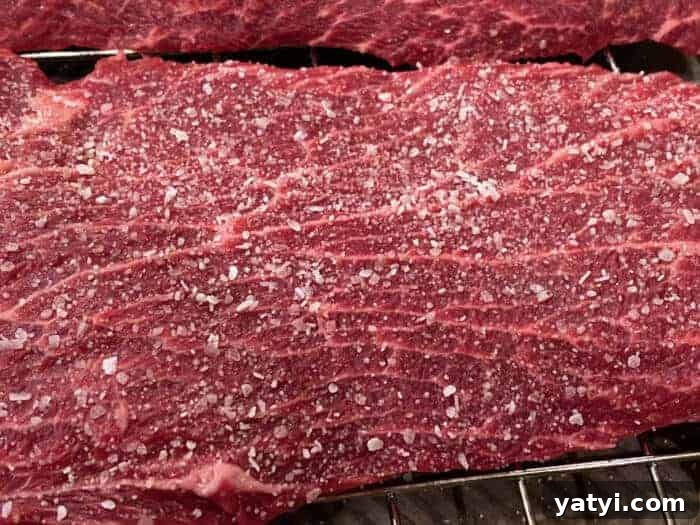
Within minutes the salt pulls moisture to the surface, dissolves, and forms small puddles of brine. Over a few hours that brine is reabsorbed and the meat’s proteins reorganize, trapping moisture inside for better retention during cooking.
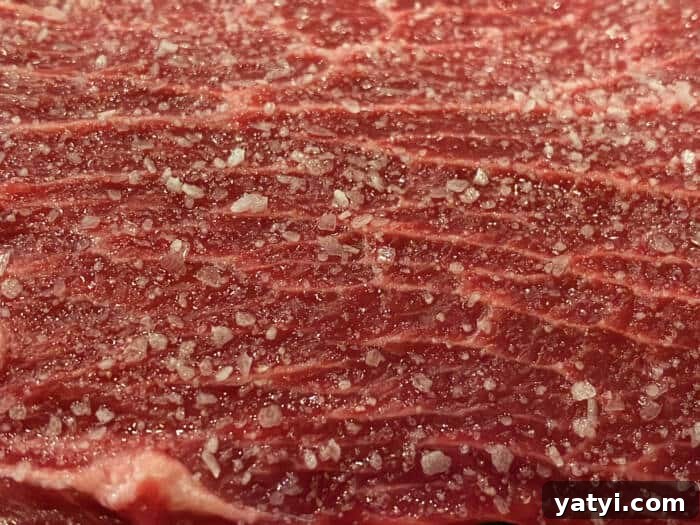
Because I often place steaks on a rack, air can circulate during the dry brine and while cooking, which also benefits smoke exposure if you’re grilling or smoking.
Seasoning while dry brining
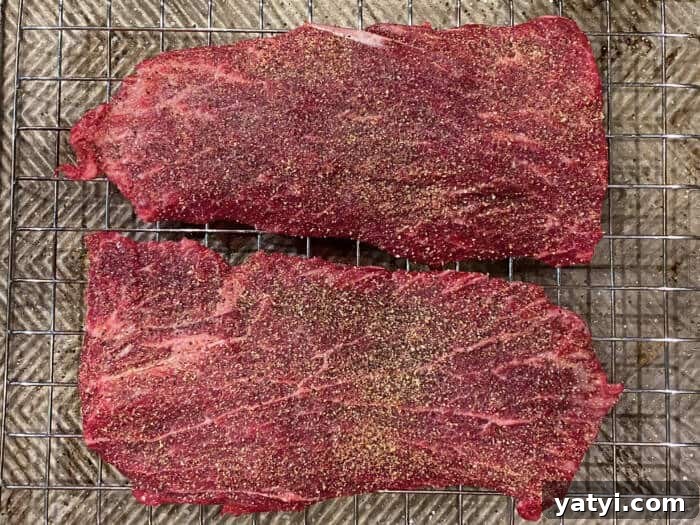
You can add low-salt rubs or seasonings during the dry brine. Many cooks salt first, wait 5–10 minutes for juices to rise, then apply a spice rub; the rub adheres well without needing an oil or binder. If you plan to dry brine both sides of a thick steak, do one side, refrigerate for a few hours, then do the other side, using slightly lighter coverage per side so the overall salt level stays balanced.
There is no single correct answer. The choice depends on the cut and the result you want.
Dry Brining
- Well suited for fattier cuts (brisket, pork shoulder) and all steaks.
- Does not add external moisture.
- Cleaner and less messy to handle.
- Salt distribution can be less uniform than a wet brine, but flavor and moisture retention are excellent.
Wet Brining
- Great for leaner cuts like poultry breasts, pork loin, fish, and seafood (but avoid for skin-on poultry if you want crispy skin).
- Creates a more uniform salt distribution and adds extra moisture.
- Requires more space and containers and is a bit messier to manage.
Both methods improve juiciness and flavor when used appropriately. Try both on different cuts and note the results so you can tailor your approach to the dish and cooking method.
If you have questions or want to discuss specific cuts or brine recipes, leave a comment below.