You can’t. There’s no such thing as “healthy grains.” STOP EATING THEM RIGHT NOW.
All jokes aside, when I followed a strict Paleo approach I believed that, too. That view isn’t entirely accurate. One major reason some people reject Paleo is its restriction on grains, but there are sensible ways to include certain grains in your diet that are both healthful and helpful.
What’s wrong with grains?
Grains are criticized in Paleo circles because many people have difficulty digesting them, along with beans, nuts, seeds, and legumes. These foods contain phytic acid in their outer coating, which can interfere with the absorption of minerals. No matter how nutrient-dense a grain or bean appears, phytic acid can reduce the availability of those benefits and, for some people, cause digestive issues.
Another problem is that modern consumption usually involves refined grains—bread, pasta, cereal, chips—that have been processed and stripped of many nutrients. These “empty carbs” lack vitamins, minerals, and enzymes, and consuming them can force the body to use internal stores to maintain balance, contributing to deficiencies and digestive problems. It’s not surprising that health issues have risen while refined grains remain common in our food system.
Refined grains and high-carbohydrate diets also raise blood sugar and prompt insulin responses. After the insulin surge, blood sugar can drop quickly as cells absorb glucose, creating a roller coaster of highs and lows. This cycle, combined with nutrient depletion from processed foods, contributes to higher rates of obesity, diabetes, allergies, and autoimmune conditions.
So… what grains can I eat?
Some people argue that humans have eaten bread for thousands of years, so it must be fine. While grains have been part of human diets for millennia, consumption has never been as high as it is today, and ancestral grains were typically consumed in whole, properly prepared forms.
“Properly prepared” commonly means soaking, sprouting, or fermenting grains. These traditional methods activate phytase, an enzyme that reduces phytic acid and improves nutrient availability and digestibility. If you want to include grains, choose sprouted grains and flours sold by natural-food retailers, or soak and sprout them at home. I soak and sprout raw nuts and grains I buy, and the difference in digestion is significant.
If you prefer convenience, white or jasmine rice can be an exception. These rices are milled and have had their outer layer removed, so they contain much less phytic acid and are easier to digest. Although brown rice has more nutrients on paper, its higher phytic acid content can limit the body’s ability to access those nutrients unless it is properly prepared.
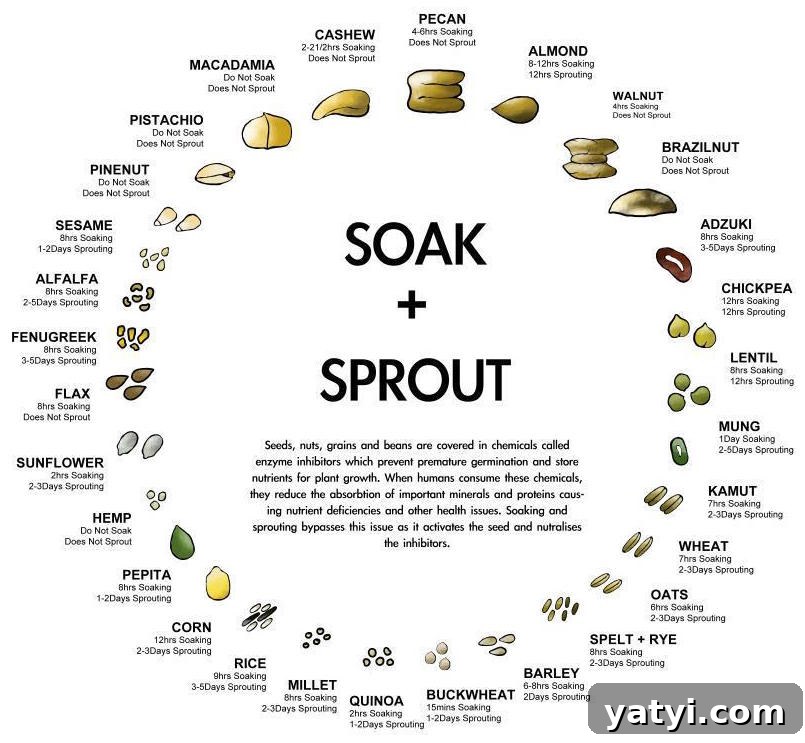
To broaden your grain options while getting real benefits, use traditional preparation methods. Below is a simple guide for soaking and sprouting grains, beans, nuts, and seeds.
How to soak and sprout grains, beans, nuts, and seeds
- Always choose organic, raw grains, beans, nuts, and seeds.
- Place the food in a glass jar and cover with water, adding about 1 tablespoon of apple cider vinegar per jar. Use roughly twice the volume of water as the food. Soaking times vary by item; for long soaks you may need to change the water every 12 hours.
- If you only want to soak (not sprout), drain and then cook as usual. Soaking shortens cooking time for most grains and beans. For soaked nuts or seeds, you can dehydrate them for about 12 hours or keep them in the refrigerator and eat slightly moist.
- To sprout, drain and rinse after the initial soak. Place the rinsed contents back in the jar, cover it with a cloth secured with a rubber band, and store the jar at an angle so excess water drains toward the lid area. Keep the jar in a dark spot.
- Rinse and drain every 12 hours, repeating the angled storage for 1–5 days depending on the item. You’ll know they’ve sprouted when small tails appear.
- Once sprouted you can cook them right away, refrigerate for a few days, or dehydrate to extend shelf life. Dehydrated sprouted grains can be ground into sprouted flour using a blender or food processor.
Although soaking and sprouting takes time, it’s a worthwhile step if you want to benefit from complex carbohydrates and ensure better digestion. These traditional steps also encourage more mindful use of grains, preventing the overconsumption that comes with readily available refined products. Soaking and sprouting help retain nutritional value and support a more balanced diet.