This homemade elderberry syrup recipe is a natural way to support your immune system and may help prevent colds and flus when used as part of a preventative routine.
Elderberry Syrup Recipe
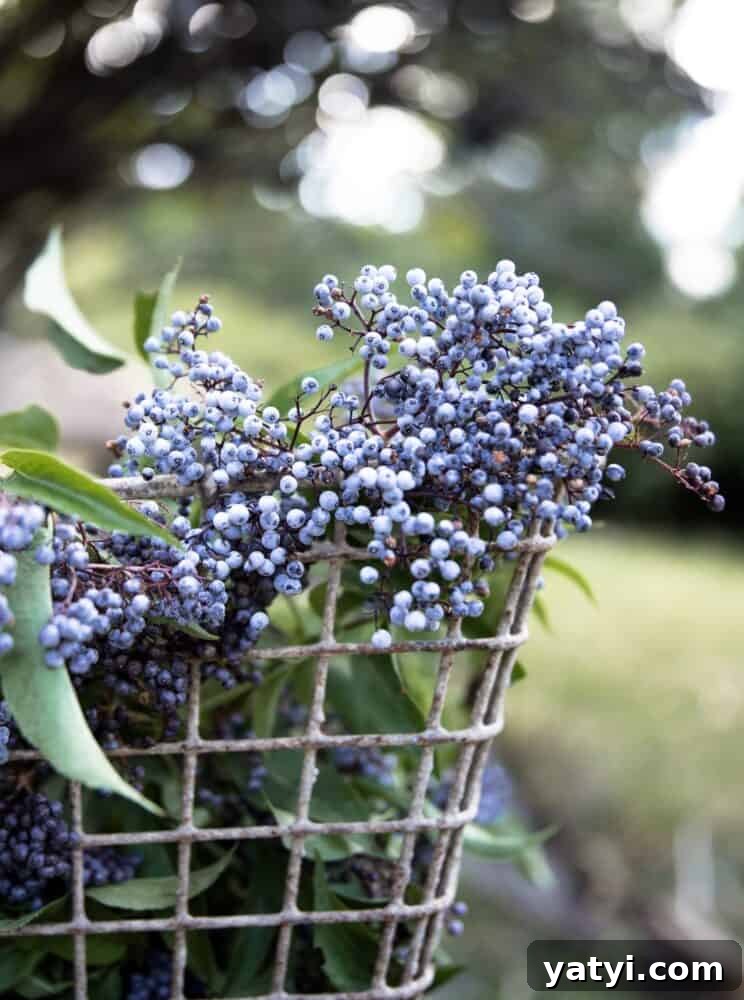
Elderberry syrup has a long history of traditional use for respiratory illnesses, colds, and general immune support. The berries develop from fragrant white elderflowers and ripen to deep navy-purple clusters in late summer and early fall. You can identify elderberry bushes by their clusters of dark berries and pinnate leaves that can resemble peach tree leaves.
Modern research supports many of the traditional uses of elderberry. In short, elderberries contain antioxidant compounds and bioactive flavonoids that can support immune responses and may interfere with viral attachment to host cells.
How exactly does elderberry syrup work to treat colds and flus?
Elderberries are rich in phenolic acids, flavonoids, catechins, and proanthocyanidins. These compounds can stimulate immune activity by increasing cytokine production in certain immune cells. The main anthocyanins in elderberry — cyanidin-3-glucoside and cyanidin-3-sambubioside — provide strong antioxidant effects. Some studies also show elderberry extracts can inhibit viral particles from attaching and entering host cells, which helps reduce infection severity.
Your Elderberry Syrup Questions Answered
Elderberry Syrup with Honey
Honey is commonly added to elderberry syrup for flavor and its soothing benefits. It can help coat the throat and reduce coughing in adults and children over one year of age. Do not give honey to infants under 1 year.
Are elderberries poisonous?
Raw elderberries, as well as the bark and leaves, contain compounds such as lectins that can cause nausea or vomiting if consumed in large amounts. For this reason, elderberries are cooked to make safe extracts or syrups. Avoid using leaves or bark in preparations.
Pregnancy, breastfeeding, and children
If you are pregnant or breastfeeding, or plan to give elderberry products to infants or young children, consult a healthcare provider to confirm safety and appropriate dosing for your situation.
Syrup vs gummies
Both syrups and gummies can deliver elderberry benefits. Gummies are convenient and come in measured doses, but check labels for added sugars and preservatives. Homemade syrup lets you control ingredients and potency.
Elderberry syrup and diabetes
Elderberry may have beneficial effects on blood sugar regulation, but syrups often contain added sweeteners. If you have diabetes, consider an unsweetened extract and consult your physician before adding elderberry to your regimen.
Sweetening: honey or sugar?
Elderberries are tart, so many recipes add a sweetener. A small serving a few times a day is usually sufficient, so some people prefer raw honey for flavor and added benefits. If you skip sweetener, store the extract cold or freeze in ice cube trays to preserve it.

Dosage (how much to take)
Typical over-the-counter recommendations are about 1 teaspoon four times daily when ill and 1 teaspoon twice daily as a preventive. Some studies suggest higher doses can be more effective, but elderberry can act as a diuretic, so avoid excessive amounts. Adjust dosing to your needs and consult a healthcare professional if unsure. A pleasant serving idea is 1 tablespoon mixed with soda water as a refreshing drink.
Where to buy
Elderberry is available as syrups, pure extracts, gummies, jams, and dried berries. If you don’t make your own syrup, choose a product labeled 100% pure elderberry extract with no unnecessary additives. Dried berries are a good option for making homemade syrup—rehydrate them in warm water before following the recipe below.
The Recipe

Elderberry Syrup
Ingredients
- 7 cups Elderberries
- 1 cup Honey
- Herbs of choice cloves, ginger, turmeric, cinnamon
- 2-3 cups Water
Instructions
-
Combine elderberries and 2 cups of water in a large pot.
-
Simmer gently over low heat for 5–10 minutes until the berries release their juices.
-
Mash the berries with a potato masher or the back of a spoon to extract more juice.
-
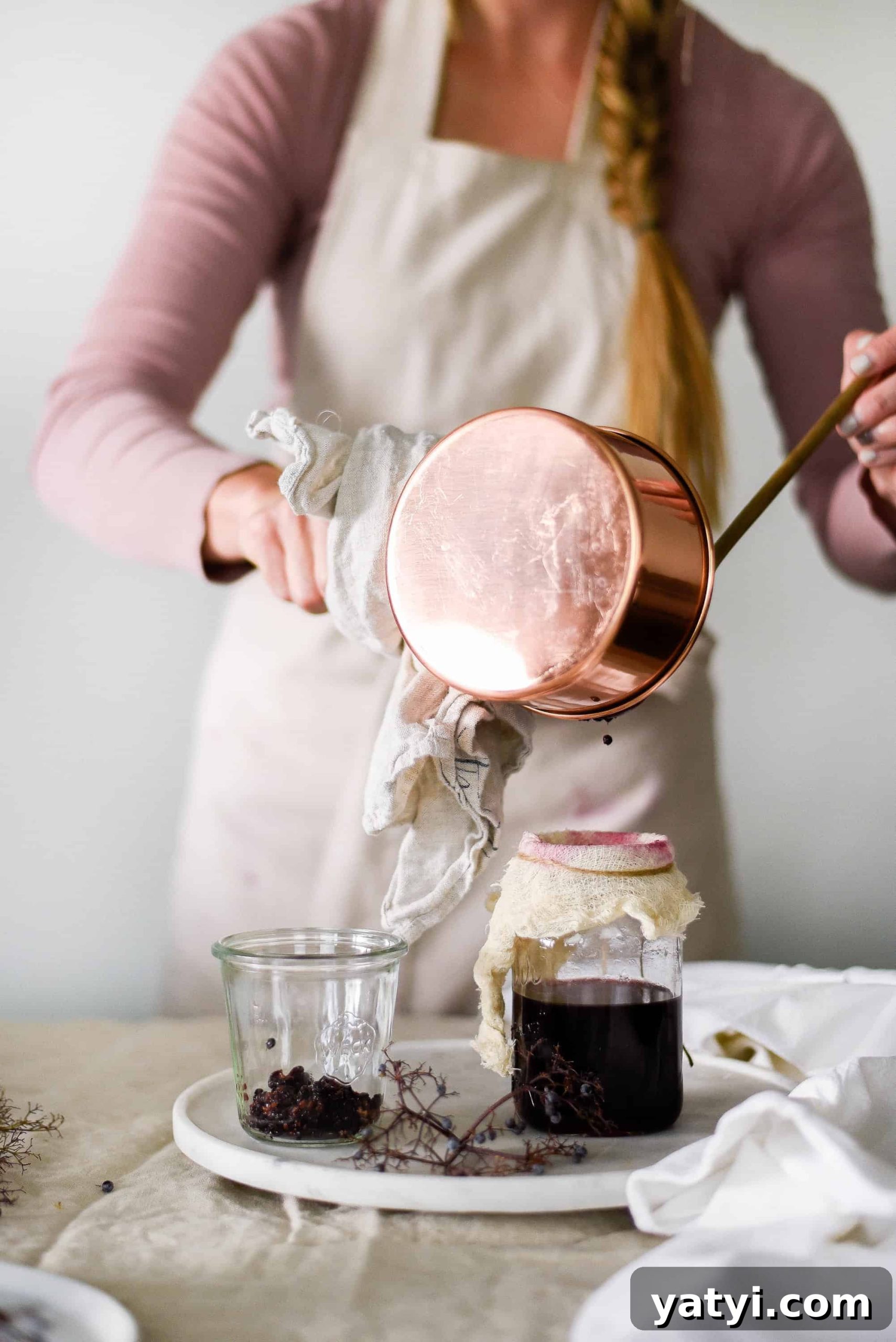
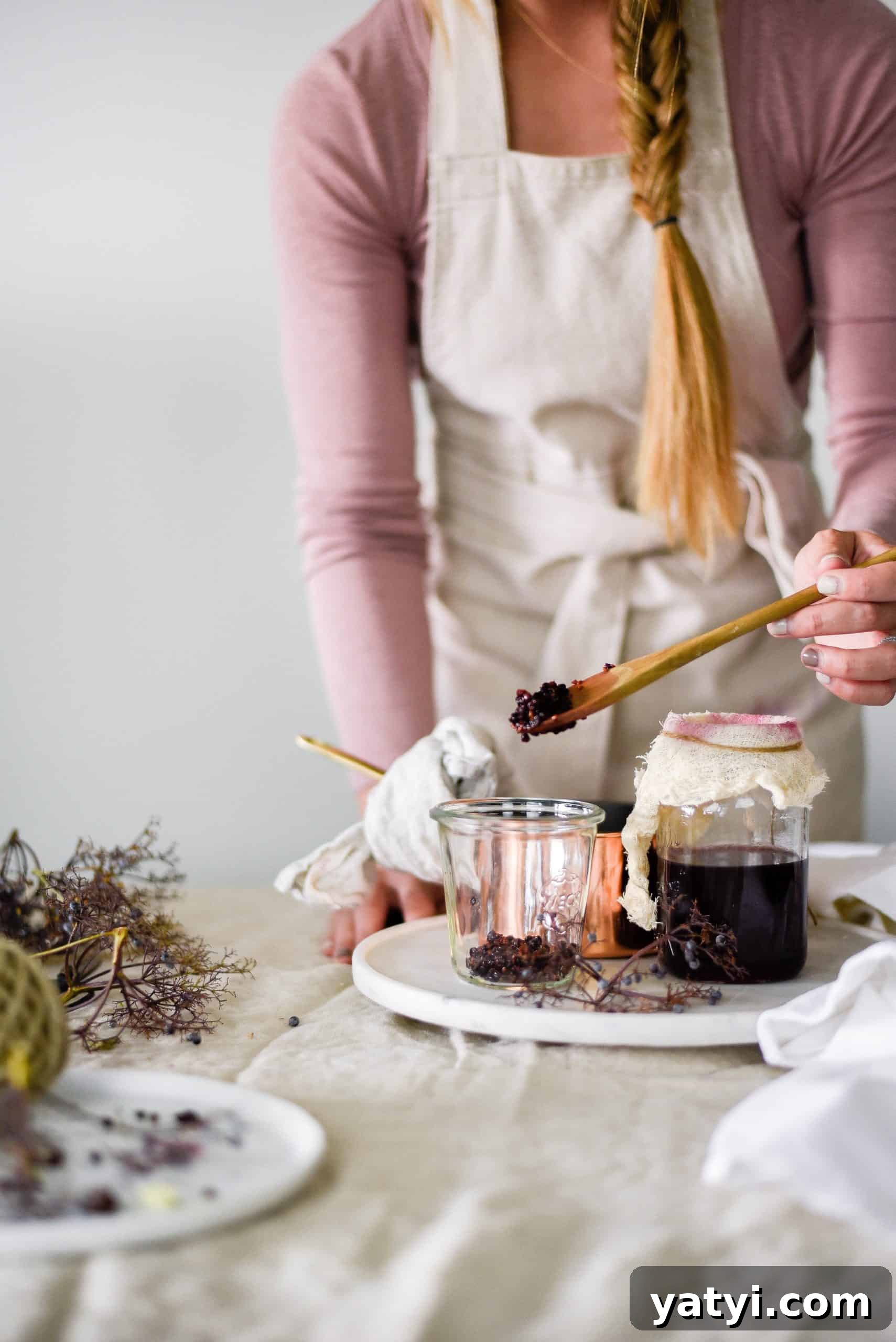
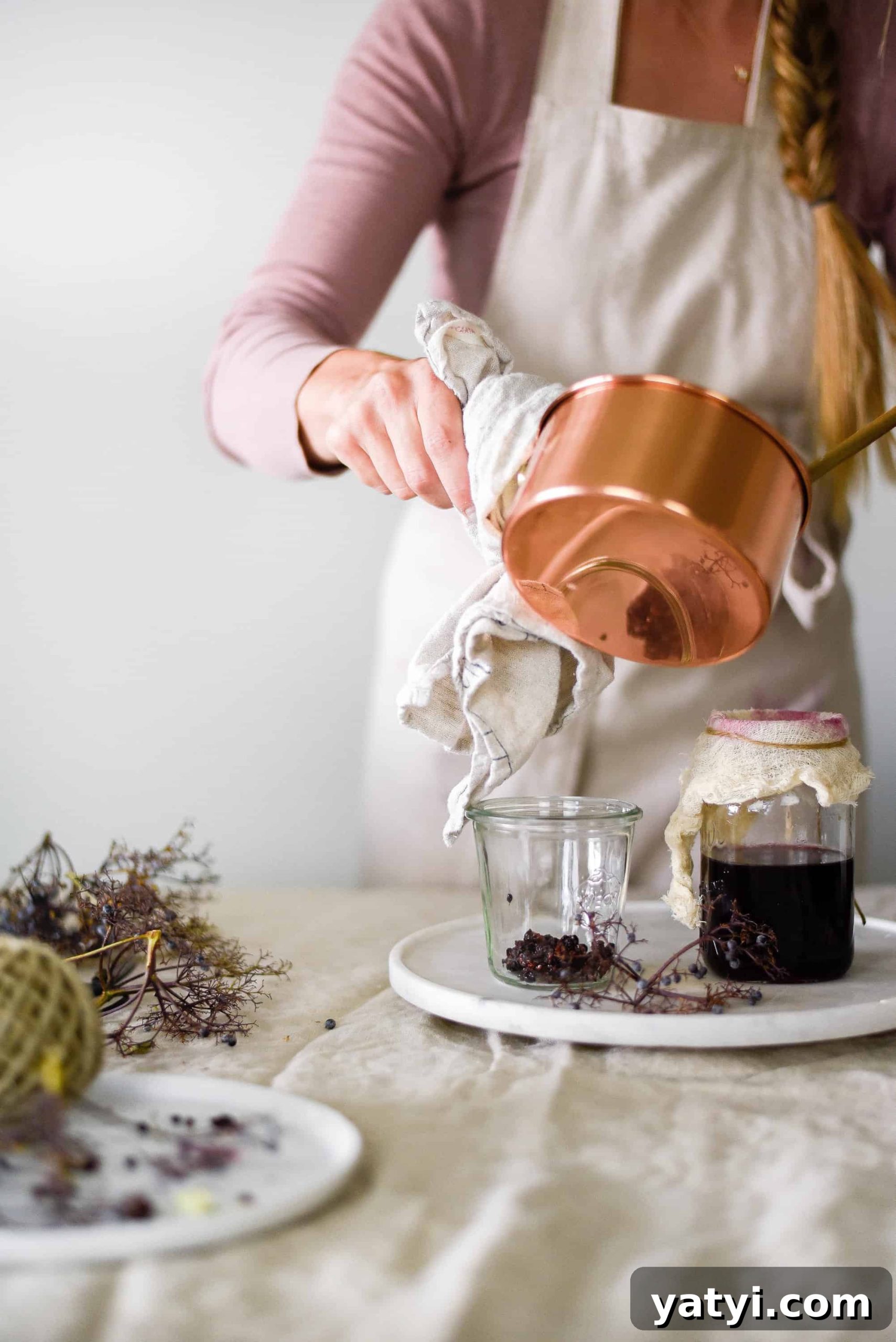
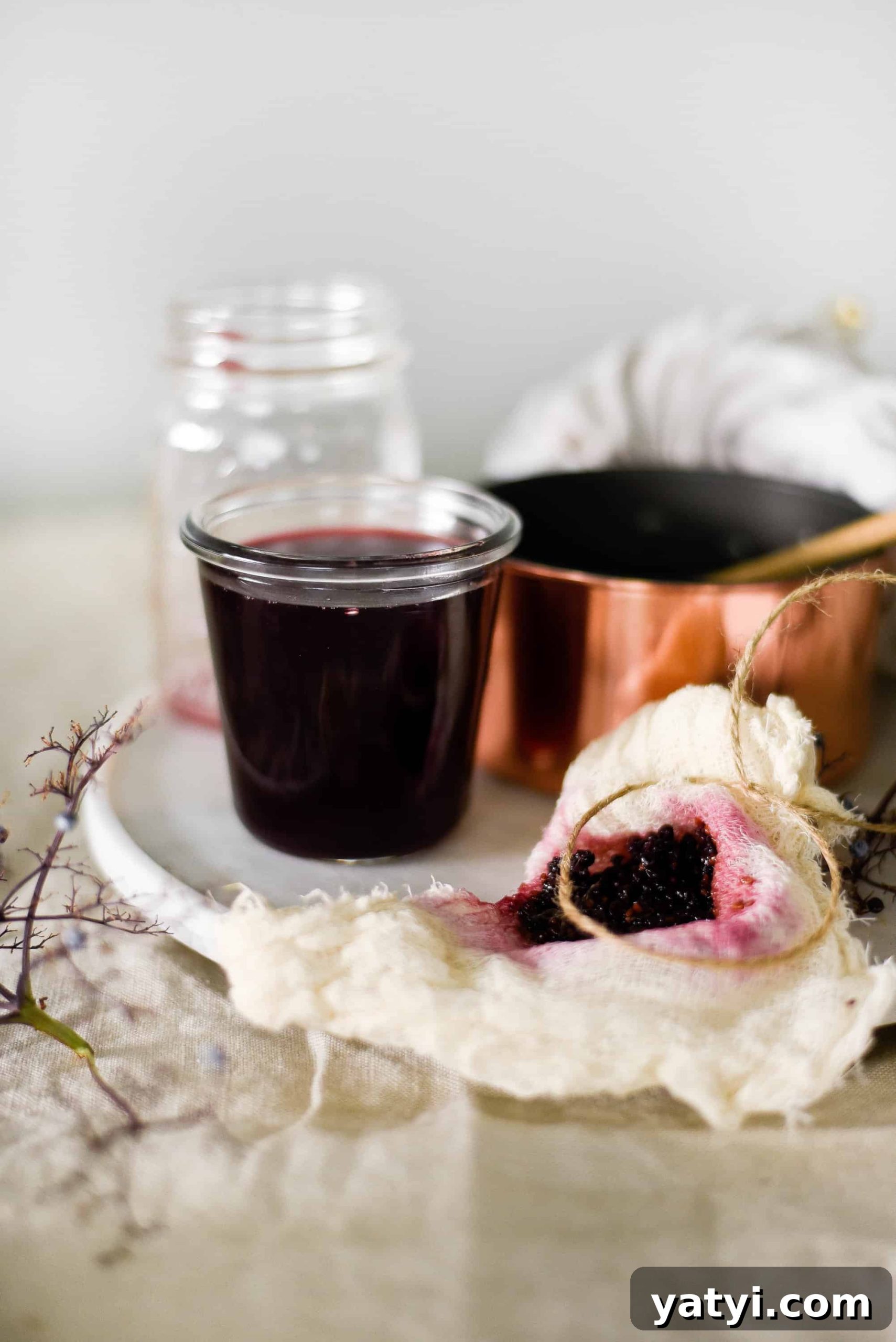
Strain the mixture through cheesecloth or a fine mesh sieve, reserving the juice. Press gently; a few seeds may remain.
-
Discard the solids.
-
Return the strained extract to the pot, add honey and your chosen herbs (cardamom, turmeric, and cloves work well).
-
Warm gently for another 5–10 minutes on low. Add more water if you prefer a thinner syrup.
-
When dissolved, transfer the syrup to small mason jars. Refrigerate for up to three months or freeze in ice cube trays for longer storage.
Notes
MORE ELDERBERRY RECIPES
elderberry pie
elderberry syrup cocktail