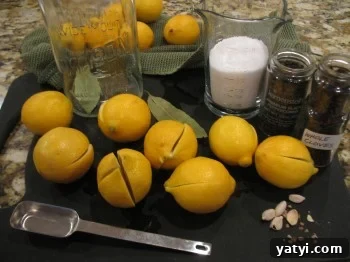
Preserved lemons are intriguing: salty, tangy and intensely lemony. They add a bright, savory lemon note to dishes and are a staple in Moroccan, Middle Eastern and Indian cuisines. If you enjoy bold, citrus-forward flavors, preserved lemons are a fantastic pantry ingredient to have on hand.
I recently found small organic lemons at the health food store and decided they were ideal for preserving. Smaller lemons tend to have a higher peel-to-flesh ratio, which is what you use when cooking with preserved lemons. Choosing organic fruit is wise because pesticides and sprays can concentrate in the peel, and you want a clean rind for preserving.
I filled a quart jar with these glossy lemons and have been turning the jar and waiting for them to transform. The process takes time—about a month in total—so a bit of patience is required. In the meantime I’ve been planning ways to use the preserved peels; they’re wonderful in tagines, stews, dressings, salads and grain dishes.
For more background and tips on preserving lemons, resources like Hunter Angler Gardener Cook describe traditional methods and variations.
Preserved Lemons
- Enough lemons (preferably organic) to fill a quart jar when packed—about 5 to 8, depending on size—plus extra for juice
- Kosher salt or coarse sea salt: 5 to 8 tablespoons (75 to 120 ml)
- 2 bay leaves
- 1 teaspoon black peppercorns
- 3 crushed green cardamom pods
- 3 whole cloves
Trim and wash the lemons, then cut each one into quarters from the top, leaving the quarters attached at the base so the lemon holds together. Place about 1 tablespoon (15 ml) of salt in the bottom of a clean quart jar. Open each lemon slightly and press a generous pinch of salt into the center, holding it over the jar so the excess falls inside. Close the lemon and pack it into the jar. Continue with the remaining lemons, pressing them down as you go so they release juice and fit tightly. Tuck bay leaves, peppercorns, cardamom and cloves between the lemons as you layer them.
When the jar is full, press the lemons down firmly, sprinkle another tablespoon of salt over the top, and add fresh lemon juice until the fruit is completely submerged. Leave the jar on the counter for about a week, shaking it daily to help the salt dissolve and redistribute. After that initial week, move the jar to the refrigerator for an additional three weeks. The lemons will mellow and the peels will soften as they cure.
The peel is the prized part of preserved lemons; the pulp becomes quite salty and is typically discarded. Remove the preserved lemons from the jar, discard the flesh, and finely slice or chop the softened peels. Use them sparingly to add an intense, complex lemon flavor to salads, grain bowls, roasted vegetables, fish, chicken and stews. A little preserved lemon goes a long way—start with a small amount and adjust to taste.
Guten Appetit!
Want to receive new Kitchen Frau recipes delivered to your email? Sign up for the newsletter to get recipes and a useful kitchen tip with each post.
If you enjoy these recipes, follow Kitchen Frau on social media to stay updated and discover more ideas for using preserved lemons in your cooking.
You might also like:
Agua Chia de Fresca (Chia Lemonade or Limeade)
Big Beautiful Lemon Meringue Pie
Luscious Lemon Almond Flour Cake
Turmeric Pickled Eggs