I love the idea of growing our own food with my children. Gardening teaches appreciation for fresh produce and patience as you care for plants. Yet starting a vegetable patch or fruit tree can feel intimidating for a beginner gardener. If that sounds familiar, don’t worry — this rewarding activity is well within reach.
This post is created in partnership with Creative QT
Start with easy herbs and the right tools!
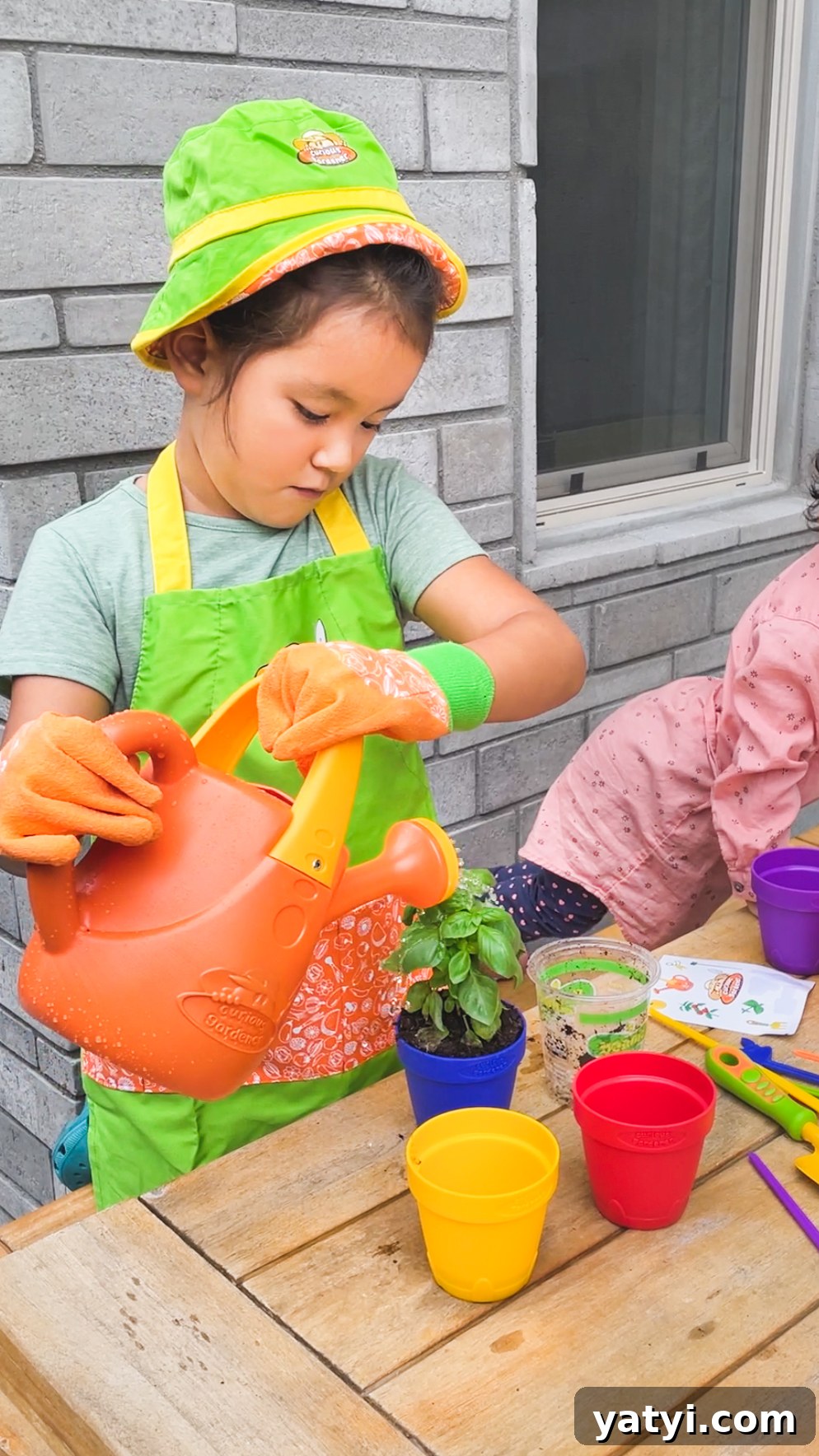
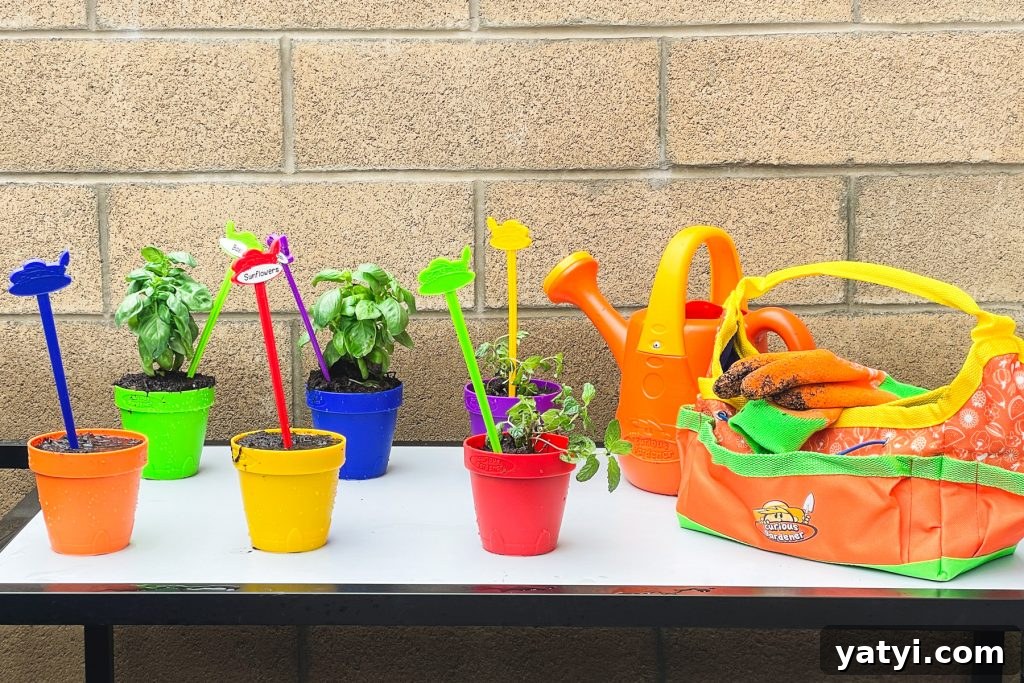
Basil and mint are two of the simplest herbs to grow, making them ideal for novice gardeners and young kids. Having the right kid-sized tools makes a big difference. The Curious Gardener Children’s 30-piece Gardening Collection provides child-friendly tools that make gardening accessible and fun. My husband recently took up gardening and was delighted by the small watering can that comes in the set. Now our toddler has an appropriate tool to help water plants instead of carrying a bath rinse cup. The colorful, size-appropriate tools make the whole activity feel approachable.
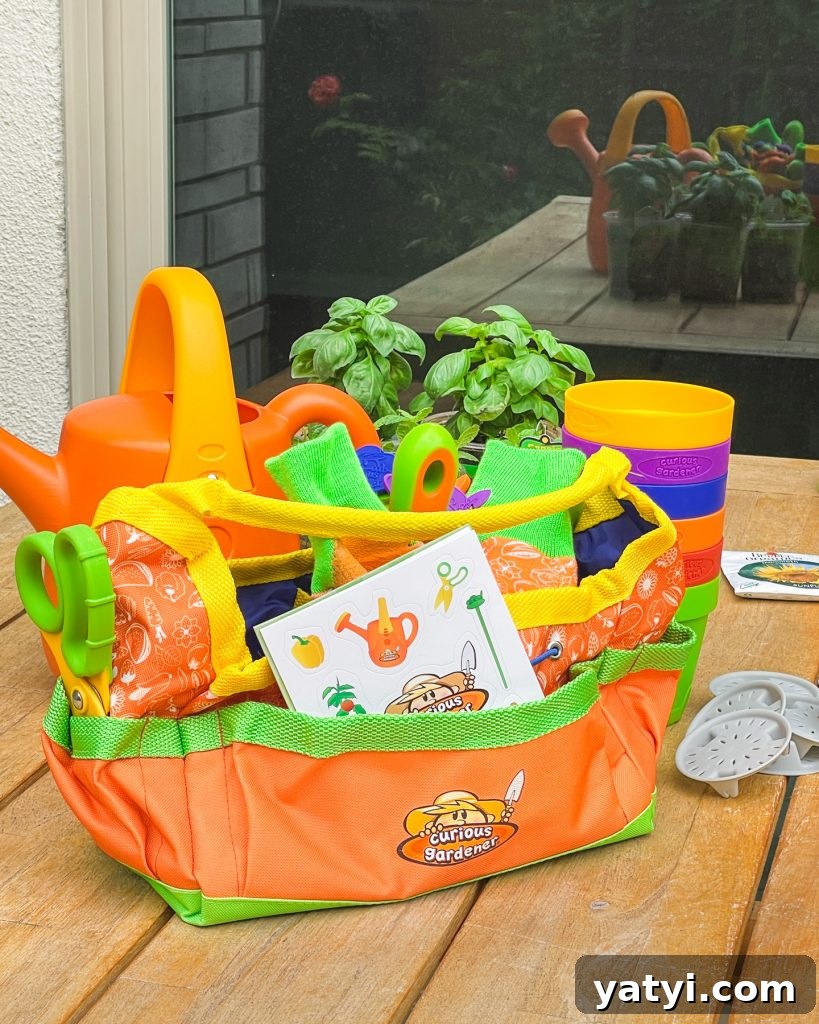
Last weekend we spent a sunny afternoon planting basil, mint, and sunflower seeds in the yard. For the herbs we used already-sprouted plants and repotted them into small containers. For little ones, seeing the herb leaves up close helps them make the visual connection between garden and table. We also sowed sunflower seeds to watch how they sprout and grow over the coming weeks.
To finish the activity, the kids harvested a few leaves from our existing basil and mint using the garden shears included in the kit. Then we moved indoors to the kitchen, where they helped assemble a simple summer salad with peaches, burrata, fresh mint, basil, and a drizzle of balsamic vinaigrette, using kid-safe cooking tools. After playing outside in the warm sun, the cool, fresh salad was a perfect, healthy reward.
Starting small with herbs and kid-friendly tools builds confidence and creates meaningful family moments. Whether you have a balcony, a small yard, or a few pots on a windowsill, easy herbs like basil and mint let children participate in every step — planting, watering, harvesting, and tasting. Over time, these small successes encourage curiosity and a lifelong appreciation for fresh food.
If you’re new to gardening, focus on simple, low-maintenance plants, involve children in age-appropriate tasks, and choose tools designed for small hands. Celebrate each stage of growth, and use the harvest to inspire family meals. Gardening with kids is less about perfection and more about shared experience, learning, and the joy of watching something grow together.