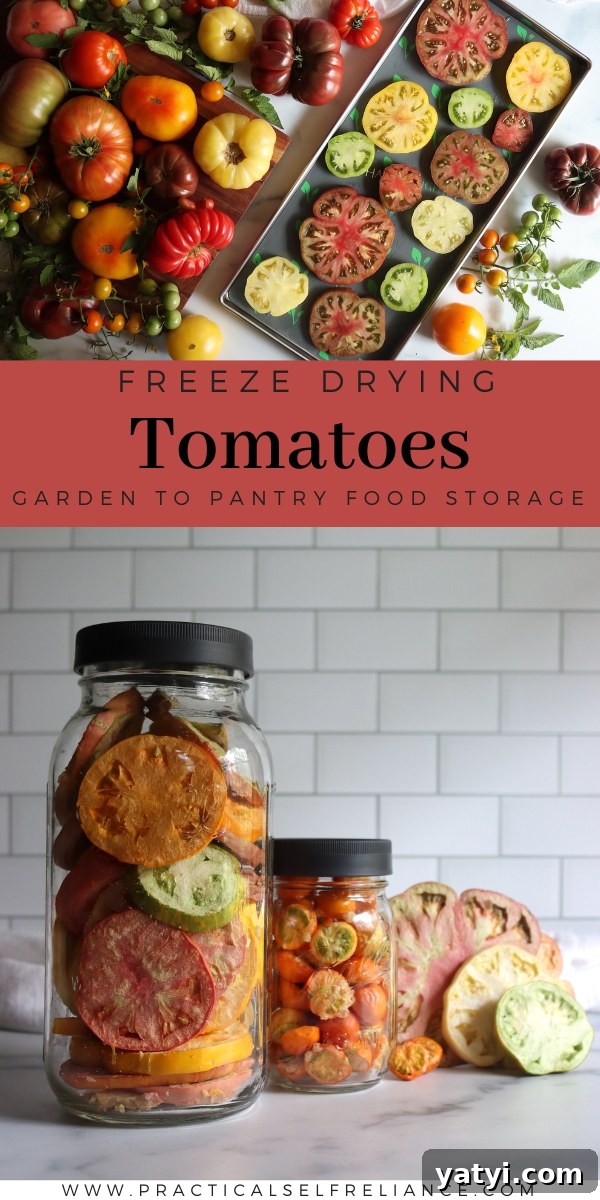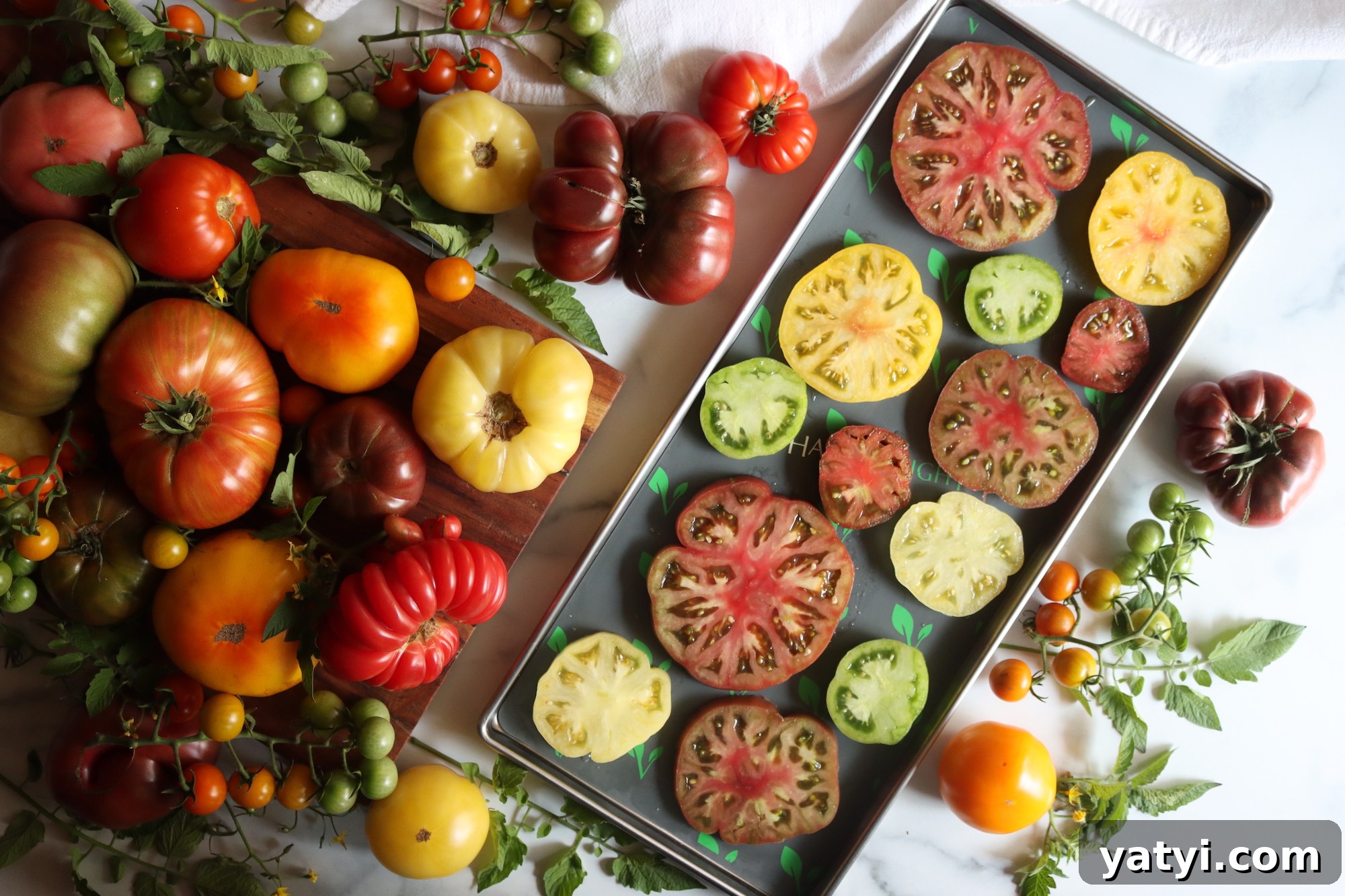
Freeze-drying tomatoes is an excellent way to preserve the bright flavor of summer harvests. Properly freeze-dried tomatoes can keep for decades and are great for sauces, snacks, sandwiches, or turning into tomato powder.
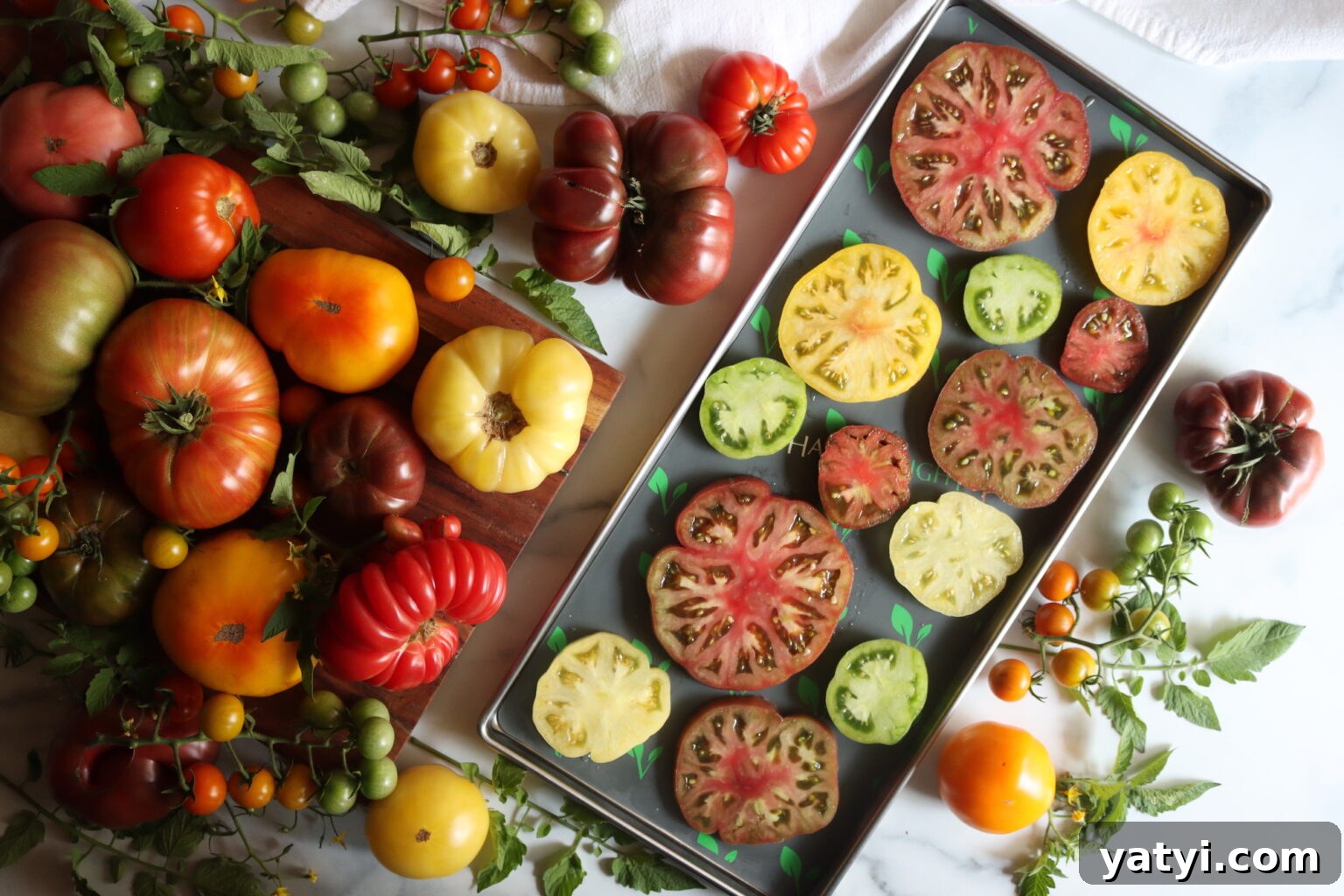
Freeze-drying is one of the most effective preservation methods for tomatoes. Any type—heirloom, cherry, roma or green tomatoes—can be freeze-dried successfully. Unlike some preservation methods that change flavor or texture, freeze-drying retains fresh taste, aroma and most nutrients.
Compared with home canning, which maintains peak quality for about 12–18 months, freeze-dried tomatoes can remain usable for decades when stored properly. Freeze-drying also preserves vitamins and antioxidants like vitamin A, vitamin C and lycopene better than most other methods.
What’s the Difference Between Freeze-Dried and Dehydrated Tomatoes?
Dehydrating removes moisture using heat. Higher temperatures change flavor and aroma, often producing a cooked taste and a chewy, rubbery texture. Dehydrated tomatoes typically won’t return to their original texture after rehydration.
Freeze-drying removes water by sublimation—ice turns directly into vapor under low temperature and pressure—so flavor and aroma are preserved. Freeze-dried tomatoes taste much closer to fresh and rehydrate more fully. Freeze-drying removes about 99% of water, whereas dehydration removes roughly 80–90%, which explains the longer shelf life of freeze-dried products.
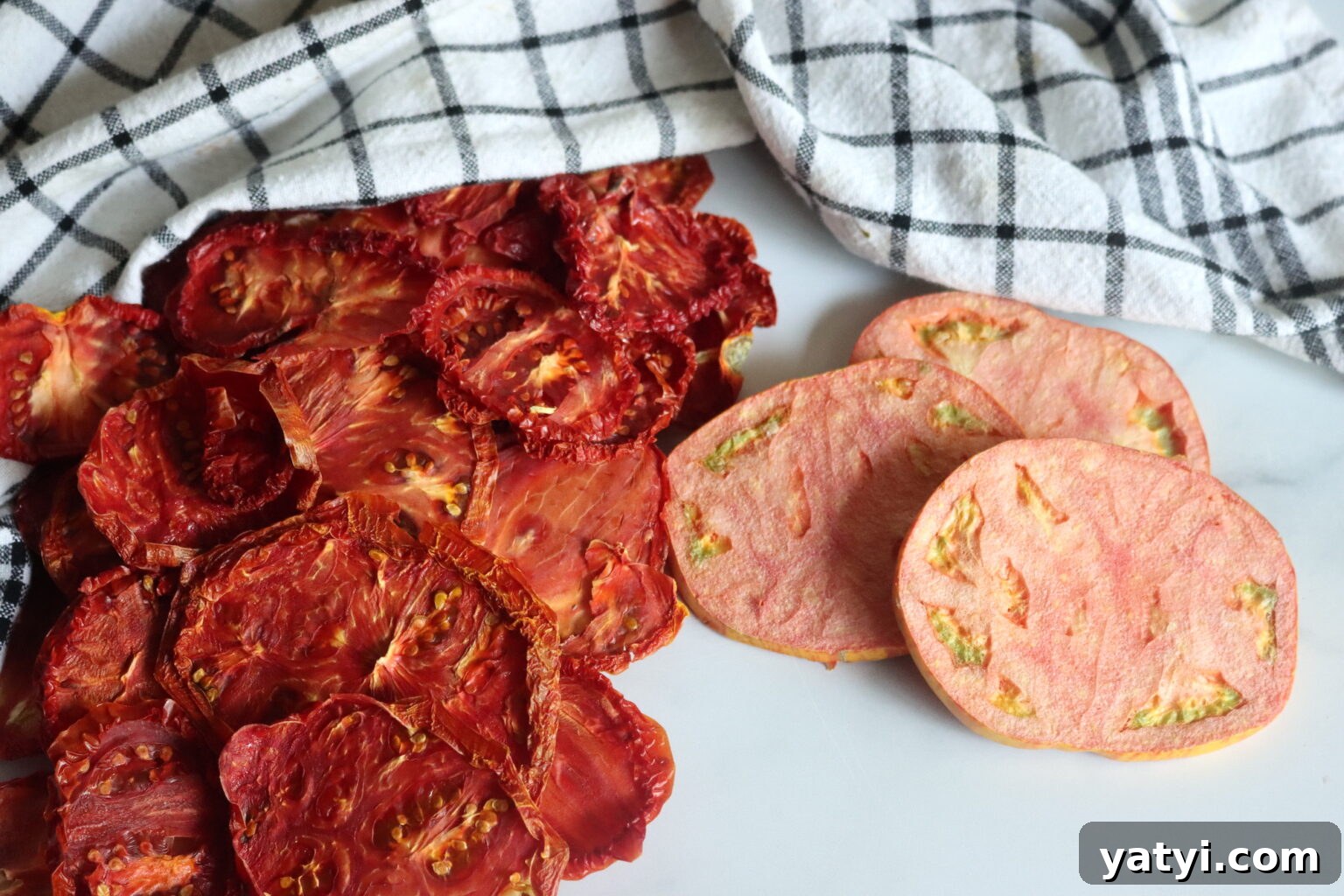
Best Tomatoes to Freeze Dry
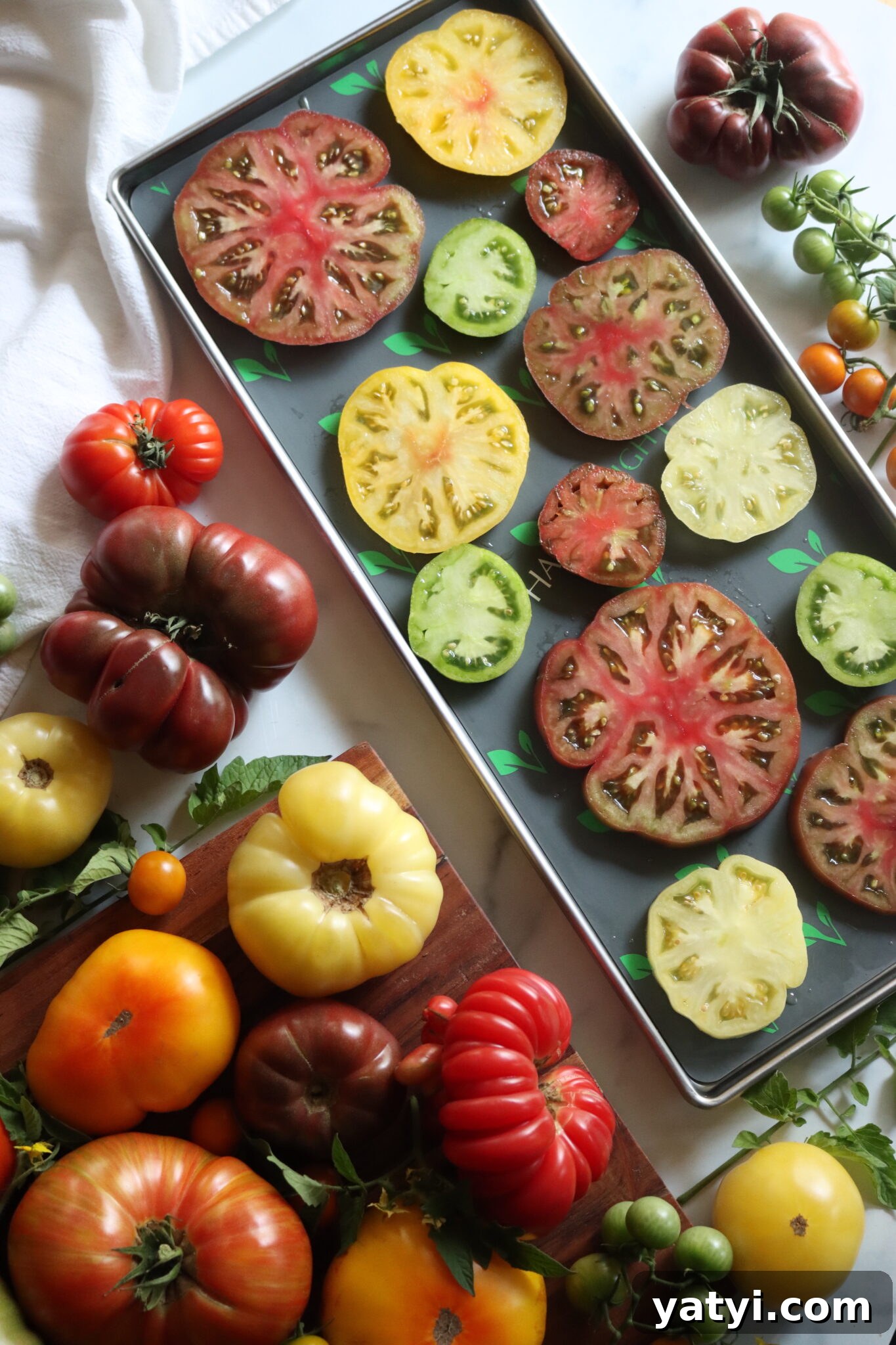
Freeze-drying preserves what you start with, so choose ripe, flavorful tomatoes. Underripe or bland fruit will only concentrate those same weak flavors. Pick tomatoes that are heavy for their size, fragrant and free of splits or rot.
When buying, local farmers markets often offer fresher, better-flavored tomatoes than grocery stores, which sometimes prioritize shelf life. Taste a sample before preserving to ensure you like the flavor you are locking in.
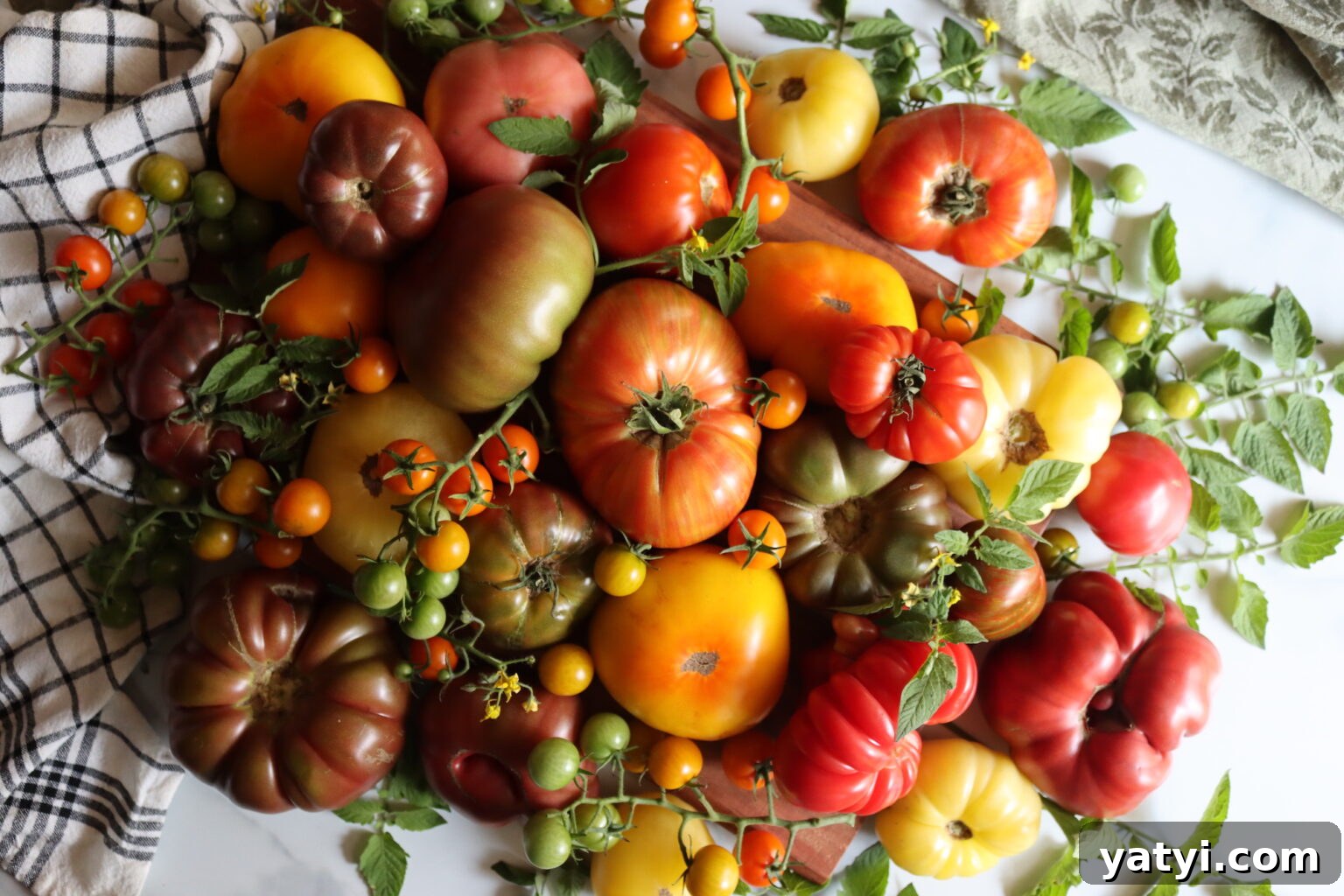
Freeze-Dried Tomatoes Yield
A pound of fresh tomatoes yields roughly 2–3 cups before drying: about 3 cups sliced, 2½ cups chopped, or 2 cups if pureed. Freeze-drying reduces weight dramatically but generally doesn’t reduce the apparent volume of slices as much as dehydration.
Typical counts per pound vary by variety:
- 3 medium globe tomatoes
- 4 large Roma tomatoes
- 8 small Roma or plum tomatoes
- 15–20 cherry tomatoes
Batch capacity depends on your freeze dryer model and how you prepare the tomatoes (sliced, halved, diced or pureed). Trays should be packed in a single layer and never heaped above the rim.
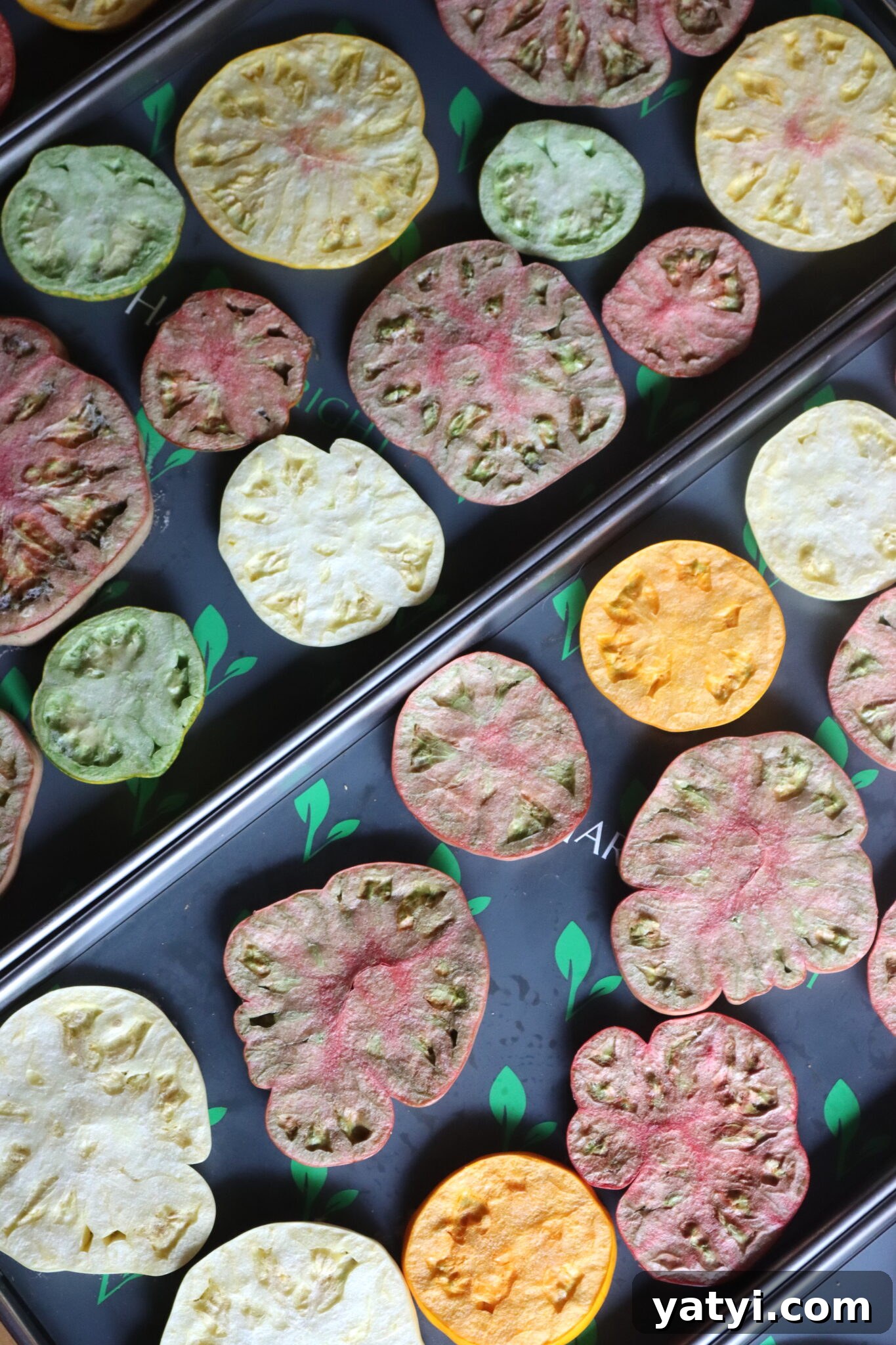
Machine capacities vary. As a guideline:
- Small: 6–10 lb per batch across 4 trays.
- Medium: 10–15 lb per batch across 5 trays.
- Large: 18–27 lb per batch across 6 trays.
- Extra large: 40–50 lb per batch across 7 trays.
Packing a little less per tray often shortens drying time and improves the appearance of the final product.
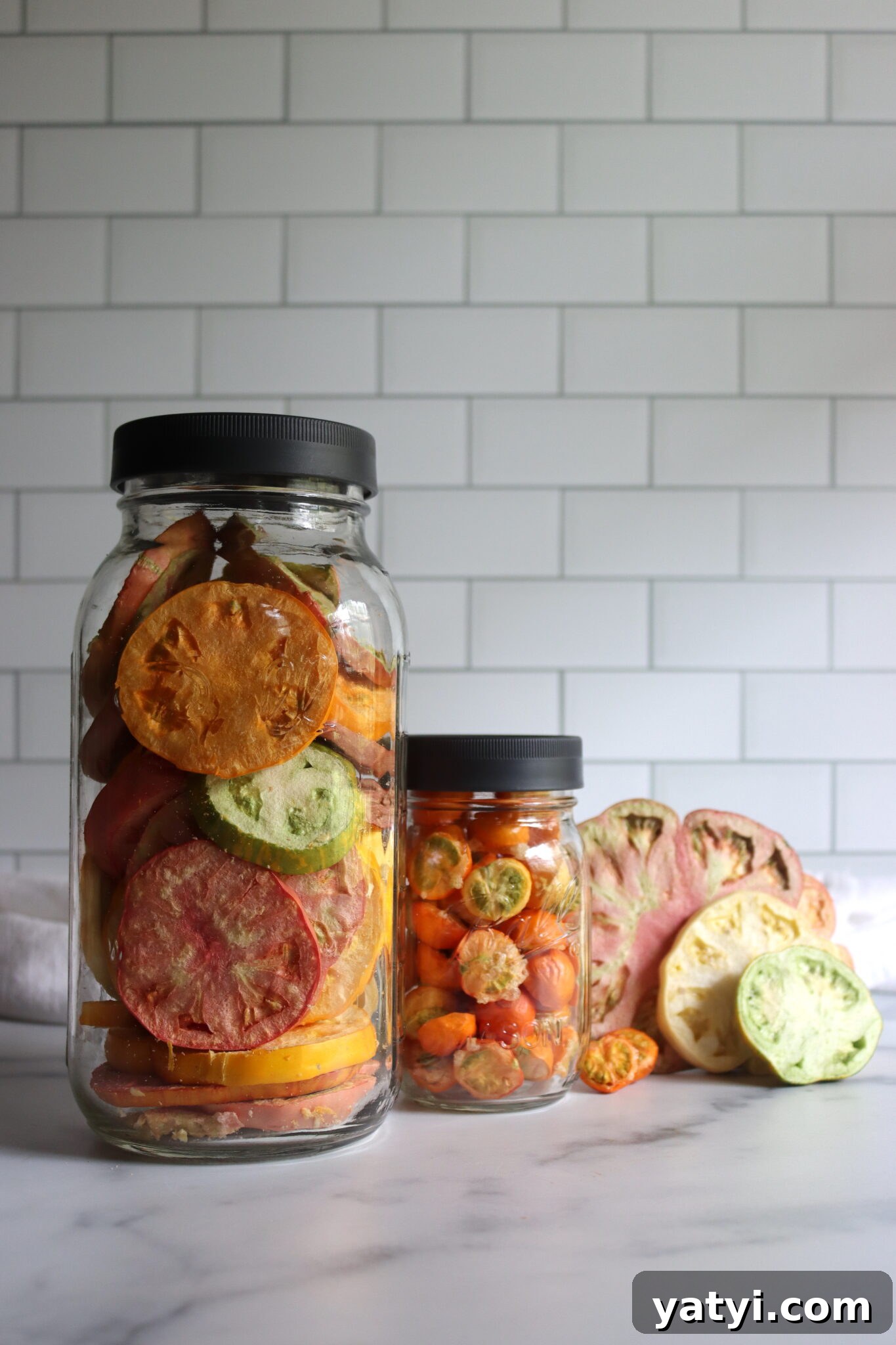
Supplies Needed
To freeze-dry tomatoes at home, gather:
- Tomatoes — fresh or pre-frozen.
- Home freeze dryer — choose the size that fits your needs; larger models are more efficient per pound.
- Cutting board and knife — for even 1/4-inch slices or desired cuts.
- Silicone tray liners or parchment paper — prevents sticking and eases cleanup.
- Colander and towels — wash and dry tomatoes thoroughly; excess surface water increases drying time.
- Mason jars or airtight containers for short-term storage; mylar bags with oxygen absorbers for long-term storage.
- Vacuum sealer (optional) — useful for removing air from jars or bags.
- Label tape and a pen — mark contents and dates for easy inventory control.
Preparing Tomatoes for Freeze-Drying
Wash tomatoes, remove stems, and discard any damaged fruit. Pat dry to remove surface moisture. Slice large tomatoes about 1/4 inch thick, dice, quarter, or halve smaller varieties. You can also puree tomatoes and spread the puree on trays to make tomato powder later.
Uniform piece size helps achieve even drying. Pre-freezing the pieces on trays shortens freeze-dryer run time if you have the freezer space.
How to Freeze Dry Tomatoes
The process is straightforward after prep. Pre-chill your freeze dryer (about 30 minutes on many models), line trays if desired, and arrange tomatoes in a single layer. For purees, partially insert trays, pour the puree, then slide trays fully in to avoid spills.
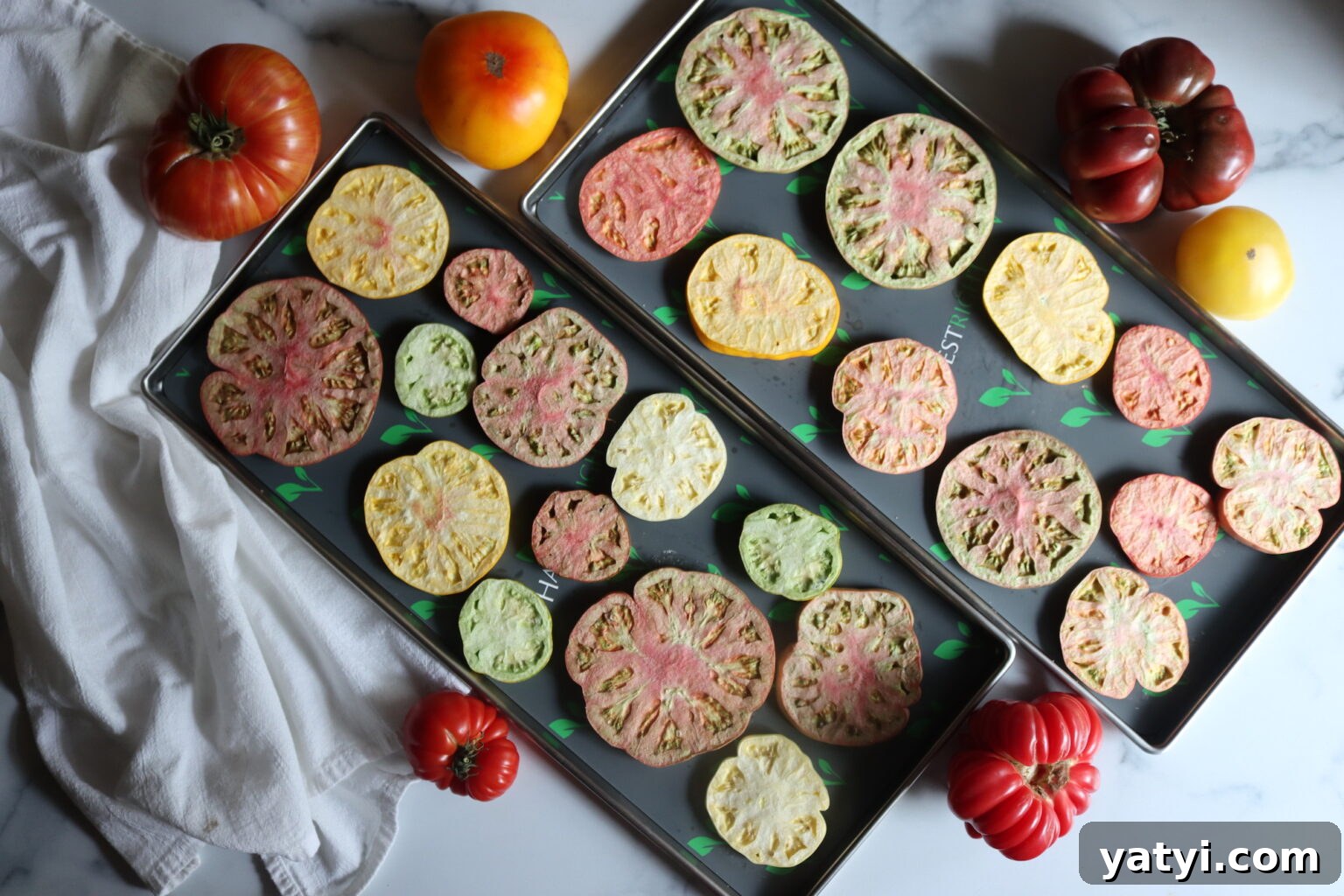
Start the cycle once trays are loaded. A full run for tomatoes typically takes around 20–24 hours, but time varies based on slice thickness, moisture content and whether tomatoes were pre-frozen. Check the thickest pieces by breaking one in half—there should be no moisture and the piece should snap.
Most batches take a little over 20 hours. Time is affected by pre-freezing, piece size and fruit moisture: pre-freezing shortens cycle time; thinner slices dry faster; very juicy tomatoes take longer.
When you start with ripe, fresh tomatoes, freeze-dried pieces taste like concentrated fresh tomatoes, not cooked. Flavor is essentially preserved, often more intense because the water is removed.
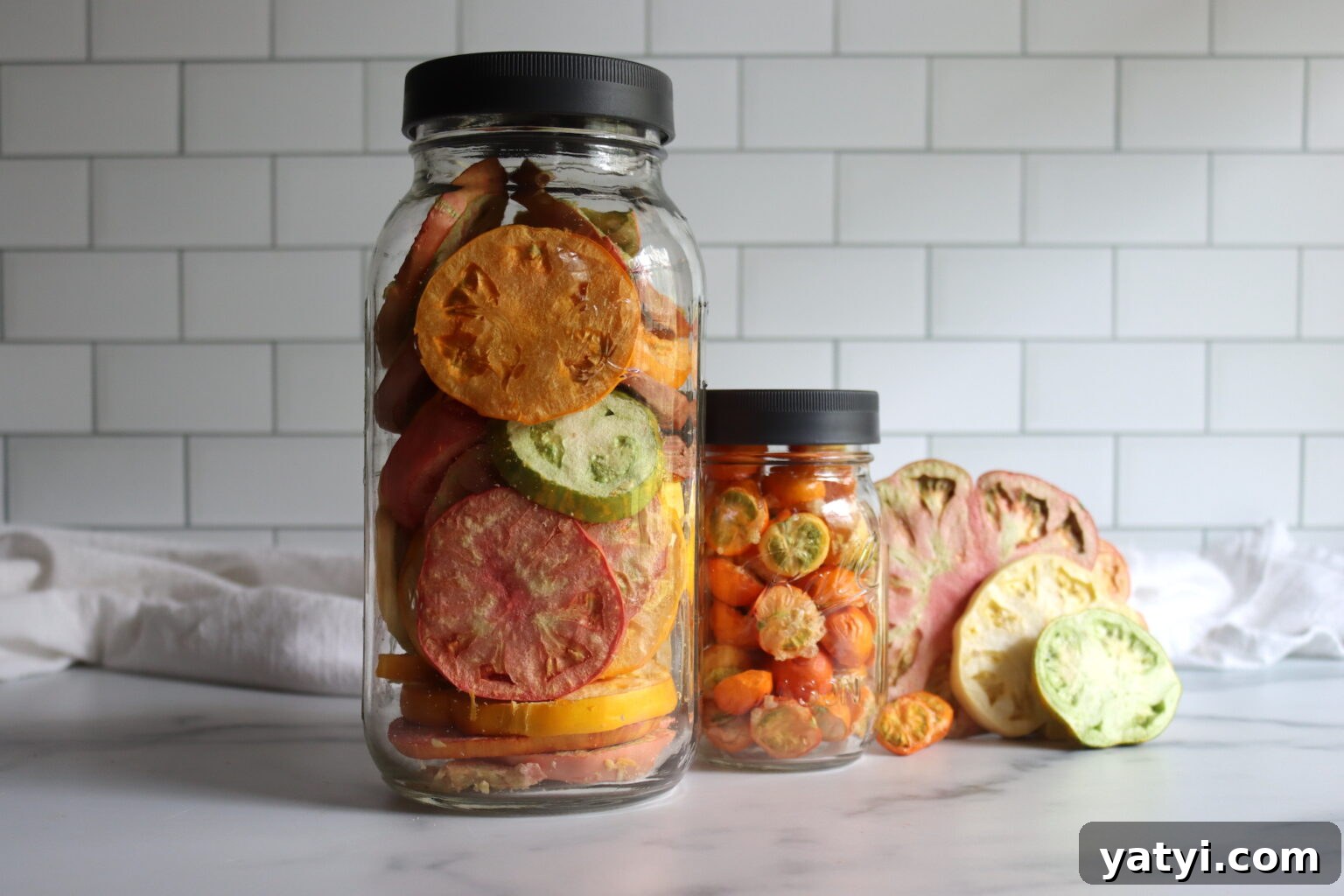
Properly sealed in mylar bags with oxygen absorbers, freeze-dried tomatoes can last 20–30 years. In mason jars with tight lids they remain excellent for about 1–2 years; repeated openings shorten that life as humidity is introduced.
Fully freeze-dried tomatoes are dry and brittle and will snap cleanly. Break the largest piece to confirm there is no internal moisture. If any is present, extend the drying time.
Reconstituting Freeze-Dried Tomatoes
Freeze-dried tomatoes can be used as-is for a crunchy texture or rehydrated. To rehydrate, cover with water and soak about 20 minutes, then drain and use. Reconstituted tomatoes will be softer than fresh and are best used cooked, blended into sauces, or added to soups and stews.
How to Store Freeze-Dried Tomatoes
For short-term use (within a year), store in mason jars with airtight lids. For long-term storage, seal in mylar bags with oxygen absorbers and keep them in a cool, dark place. Use smaller jars or bags to limit repeated exposure to air when opened.
Ways to Use Freeze-Dried Tomatoes
Freeze-dried tomatoes are versatile. Toss them into soups, stews and chili where they will quickly absorb liquid. Use slices as a crunchy topping for sandwiches or salads. Rehydrate and puree for sauces, blitz into tomato powder for seasoning blends, or add to pasta, pizza and shakshuka. Tomato powder can be made by grinding dried pieces into a fine powder for easy storage and use.
Reconstituted tomatoes are excellent when simmered with garlic, herbs and olive oil to create flavorful sauces, or blended into dressings and spreads.
Freeze Dried Tomatoes
Freeze-dried tomatoes are easy to store and can replace fresh tomatoes year-round. Use them dry for crunch or rehydrate for cooking.
Prep: 30 mins • Cook: 20 hrs • Total: ~21 hrs
Equipment
- Home freeze dryer
- Silicone freeze dryer mats (optional)
Ingredients
- Tomatoes, fresh or pre-frozen
Instructions
- Turn on your freeze dryer and allow it to pre-chill for about 30 minutes.
- Wash tomatoes, remove stems, and discard any with rot.
- Pat tomatoes dry and slice or cut into the desired size.
- Line trays with parchment or silicone liners if you like for easier removal.
- Arrange tomatoes in a single layer on trays; for puree, pour into trays while partially inserted.
- Load trays, start the cycle and allow approximately 20–24 hours, adjusting for piece size and moisture.
- When the cycle ends, check the largest pieces for dryness; if any moisture remains, extend the cycle.
- When fully dry, remove trays and set the dryer to defrost.
- Pack immediately: mason jars for short-term use, mylar bags with oxygen absorbers for long-term storage.
Notes
Storing
In mason jars, freeze-dried tomatoes retain quality for about a year. For multi-decade shelf life, use mylar bags with oxygen absorbers and store in a cool, dark place.
Reconstituting
Cover freeze-dried tomatoes with water and soak 20 minutes, drain, then use. Refrigerate any leftovers.
Freeze Drying Guides
Home Freeze Drying (Beginner’s Guide)
How to Freeze Dry Strawberries at Home
How to Freeze Dry Peppers (Hot or Sweet)
Freeze Drying Onions