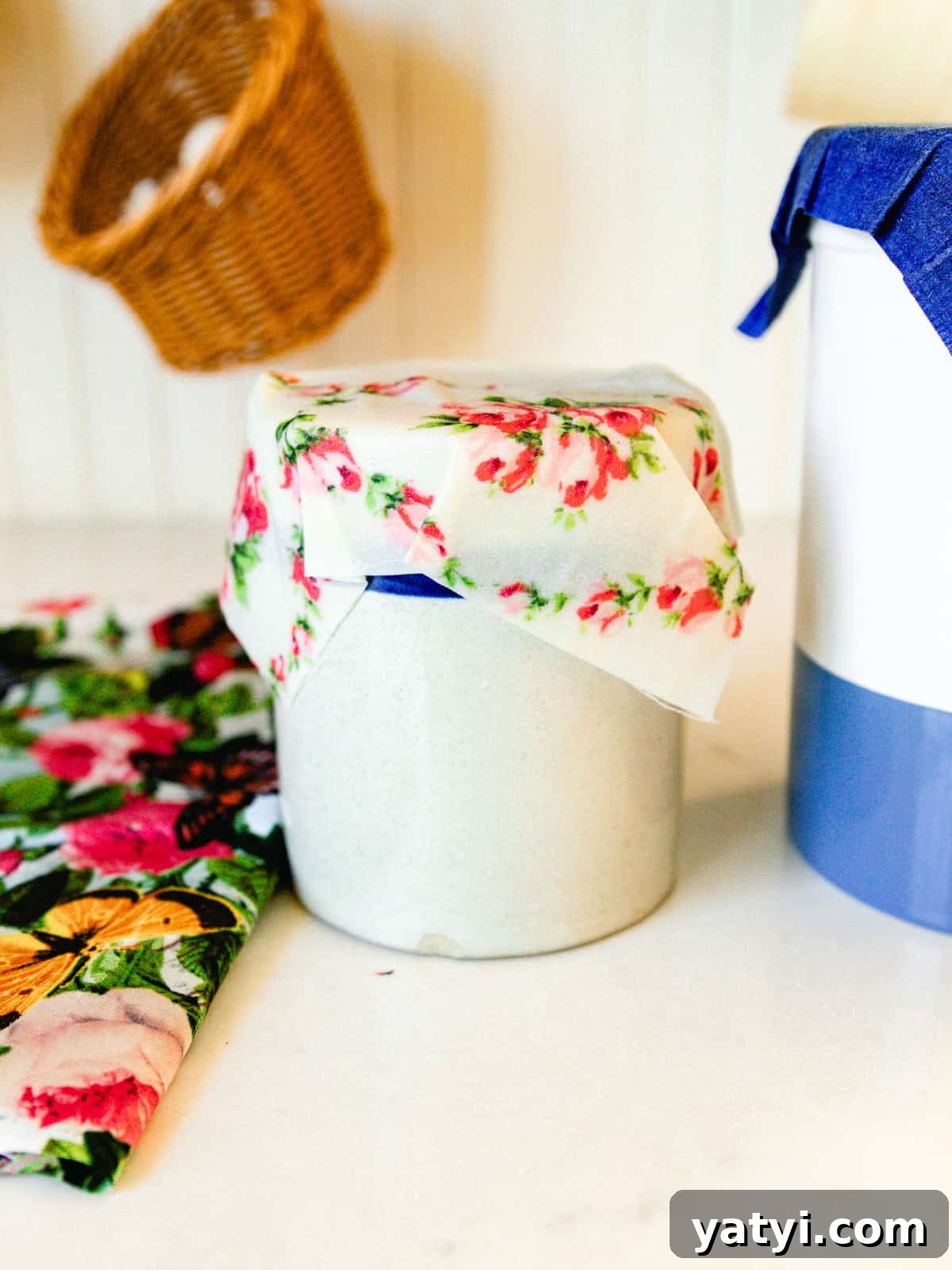
Learn how to make beeswax wraps with just two ingredients and a few simple steps. Homemade beeswax wraps are an affordable, eco-friendly way to replace single-use plastic wrap and keep food fresh. Made from natural materials, they’re reusable, biodegradable, and easy to customize to any size you need.
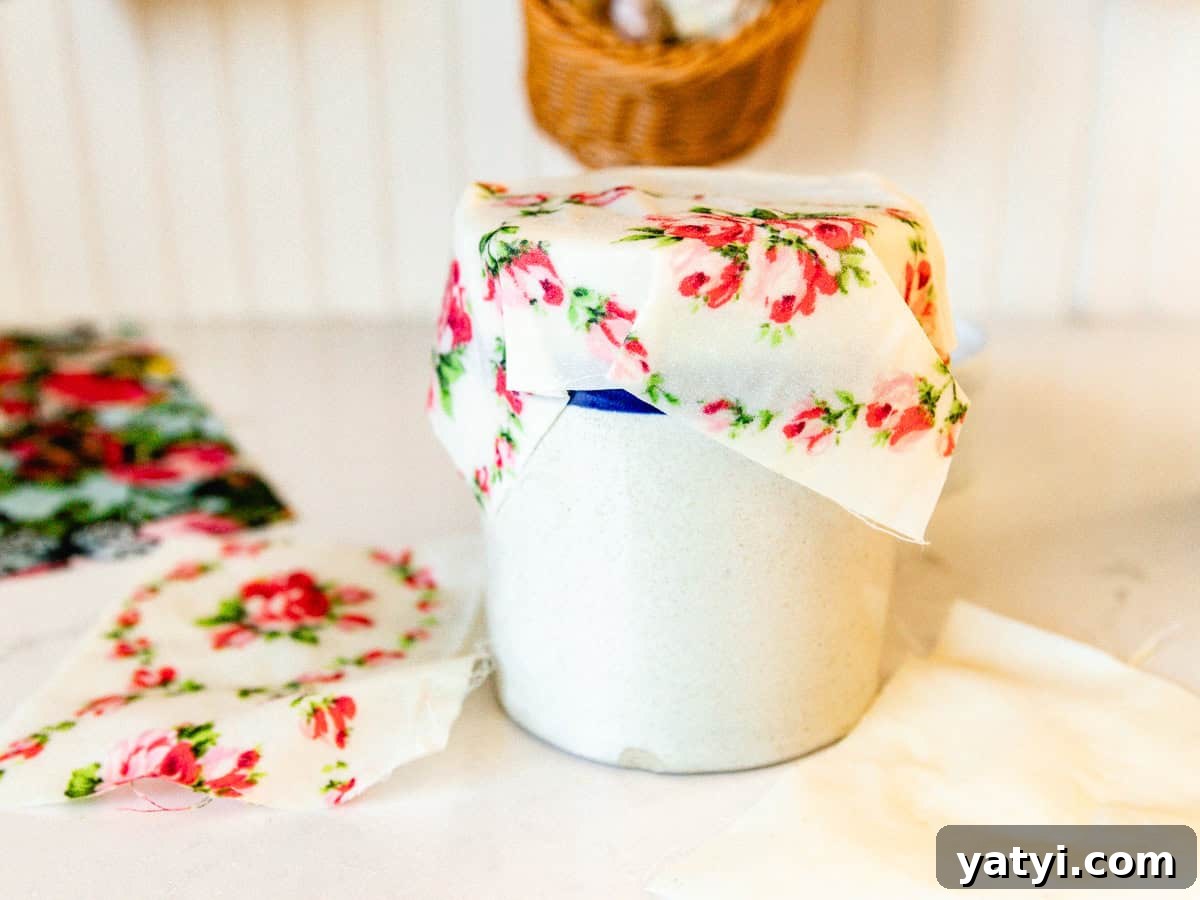
Early in my marriage I looked for small, practical ways to cut household costs. Making reusable items like cleaning wipes and dryer sheets reduced waste and saved money over time. That led me to beeswax wraps—simple, effective, and made from materials you can trust.
Beeswax wraps are fabric coated with beeswax that can be molded to cover bowls or wrap food. One wrap can replace many rolls of plastic wrap, sandwich bags, and foil, so they quickly pay for themselves in cost and environmental benefit.
While you can buy ready-made wraps, making them at home is fast, inexpensive, and satisfying. Below is an easy method to create durable, natural wraps using only fabric and beeswax.
Why You’ll Love Them
- Eco-friendly: Beeswax wraps are biodegradable and made from natural materials like 100% cotton and pure beeswax, helping reduce landfill waste from disposable wraps.
- Save money: Replacing single-use cling wrap and bags with reusable wraps saves money over time. Homemade wraps are far less expensive than store-bought alternatives.
- Natural materials: With only fabric and beeswax, you avoid synthetic additives coming into contact with food. Making them yourself also lets you control fabric quality and appearance.
Materials Needed
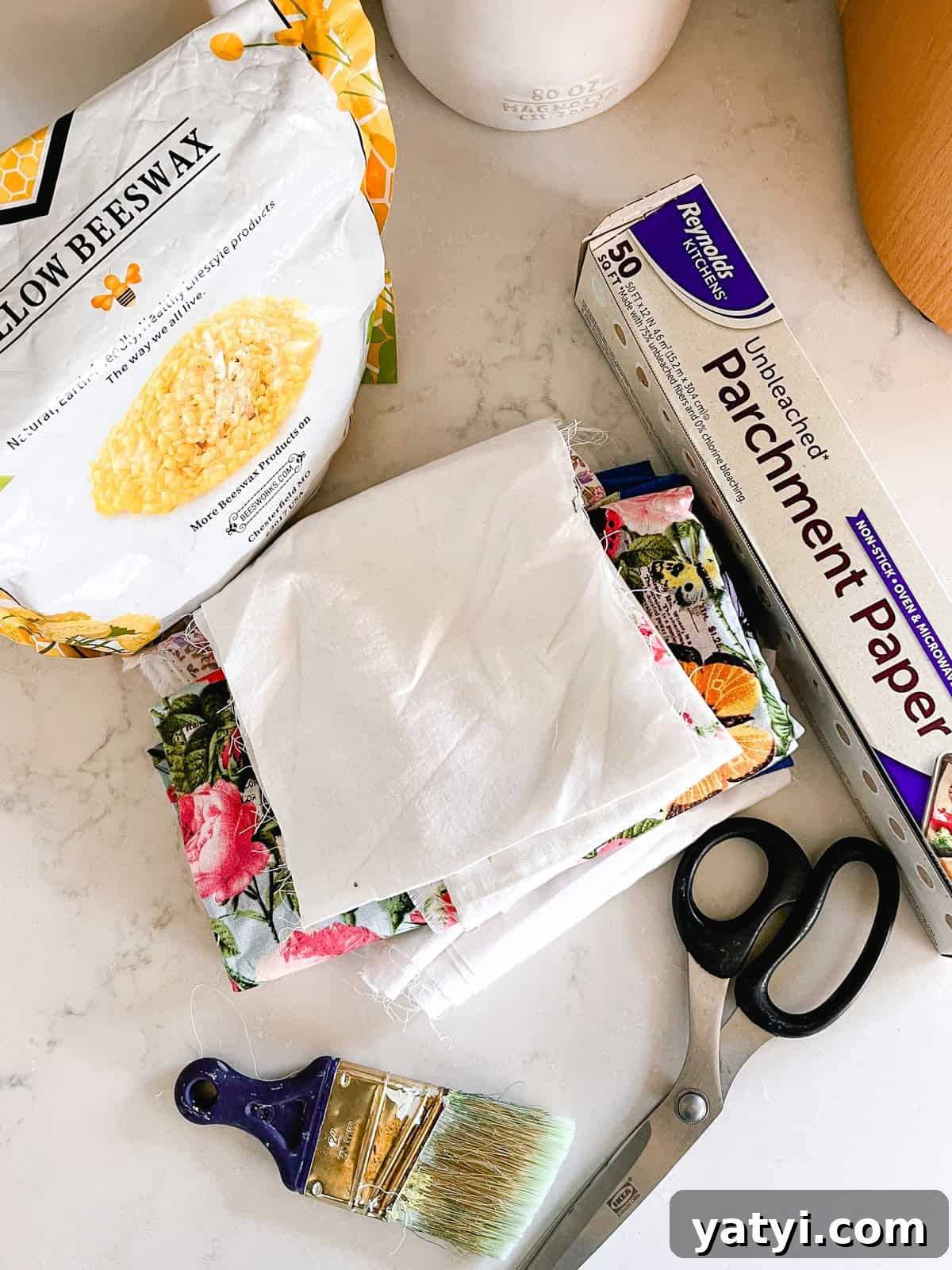
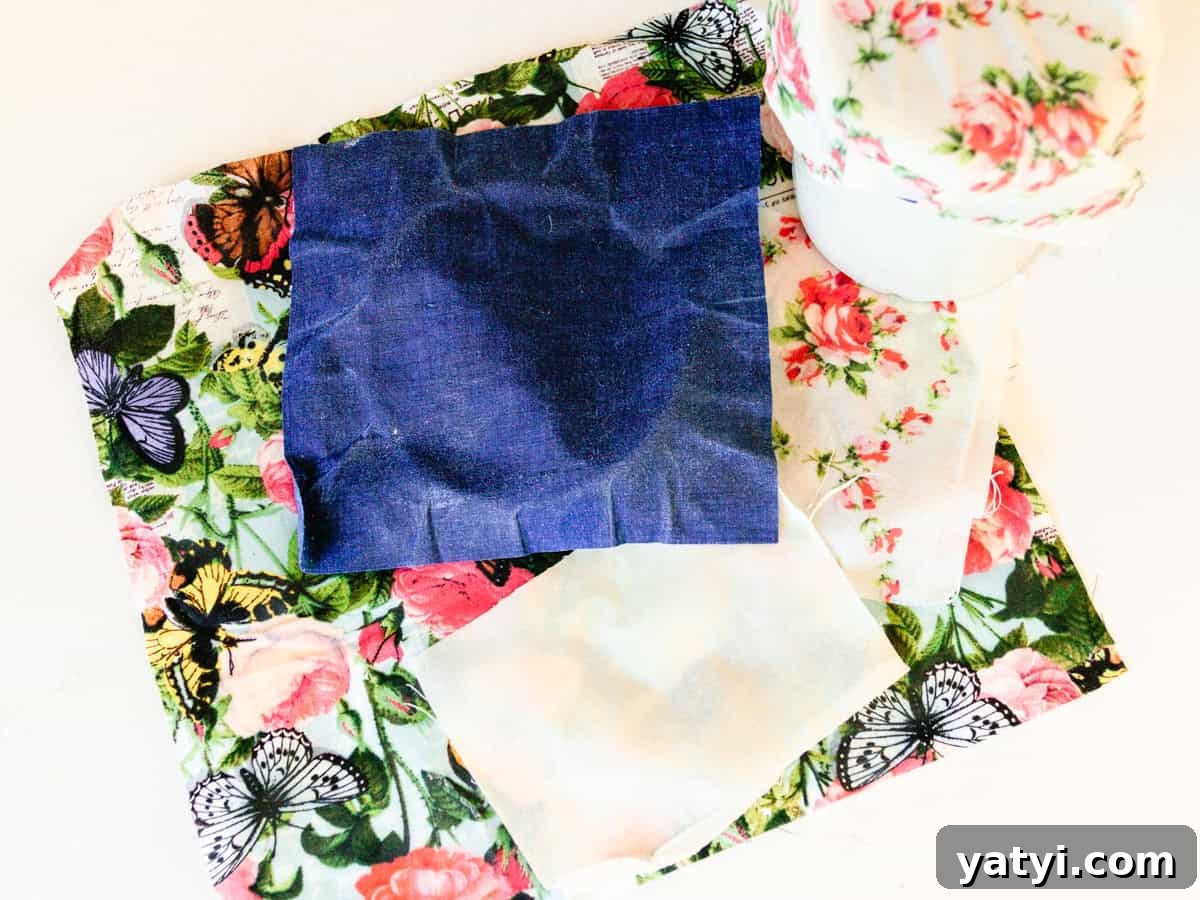
- Fabric (cut into squares or circles): 100% cotton works best. Use scrap fabric to make small wraps and reduce waste.
- Beeswax pellets or shredded beeswax: Pellets melt easily; you can also grate a block of beeswax with a cheese grater.
Tools
- Scissors or rotary cutter for clean edges.
- Paintbrush (or a piece of cardboard) to spread melted wax.
- Baking pan and parchment paper to protect the pan and make cleanup easier.
How to Make Beeswax Wraps
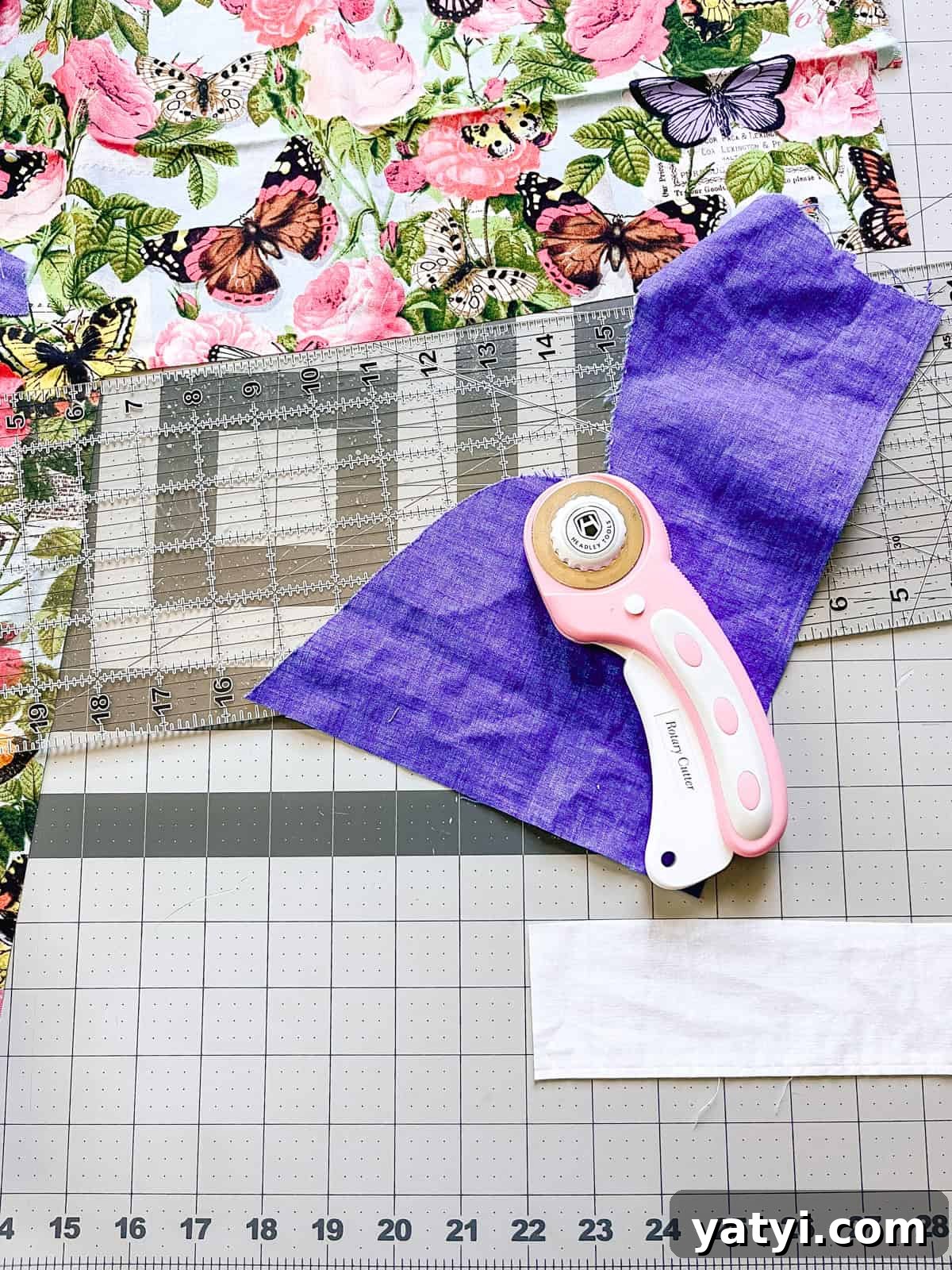
Step 1. Preheat your oven to 175°F (about 80°C). Cut the fabric into the shapes and sizes you want. Use plates, bowls, or cake pans as templates for round wraps.
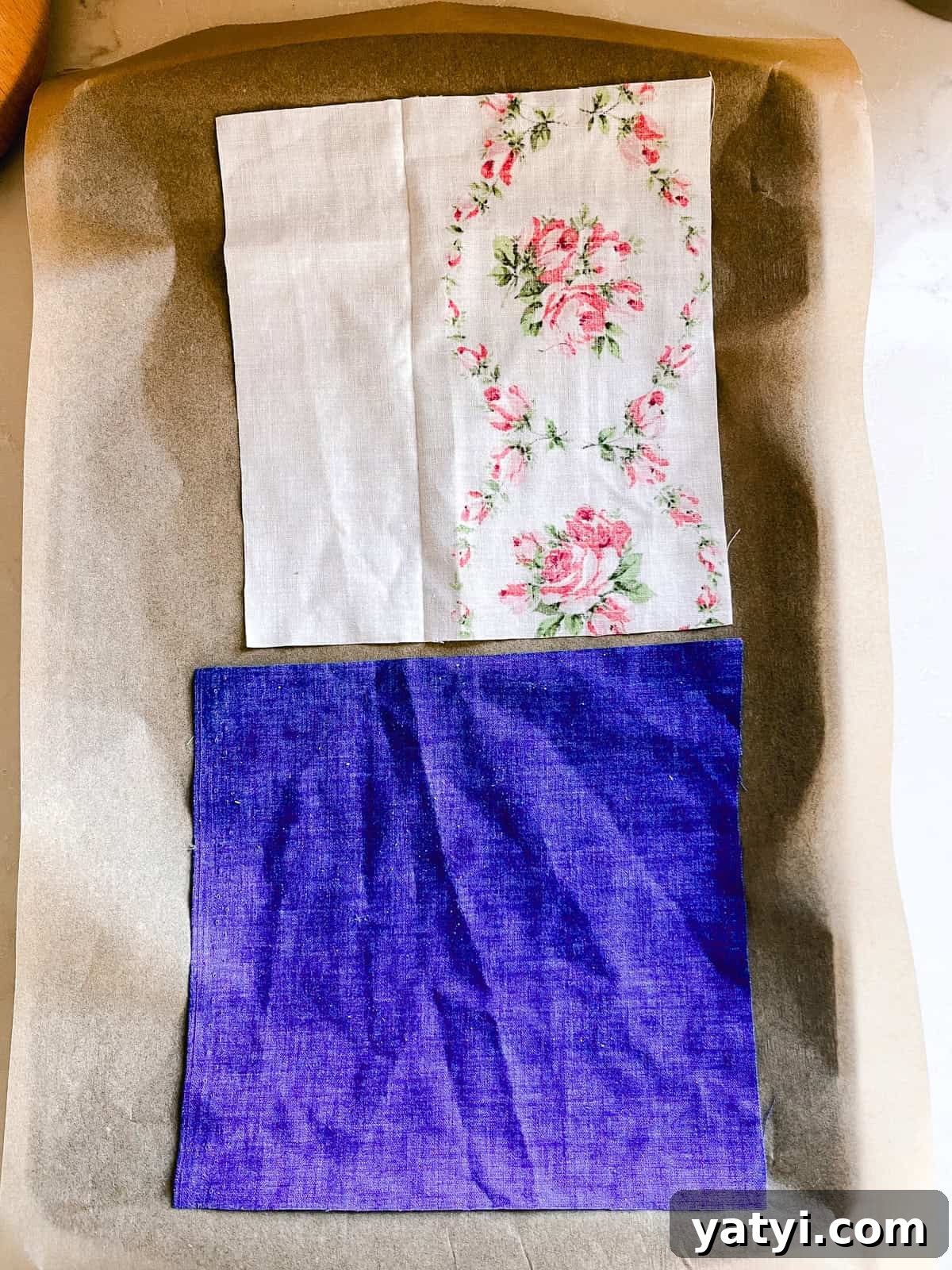
Step 2. Line a baking pan with parchment paper and arrange the fabric pieces on top so they lie flat and don’t overlap.
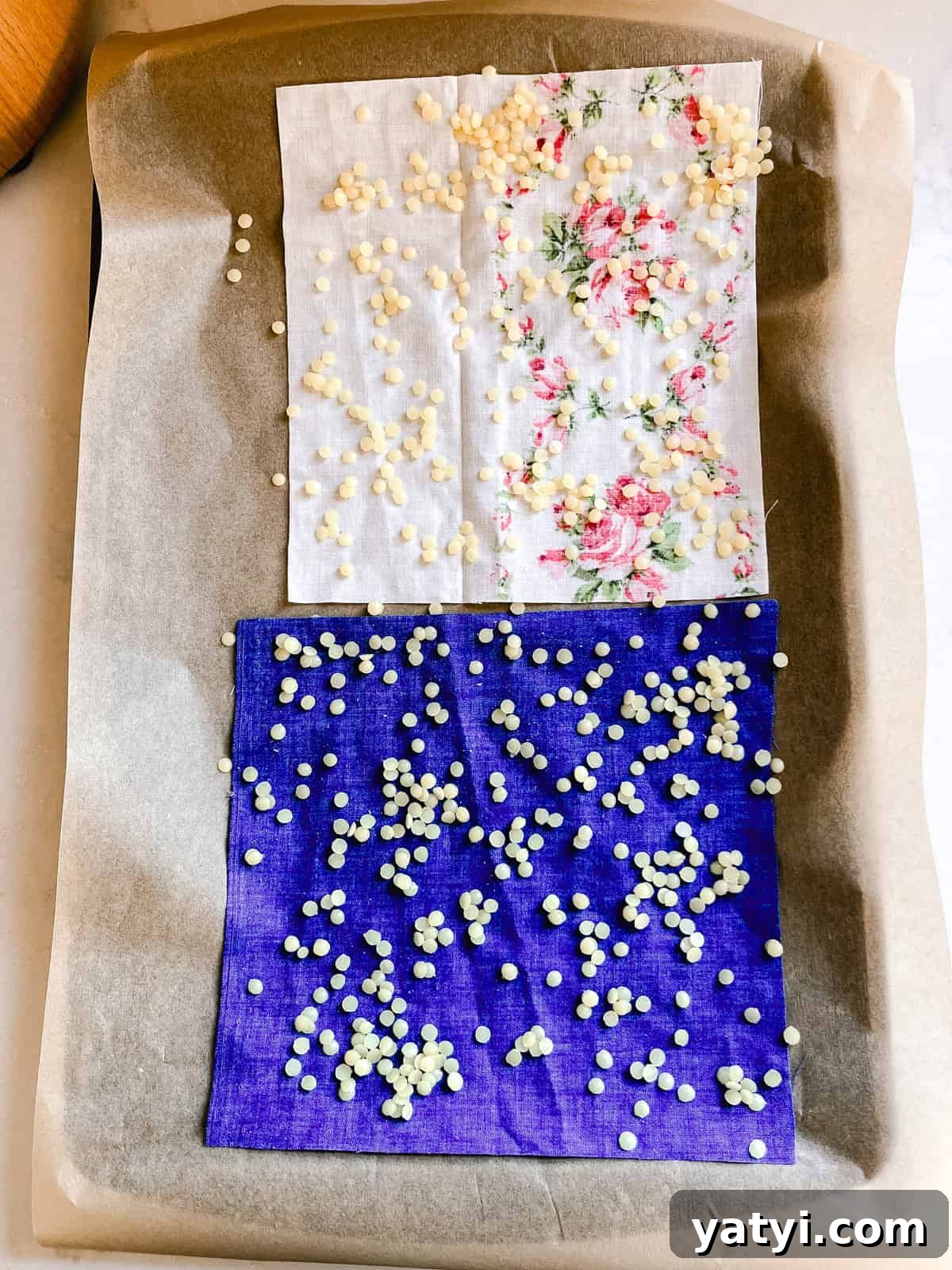
Step 3. Sprinkle a light, even layer of beeswax pellets across each fabric piece. Leave small gaps so the wax can spread rather than form a single thick puddle. If you’re using a block of beeswax, shred it first. Place the pan in the oven for about 4–6 minutes, or until the pellets melt completely.
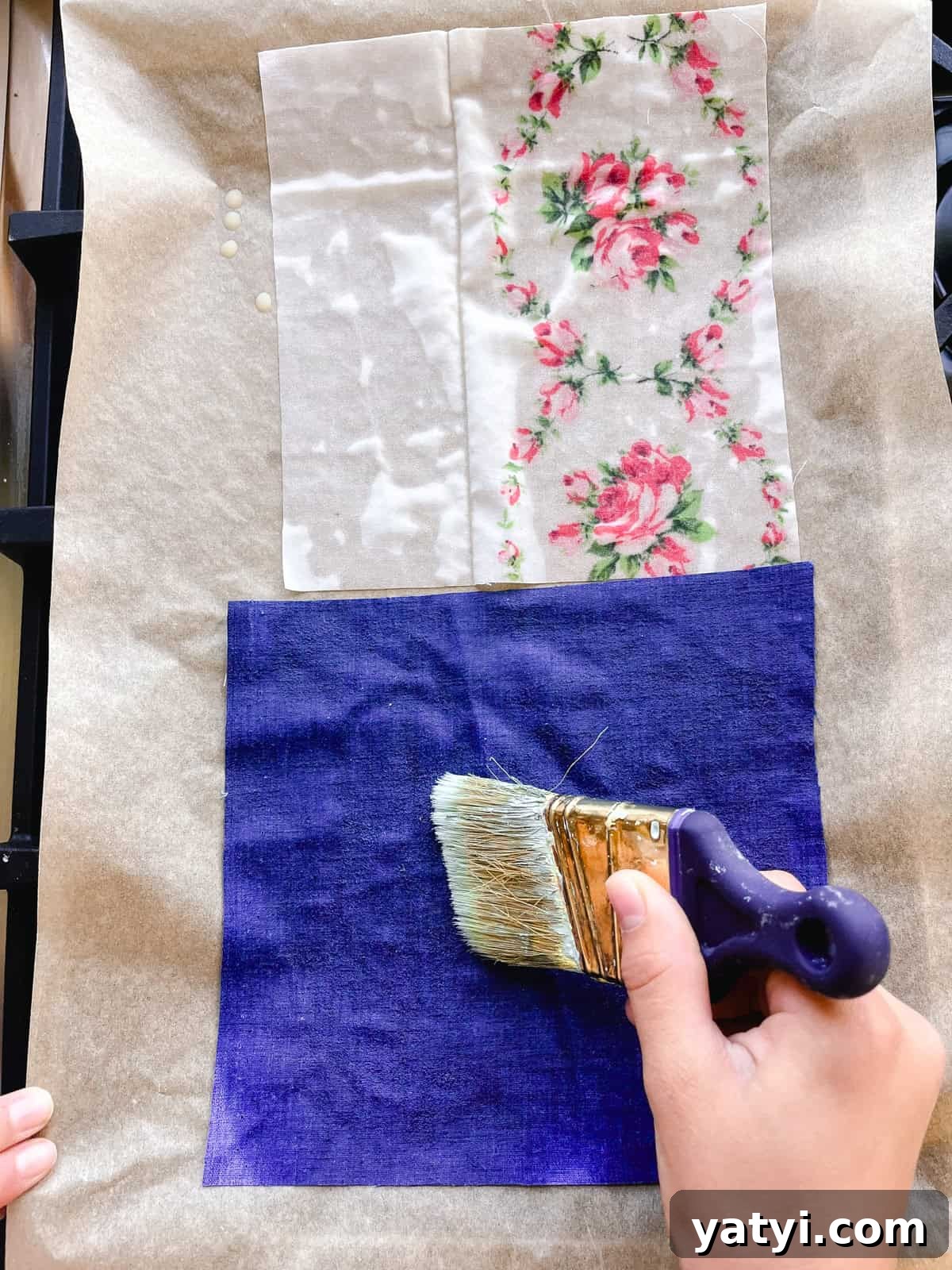
Step 4. Carefully remove the pan and, working quickly, brush the melted wax evenly over the fabric with a paintbrush or spread it with a piece of cardboard. The wax sets fast, so smooth it out while it’s warm.
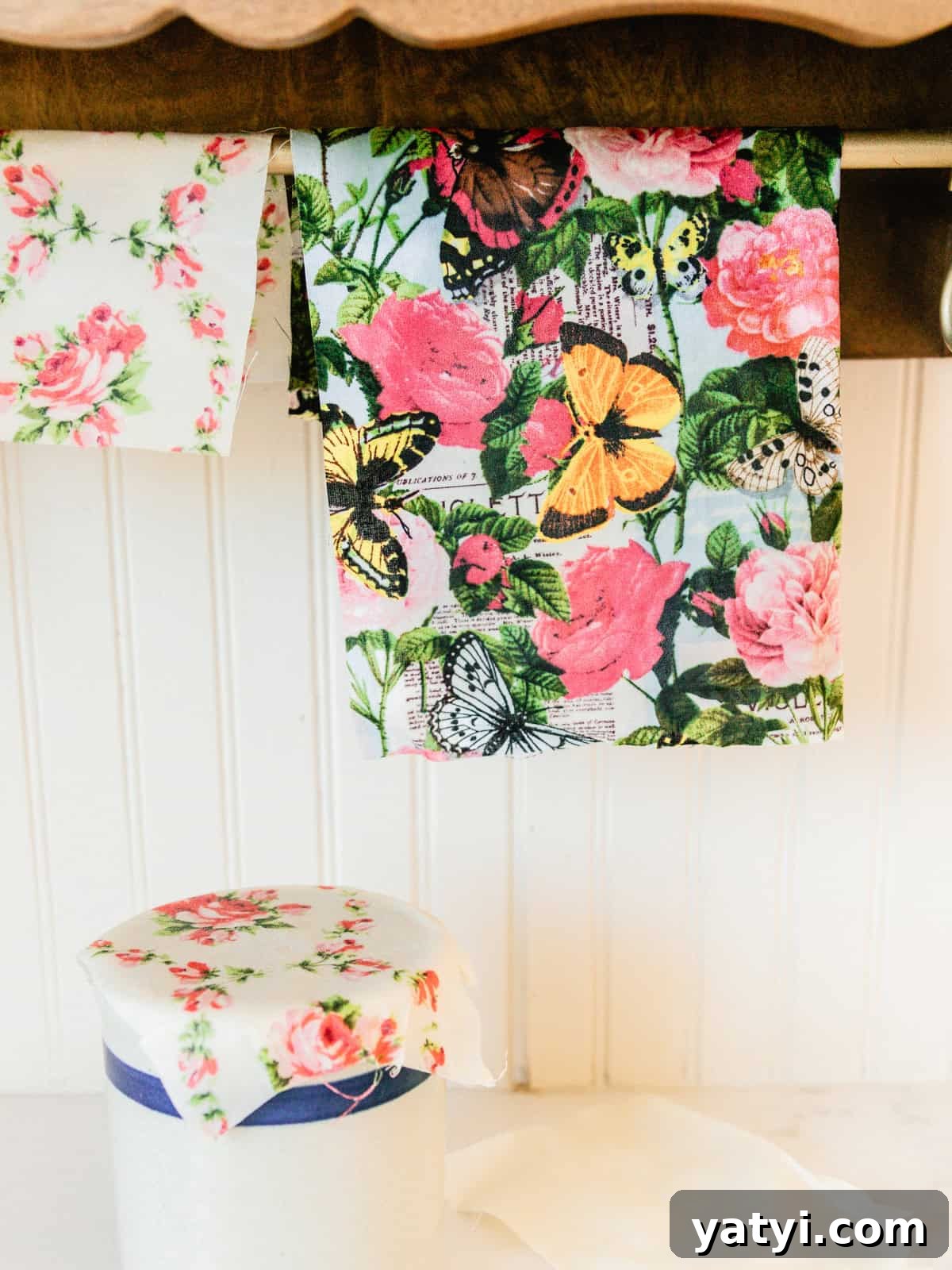
Step 5. Hang the fabric or lay it flat until the wax has fully hardened and the wrap is dry to the touch. This usually takes a few minutes.
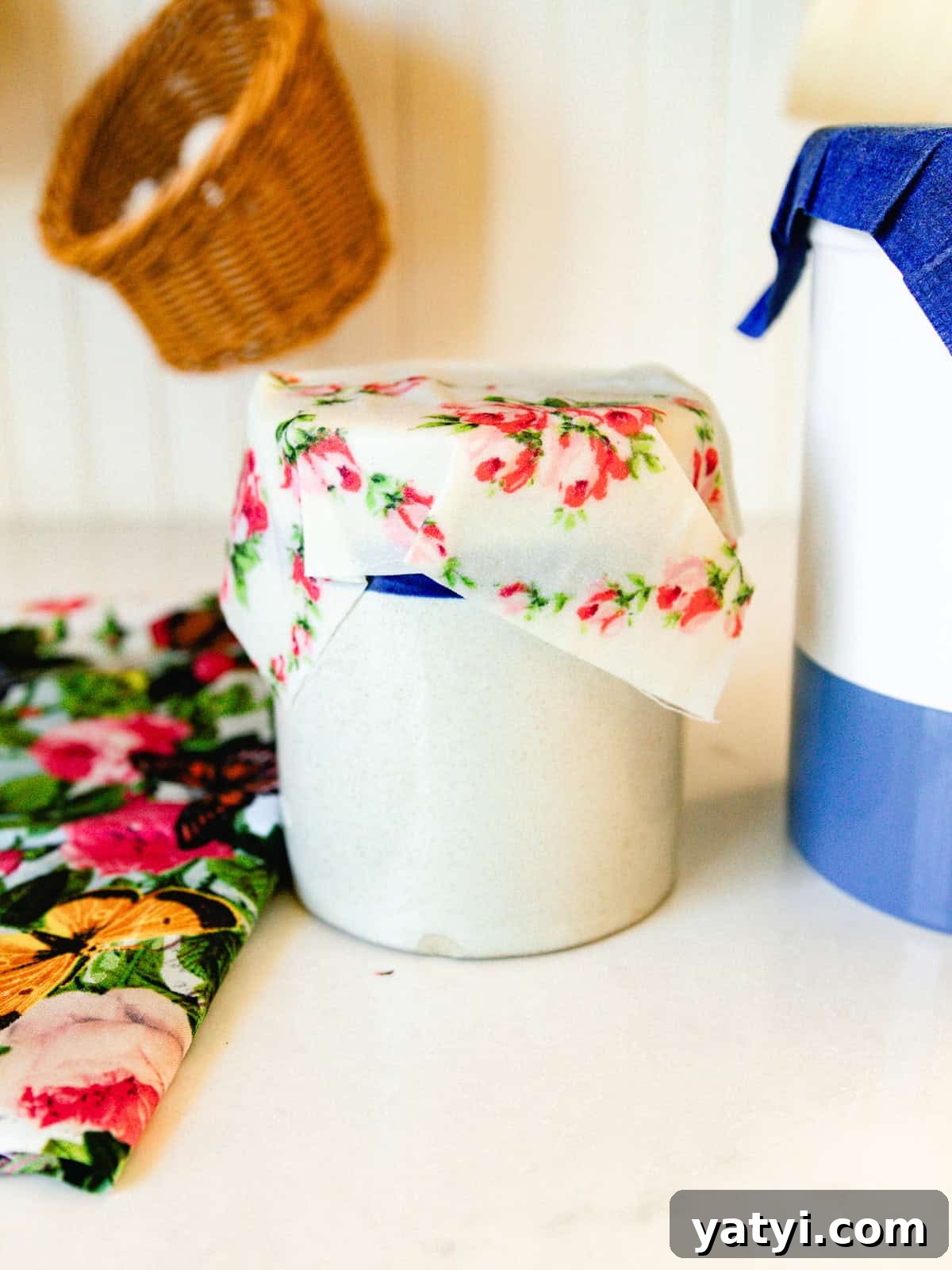
Step 6. Once hardened, the wraps are ready to use as bowl covers or to wrap sandwiches, produce, or half-cut fruits and vegetables.
How to Use Beeswax Wraps
Using beeswax wraps is simple. They cling and form a seal through the warmth of your hands. Follow these steps:
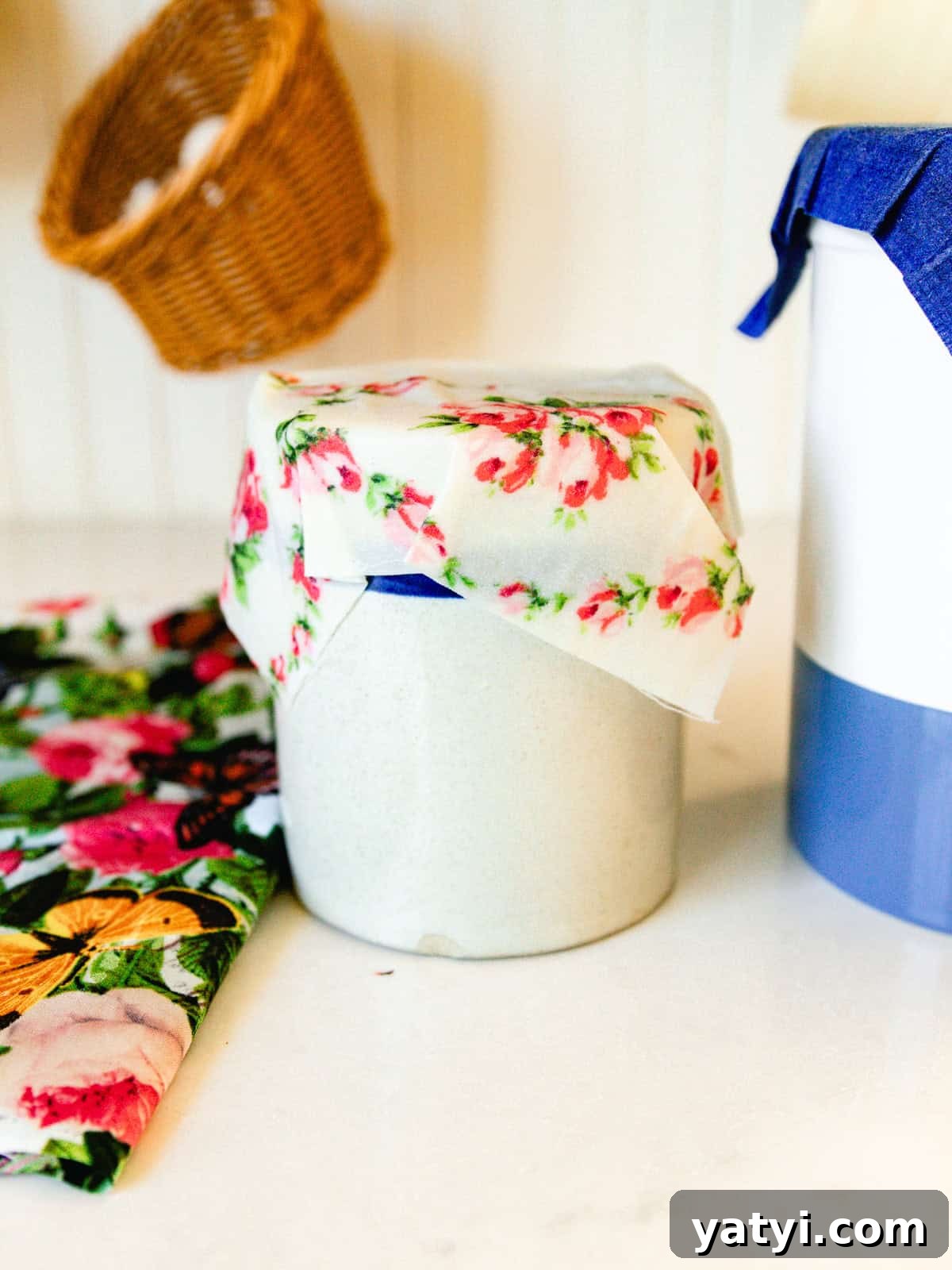
- Place the wrap over a bowl, plate, or food item.
- Press gently with your hands to create a seal.
- Let the warmth of your hands soften the wax so it molds to the shape.
When cleaning, hand wash in cold water with a mild dish soap and hang to dry. Do not use warm or hot water, as heat can soften and remove the wax coating.
Expert Tips
- Use only a light layer of beeswax; fabric thickness and size will determine how much you need.
- Work quickly after removing the pan from the oven—the wax sets fast.
- Handle the hot pan and melted wax with oven mitts to avoid burns.
- Avoid letting beeswax go down the sink during cleanup to prevent clogged drains.
Recipe FAQs
When wraps become less sticky or pliable, refresh them by adding another thin layer of beeswax using the same oven-and-brush method. This extends their usable life.
Yes. Make a larger wrap to cover loaves, or sew two wraps together to form a bag and roll the top closed. Aim for a size roughly twice the length of your loaf for an easy fit.
Do not use beeswax wraps with warm or hot foods—allow items to cool first. Avoid wrapping raw meat or fish to prevent contamination.
Related Recipes
- Homemade Wood Balm
- DIY Beeswax Furniture Polish
- How to Make Candle Wax Melts
- How to Make Beeswax Soap
- 15+ Creative Ways to Use Beeswax
If you try these homemade beeswax wraps or another tutorial from this site, please leave a star rating and share your experience in the comments. Thanks for visiting!
Homemade Beeswax Wraps
Equipment
- Scissors or a rotary cutter
- Paintbrush or a piece of cardboard
- Baking pan lined with parchment paper
Ingredients
- Fabric, cut into squares or circles
- Beeswax pellets or shredded beeswax
Instructions
- Preheat oven to 175°F. Cut fabric into desired shapes, using plates or bowls as templates.
- Line a baking pan with parchment paper and place fabric pieces on top.
- Sprinkle a thin, even layer of beeswax pellets over each piece and place the pan in the oven until the beeswax melts (about 4–6 minutes).
- Carefully remove the pan and spread the melted wax evenly across the fabric with a paintbrush or cardboard.
- Hang or lay the wraps flat until the wax has hardened.
How to Use Beeswax Wraps
- Place the wrap over a bowl, plate, or food item.
- Press gently with your hands to form a seal.
- Allow the warmth of your hands to soften the wax so it molds into place.
Notes
- Hand wash in cold water and hang to dry; avoid hot water.
- Use a light layer of beeswax; fabric size and thickness will affect how much you need.
- Work quickly when spreading wax as it hardens fast.
- Use oven mitts when handling hot pans and melted wax.
- Prevent beeswax from entering the sink to avoid clogs.
- Refresh wraps by reapplying beeswax when they lose stickiness.