What Rice Does in Place of Egg
The secret is one word: starch. When rice simmers slowly in hot milk, the grains swell and release amylose, which thickens the liquid. This gelatinization gives body to the base the same way an egg yolk does in a traditional ice cream. Rice therefore acts as a natural binder, eliminating the need for eggs.
This approach is well known in Italy. Sicilian gelato often avoids eggs by using cornstarch, while Florentine gelato di riso relies on Arborio rice. By absorbing free water, the starch also helps limit the formation of large ice crystals, which explains the smoother mouthfeel.
The rest of the creaminess comes from full-fat whipping cream (30% fat), which brings a rich, fatty softness. Sugar lowers the freezing point, preventing the ice cream from turning into a rock-hard block. This rice-based frozen dessert is not new; it’s a cousin to Italian gelato di riso and the Indian kulfi.
Ingredients for Rice Ice Cream
- 120 g round rice
- 1 L whole milk
- 120 g light brown or blond sugar
- 2 vanilla beans (or 2 tsp natural vanilla extract)
- 1 pinch of salt
- 250 ml full-fat cream (minimum 30% fat)
Steps: From Rice Pudding to Ice Cream
- Start by giving the rice a quick rinse under cold water to remove surface starch.
- In a large saucepan combine the drained rice, milk, sugar and salt. Split the vanilla beans lengthwise, scrape out the seeds and add both the seeds and pods to the milk.
- Cook over very low heat, just below a simmer, and let the rice soften for 35–40 minutes, stirring occasionally, until the mixture becomes thick and creamy.
- Off the heat, remove the vanilla pods and let the mixture cool slightly. Add the well-chilled cream and blend thoroughly with a hand blender until no grain remains.
- Cover and chill the base in the refrigerator for at least two hours.
- If you have an ice cream maker, pour the mixture in and churn until soft and ribbon-like. If not, spread the base in a wide, shallow dish and break it up with a fork every half hour for about three hours to interrupt ice crystal formation.
No Ice Cream Maker? The Fork Trick to Prevent Crystals
This technique is essential when you don’t own a machine. Place the chilled base in a flat, wide container so it freezes faster from the edges inward. Every 30 minutes, remove the container and vigorously break the frozen layer with a fork, folding the edges toward the center. Repeat for roughly three hours, about five to six times in total.
Success depends on controlling ice crystal size. Without agitation, water forms large crystals that crunch under the spoon. By regularly breaking and stirring the mass you fragment those crystals and incorporate some air, keeping the texture smooth. Don’t expect the same pillowy lightness as a professional machine: homemade rice ice cream will be pleasant but slightly denser.
For storage, plan on 1–2 weeks of optimal texture in an airtight container with a plastic wrap layer directly on the surface. After that, an iced flavor may develop because this recipe contains no stabilizers. Remember to remove the ice cream from the freezer a few minutes before serving so it softens slightly.
Variations and Serving Suggestions
The vanilla base is only a starting point. You can whisk in a spoonful of matcha for a green, slightly bitter variation, or replace part of the milk with coconut milk and coconut cream for a tropical twist. Black sesame blended into a paste also makes a strikingly flavorful, almost gray ice cream with a roasted note.
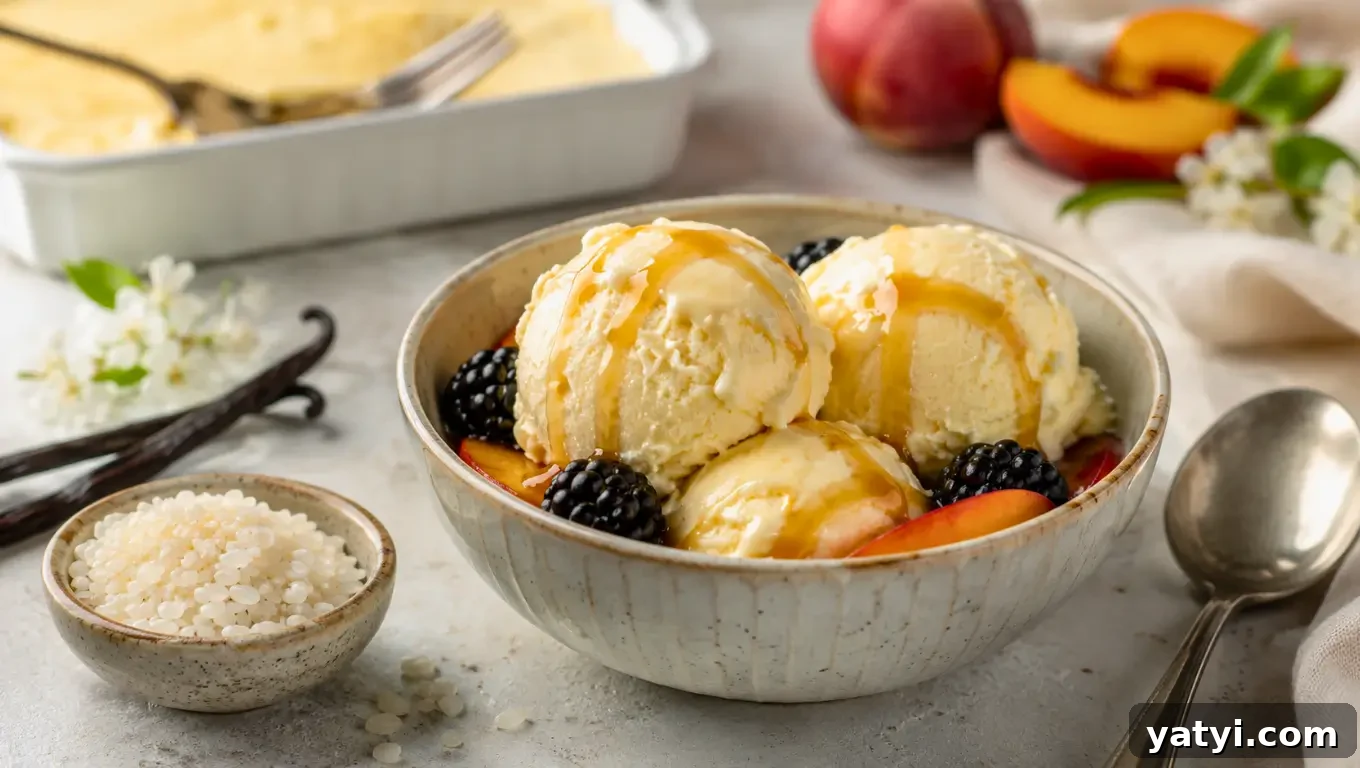
To serve, a drizzle of caramel over a scoop is always appealing. In summer I prefer pairing the rice ice cream with seasonal fruit: quartered figs, sliced nectarines or bursting blackberries complement the creamy base beautifully. It’s a simple way to enjoy a refined frozen dessert without investing in specialized equipment.