
Should my toddler be drinking almond milk? Is almond milk similar to cow’s milk? Read on to learn more.
We usually have at least three different kinds of milk in our refrigerator. I admit I’m indecisive, and having options is convenient. Our variety of milks developed organically over time.
Here’s how our household breaks down: my son drinks whole or 2% milk, depending on which organic option is more affordable that week. I’m lactose intolerant, so I could buy lactose-free milk for both of us, but I prefer almond milk in my smoothies. My husband discovered coconut milk in his coffee once and now prefers it, so I keep a carton for him each week.
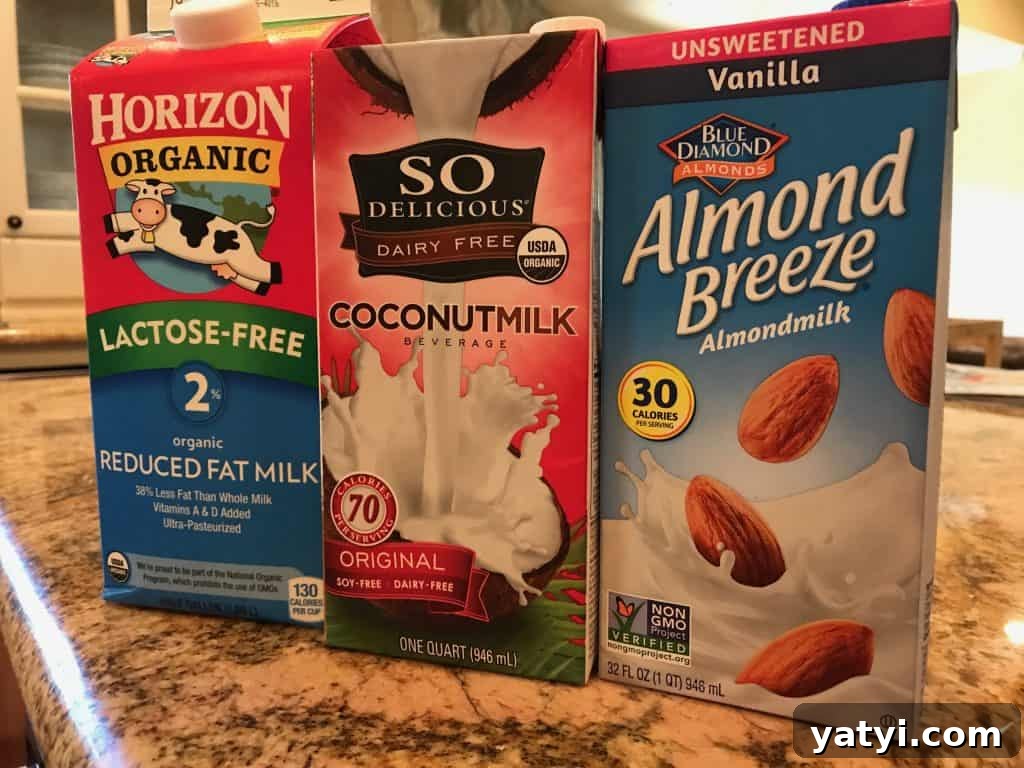
I choose my son’s milk largely for nutritional reasons, while my husband and I pick ours based on taste.
Many parents hesitate to switch their child to cow’s milk after the first birthday. That hesitation makes sense given the mixed messages about dairy. Today I want to focus specifically on almond milk, which is a very popular non-dairy option. Some people give almond milk to toddlers instead of cow’s milk, assuming that because it’s called “milk” it must be nutritionally similar.
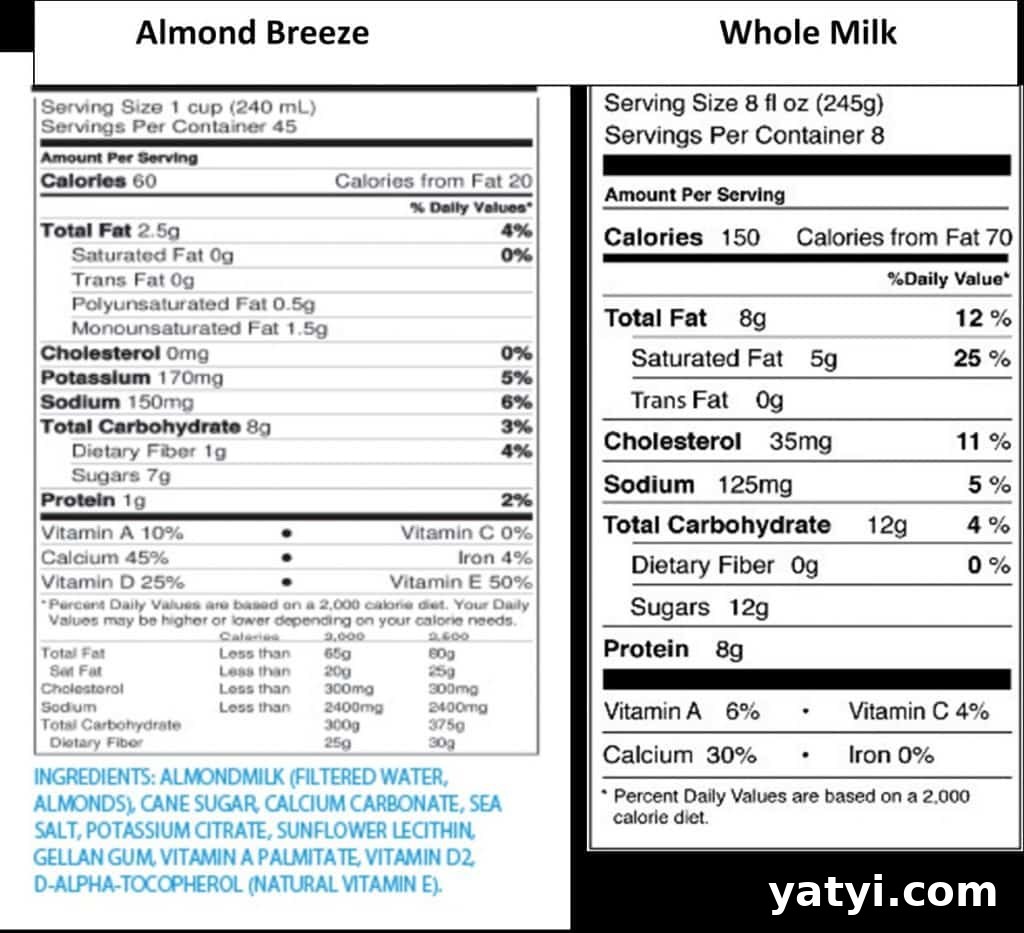
But nutrition labels tell a different story. Let’s compare Almond Breeze (original) with whole cow’s milk to highlight the differences.
Calories
Almond Breeze contains less than half the calories of whole milk. That lower calorie content can help adults aiming to lose weight, but toddlers have different needs. A toddler’s primary job is growth. They require plenty of calories to support rapid physical development and brain growth. Toddlerhood is not the time to restrict calories. Substituting cow’s milk or breast milk with almond milk may reduce the calories available to a young child, which is not ideal at this stage.
To put it in perspective: my two-year-old son weighs about 30 pounds and needs roughly 1,100 calories per day based on common energy estimation equations. Many adults consume between 1,200 and 1,600 calories daily. That means a two-year-old, who weighs about a quarter of an adult’s size, needs nearly as many calories as an adult. Their appetites can be astonishing, and energy-dense foods are generally appropriate during this growth period.
Protein
Almonds are a good source of protein, but almond milk is largely water. When water is the first ingredient, there is more water than almonds, so commercially prepared almond milk is closer to flavored water than to cow’s milk or breast milk. A cup of almond milk typically provides about 1 gram of protein, while a cup of cow’s milk offers around 8 grams.
Protein needs for toddlers are modest but important. I rely on the protein in milk and yogurt for my son because he isn’t currently interested in eating much meat. If a toddler avoids animal proteins, the protein that would typically come from milk becomes more important. For toddlers with limited intake of other protein sources, a low-protein beverage like almond milk may leave a nutritional gap.
In conclusion…
I’m not saying toddlers can never have almond milk. My aim is to dispel the misconception that almond milk and cow’s milk (or breast milk) are nutritionally equivalent. Despite sharing the word “milk,” these beverages differ significantly in calories, protein, and other nutrients.
If a toddler is allergic to cow’s milk or refuses it, there are alternative beverages that more closely match the nutritional profile of dairy. One example that has gained attention is a pea-based milk that provides about 8 grams of protein per cup.
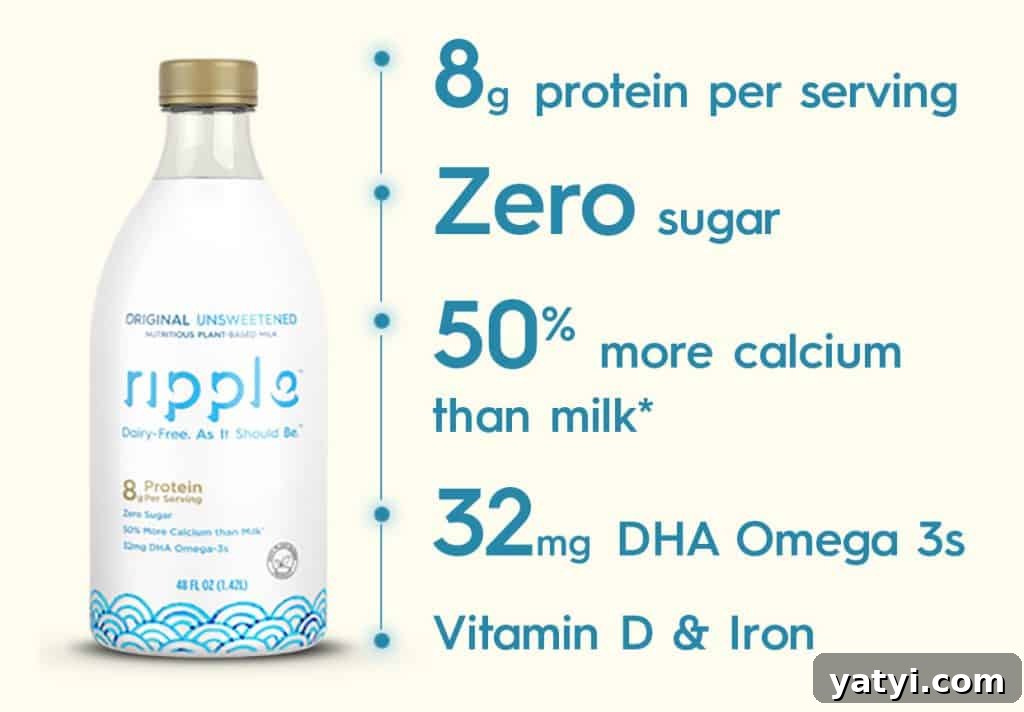
I haven’t tried that specific product myself, but it’s reported to contain a similar protein content to cow’s milk.
Your toddler can thrive without cow’s milk or a milk alternative, but if you remove milk from their diet it’s wise to consult a registered dietitian to ensure they receive adequate nutrients for healthy growth.
——–
Need some healthy breakfast ideas for your little one?
When I think about toddlers and milk, breakfast immediately comes to mind. Mornings can be hectic, and having quick, nutritious breakfast ideas helps on days when I’m tired or running late.
If you need easy, healthy breakfast inspiration for a toddler, consider simple options like yogurt with fruit, oatmeal with nut butter, scrambled eggs and toast, or whole-grain pancakes with fruit. These choices pair well with milk and provide a balance of calories, protein, and carbohydrates to support growing children.