Bringing Plant Protein to Your Plate
If you read my earlier piece, Understanding Plant Protein: Getting Enough for Strength, Balance, and Health, you already know how essential protein is for strength, energy, and healthy aging. This article focuses on practical ways to bring that knowledge to the table—literally—by filling your plate with satisfying, protein-rich plant foods that help you stay strong and thrive at every stage of life.
This guide explains what to eat, why it matters, and how to combine foods so you get the full range of amino acids your body needs.
Delicious and Nourishing Plant-Based Protein Sources
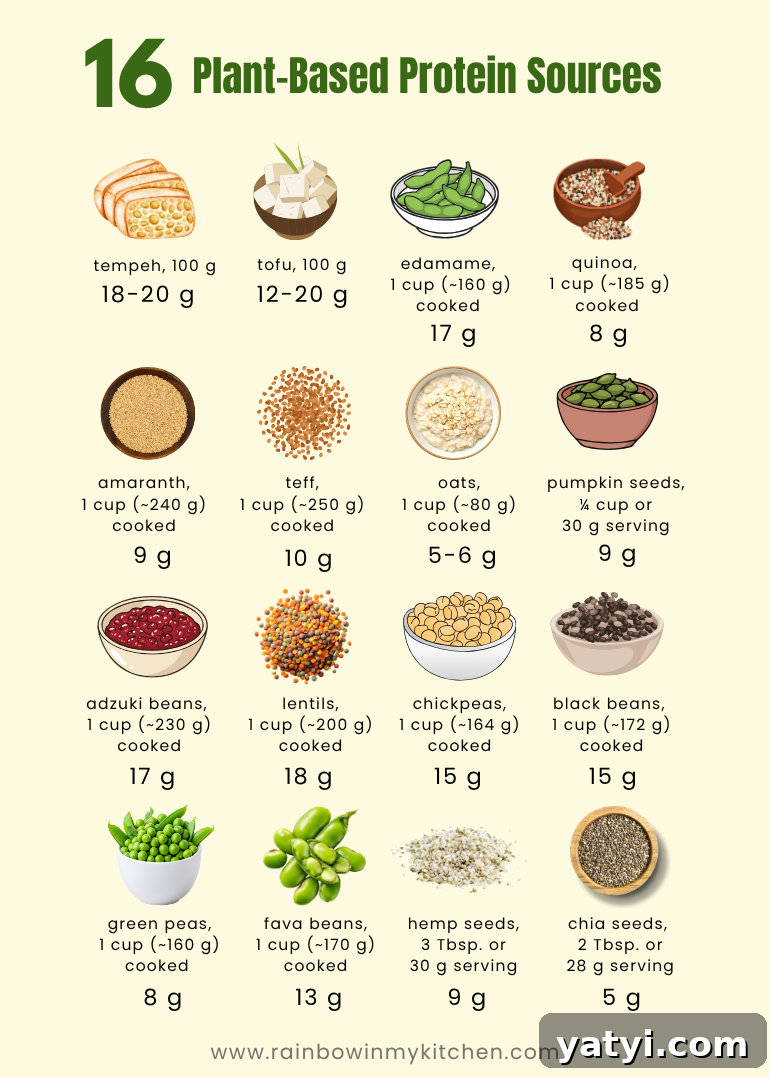
Many people worry that vegetarian or vegan diets don’t provide enough protein. In reality, whole plant foods—legumes, grains, seeds, and soy products—can supply ample protein and, when eaten in variety, provide all essential amino acids. Below are 16 nutrient-dense plant proteins to incorporate into everyday meals. Each offers a unique mix of vitamins, minerals, textures, and flavors that make healthy eating enjoyable.
1. Tempeh
Tempeh is made from fermented soybeans and delivers about 18–20 grams of protein per 100 grams. Fermentation improves digestibility and adds beneficial microbes for gut health. Its firm, nutty texture works well in stir-fries, sandwiches, and grain bowls. Marinate and bake tempeh for a hearty, protein-packed addition to meals.
2. Tofu
Tofu provides roughly 12–20 grams of protein per 100 grams, depending on firmness. Silken tofu is lighter and higher in water, while firm and extra-firm varieties are denser and more protein-rich. Tofu absorbs flavors well and is versatile—from scrambles and curries to smoothies and desserts. Choose calcium-set tofu for extra mineral content.
3. Edamame
Young soybeans make a simple, satisfying snack. One cup of cooked edamame (about 160 g) contains around 17 grams of protein, plus fiber, folate, and vitamin K. Edamame is a complete protein and works great in salads, noodle bowls, or enjoyed lightly salted.
4. Quinoa
Quinoa is a rare plant-based complete protein, offering about 8 grams per cooked cup (185 g) and all nine essential amino acids. It’s also a good source of magnesium, iron, and fiber. Use quinoa in salads, pilafs, or breakfast bowls for a light, nutty base.
5. Amaranth
Amaranth, an ancient grain, supplies about 9 grams of protein per cooked cup (240 g). Like quinoa, it’s a complete protein and rich in iron, calcium, and magnesium. With a slightly earthy flavor and creamy texture, amaranth is excellent in porridge, soups, or as a rice substitute.
6. Teff
Teff is tiny but nutrient-dense. A cooked cup (around 250 g) provides about 10 grams of protein along with calcium and resistant starch that supports gut health. Traditionally used for injera bread, teff also works in porridge, pancakes, and baked goods.
7. Oats
Oats offer about 5–6 grams of protein per cooked cup (80 g) and deliver high levels of beta-glucan fiber, which supports healthy blood sugar and cholesterol. Use oats for porridge, smoothies, and granola; add nuts or seeds to round out the amino acid profile.
8. Hemp Seeds
Three tablespoons (about 30 g) of hemp seeds provide roughly 9 grams of protein. They’re rich in omega-3 and omega-6 fats and have a mild, nutty flavor that’s easy to sprinkle over smoothie bowls, salads, soups, or oatmeal.
9. Pumpkin Seeds (Pepitas)
About a quarter cup (30 g) of pumpkin seeds has close to 9 grams of protein and delivers magnesium, zinc, and antioxidants. Lightly roast them for snacks or use as a crunchy topping on soups and salads.
10. Lentils
Lentils provide roughly 18 grams of protein per cooked cup (200 g), along with fiber, iron, and folate. They cook quickly and come in several varieties—green, brown, red, and black—each with its own texture and flavor. Use lentils in soups, stews, curries, and salads for filling, protein-rich meals.
11. Chickpeas
Chickpeas (garbanzo beans) contain about 15 grams of protein per cooked cup (164 g). They’re extremely versatile: blend into hummus, add to curries, or roast with spices for a crunchy snack. Chickpeas also supply iron and fiber to keep you full and energized.
12. Black Beans
Black beans offer about 15 grams of protein per cooked cup (172 g), plus antioxidants, folate, and magnesium. Use them in tacos, burritos, chili, or grain bowls. Combining black beans with whole grains like brown rice gives you a complete amino acid profile.
13. Green Peas
One cup of green peas (160 g) provides about 8 grams of protein, along with vitamins A, C, and K. Peas are excellent in soups, risottos, and dips. Pea protein powder is also available as an allergen-friendly option for shakes and smoothies.
14. Fava Beans
Fava (broad) beans contain around 13 grams of protein per cup (170 g) and are rich in iron, potassium, and fiber. Their buttery flavor suits Mediterranean-style dips or simple preparations with olive oil, lemon, and fresh herbs.
15. Adzuki Beans
Adzuki beans pack about 17 grams of protein per cooked cup (230 g) and have a slightly sweet flavor. Common in East Asian cuisines, they work in soups, stews, and even desserts. They’re also a good source of potassium and folate.
16. Chia Seeds
Two tablespoons (about 28 g) of chia seeds provide roughly 5 grams of protein, plus omega-3s, fiber, and antioxidants. When soaked they form a gel ideal for puddings, overnight oats, or as an egg substitute in baking. The high fiber content supports digestion and steady energy.
Understanding Amino Acids and Complete Proteins
Proteins are chains of amino acids—the building blocks your body uses to repair tissues, build muscle, and produce hormones and enzymes. Of the 20 amino acids your body needs, nine are essential and must come from food because the body cannot make them.
The nine essential amino acids are histidine, isoleucine, leucine, lysine, methionine, phenylalanine, threonine, tryptophan, and valine.
Some plant foods are complete proteins on their own. Soy-based foods like tofu and tempeh, quinoa, hemp seeds, and chia seeds provide all nine essential amino acids. Most other plant proteins—lentils, chickpeas, beans, peas, and grains—are lower in one or two amino acids. Eating a variety of plant foods throughout the day allows your body to combine amino acids naturally and form a complete profile.
How to Combine Plant Proteins for the Best Nutrition
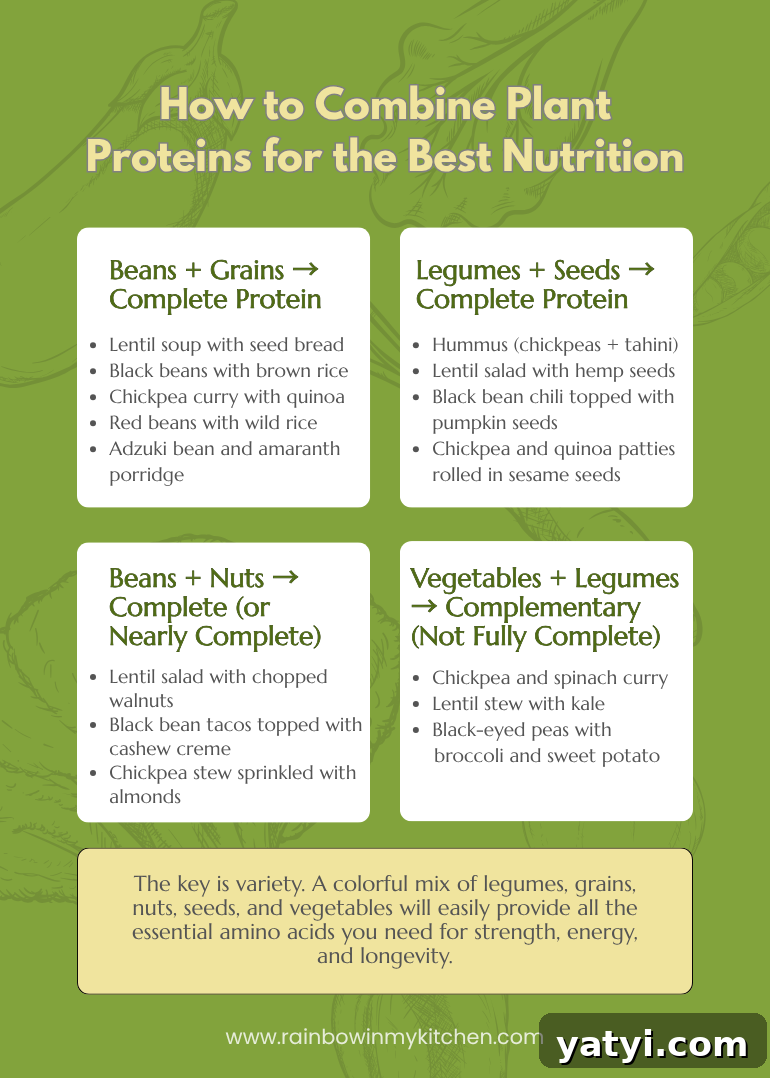
Two amino acids that often differ between plant foods are lysine and methionine. Legumes are typically high in lysine but lower in methionine; grains, nuts, and seeds tend to be higher in methionine but lower in lysine. Pairing these foods creates complete, balanced proteins without relying on animal products.
Below are five straightforward ways to combine plant foods for optimal protein balance.
1. Beans + Grains → Complete Protein
Legumes provide lysine while grains supply methionine. Together they create a complete protein with all nine essential amino acids.
Examples:
- Lentil soup with whole-grain bread
- Black beans with brown rice
- Chickpea curry with quinoa
- Adzuki bean and amaranth porridge
2. Beans + Nuts → Complete (or Nearly Complete)
Nuts like almonds, cashews, and walnuts add methionine to the lysine-rich beans, delivering a near-complete or complete protein plus healthy fats and minerals.
Examples:
- Lentil salad with chopped walnuts
- Black bean tacos topped with cashew crema
- Chickpea stew sprinkled with almonds
3. Legumes + Seeds → Complete Protein
Seeds—sesame, pumpkin, sunflower, chia, and hemp—bring methionine while legumes supply lysine. This combination delivers complete protein and adds fiber, iron, zinc, and omega-3 fats.
Examples:
- Hummus (chickpeas + tahini)
- Lentil salad with hemp seeds
- Black bean chili topped with pumpkin seeds
- Red lentil soup with sunflower seed pesto
- Chickpea and quinoa patties rolled in sesame seeds
- Green pea dip with chia seeds and lemon
- White bean spread with flaxseed and herbs
4. Vegetables + Legumes → Complementary (Not Fully Complete)
Leafy greens and cruciferous vegetables contribute small amounts of methionine, threonine, and other amino acids that complement legumes. While not a complete protein on their own, these combinations boost nutrient density, fiber, and antioxidants.
Examples:
- Chickpea and spinach curry
- Lentil stew with kale
- Black-eyed peas with broccoli and sweet potato
The Bottom Line
You don’t have to achieve a perfect amino acid balance at every meal—your body pools amino acids across the day. The essential strategy is variety. A colorful rotation of legumes, grains, nuts, seeds, and vegetables will supply everything you need for strength, energy, and long-term health.
Whole, balanced, and plant-powered—complete nutrition can be simple and delicious.
Plant foods can contain all nine essential amino acids, though not always in ideal proportions. Lysine and methionine are the two amino acids most often imbalanced in plant-based diets. Legumes are high in lysine but lower in methionine, while grains, nuts, and seeds are higher in methionine but lower in lysine.
Pair legumes with grains, nuts, or seeds—beans with rice, chickpeas with tahini, or lentils with walnuts—and you’ll create complete proteins that supply all essential amino acids.
Simple rule: Combine legumes with grains, nuts, or seeds and your plant proteins will be complete.
Final Thoughts
Meeting protein needs on a plant-based diet is entirely achievable and deeply nourishing. These 16 protein-rich foods, combined with a variety of grains, nuts, seeds, and vegetables, provide the amino acids and nutrients your body needs to build strength, support energy, and thrive at every age.