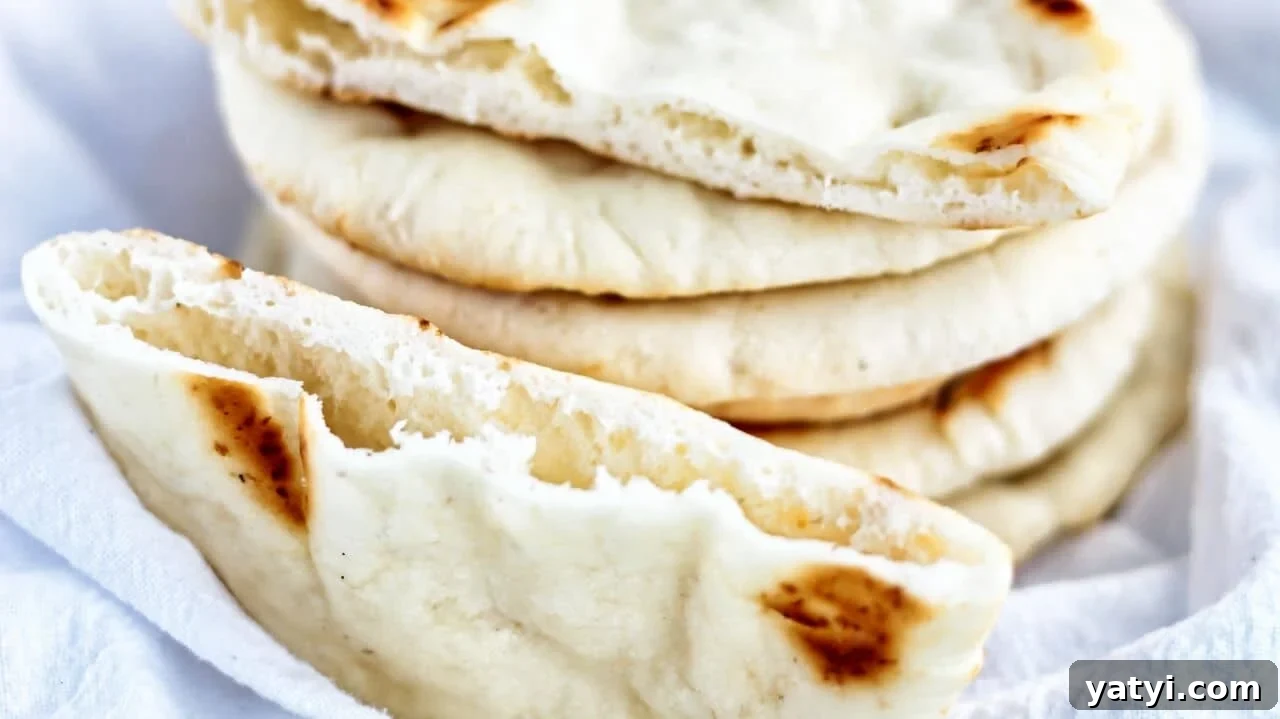
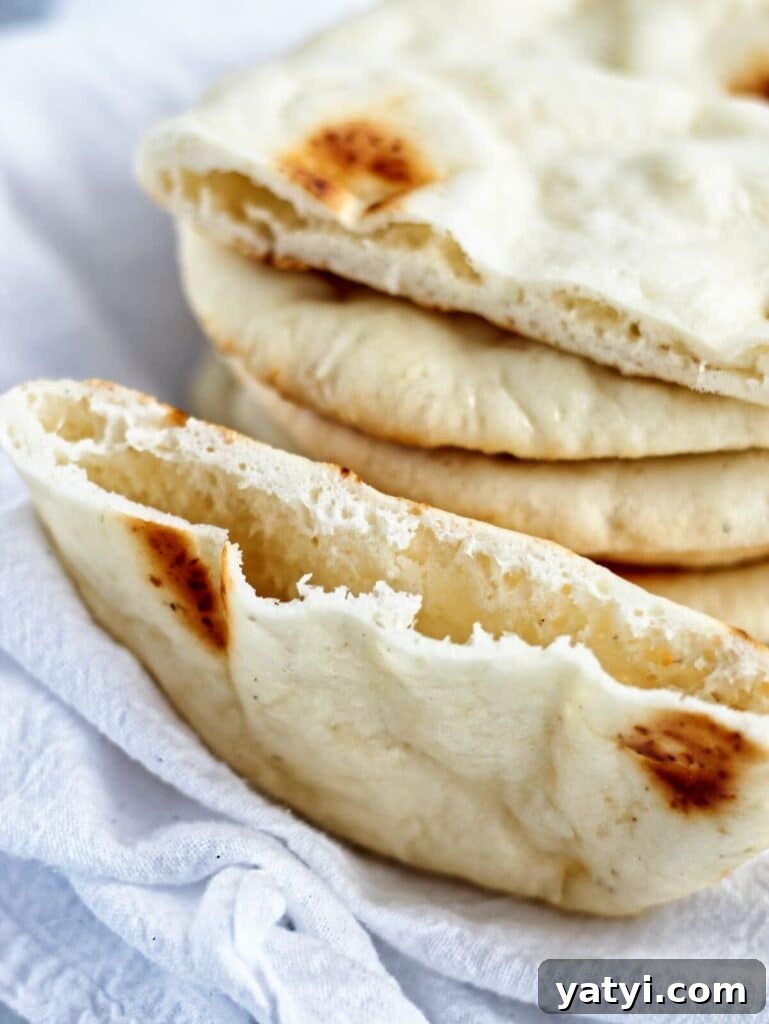
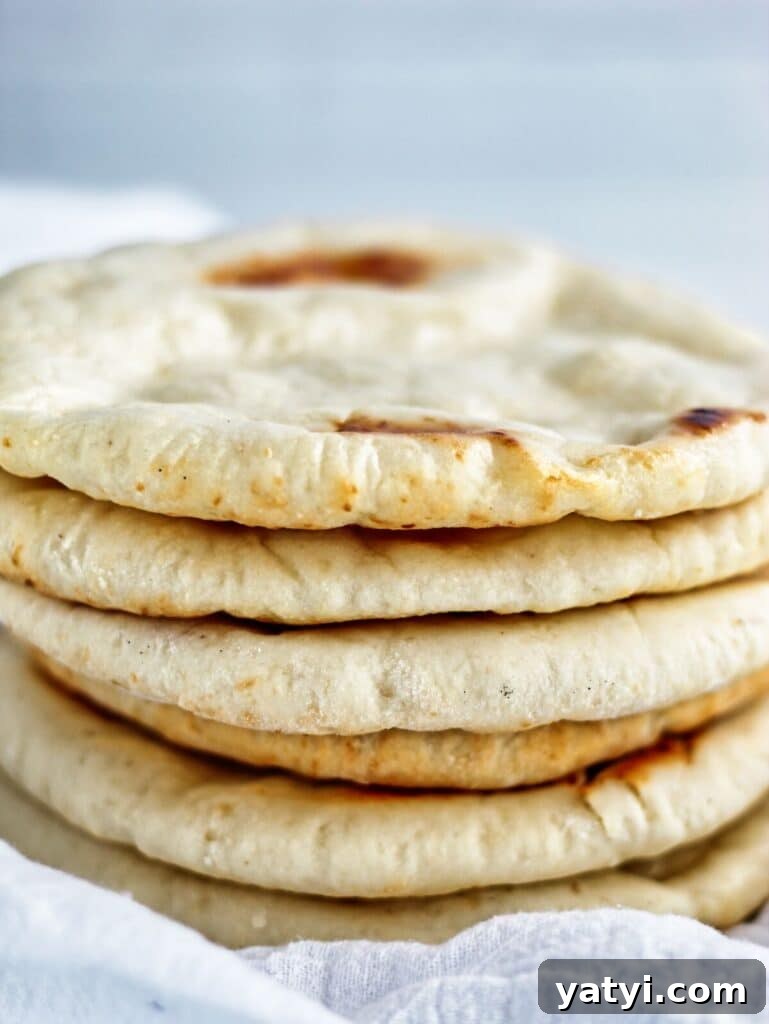
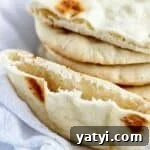
This gluten-free pita bread is unlike any you’ve tried before: soft, flavorful, and tender rather than dry. It puffs reliably to form a pocket and tears apart with a pleasant, plush texture—everything a great pita should be.
Some items mentioned may be affiliate links. If you purchase through them at no extra cost to you, a small commission may be earned.
For years I avoided most store-bought pita because it tended to be dry. Even recipes that produced a pocket often lacked flavor and moisture. After many attempts and tweaks, I developed a version that is soft, tender, and noticeably flavorful—this is that recipe.
These pitas are plush and soft, not dry. They puff into beautiful pockets, have a pleasant chew, and are rich in taste thanks to a few simple, intentional ingredient choices.
Ingredients you’ll need to make pita
- Kim’s Gluten Free Bread Flour Blend — a custom blend works best for texture and structure; use a reliable bread flour blend for best results.
- Milk — replacing part of the water with milk adds tenderness and flavor.
- Olive oil — contributes to a softer crumb (can substitute canola or vegetable oil).
- Instant yeast
- Sugar
- Salt
- Psyllium husks — helps bind and give elasticity; if you omit them, reduce the water in the recipe as noted below.
- Butter for brushing the finished pita (use dairy-free butter to make the recipe dairy-free).
How to make homemade pita bread
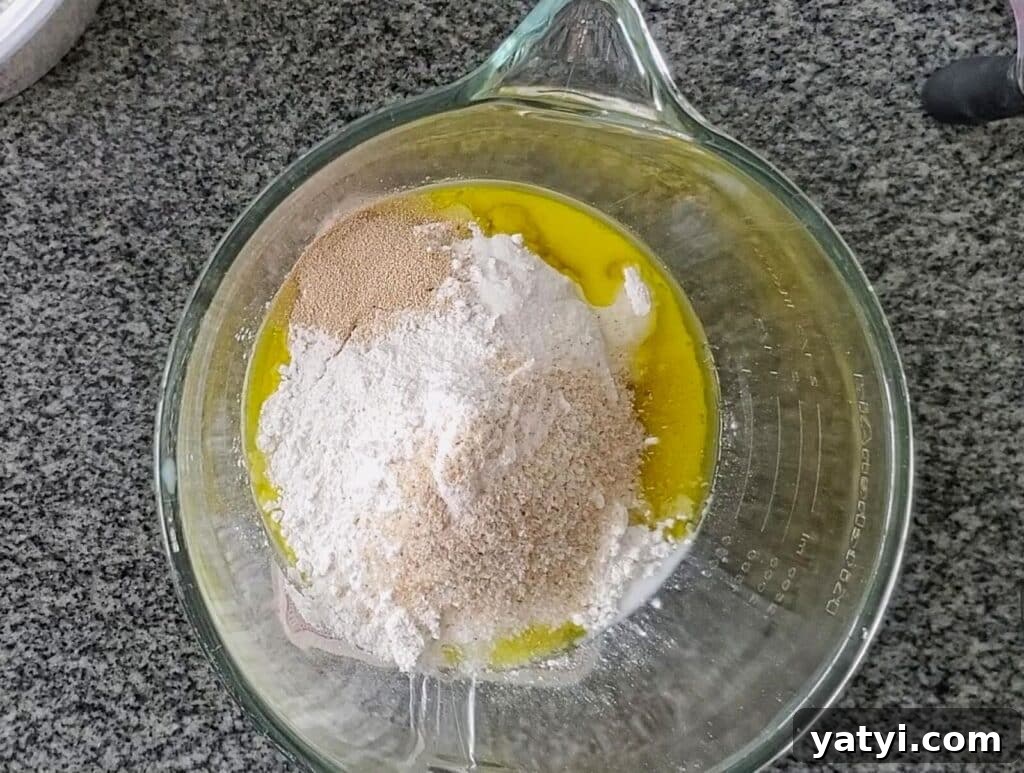
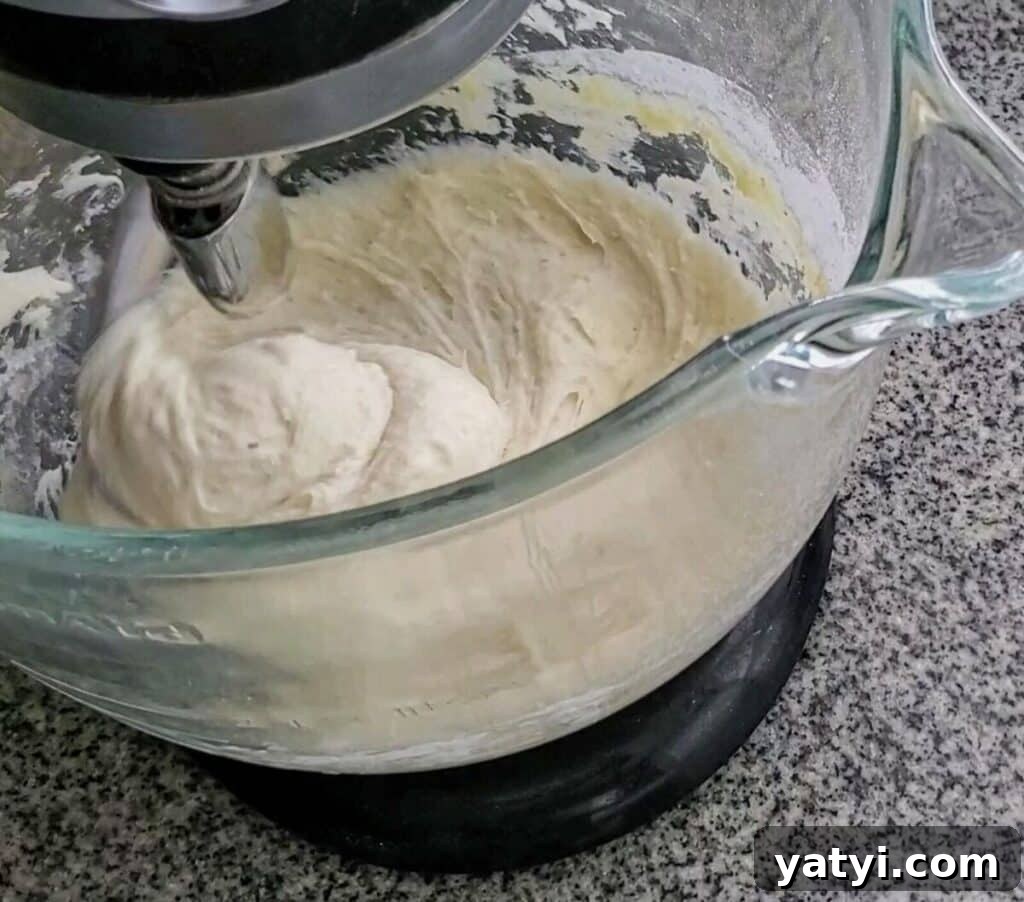
- Combine the cold wet ingredients in a large bowl, then add the dry ingredients. Mix for about 5 minutes on medium speed using a stand mixer with a dough hook. A handheld mixer or a Danish dough whisk can be used, but you will need to mix vigorously for several minutes to reach the right texture.
- Cover the dough and refrigerate for a cold proof. Chill at least 24 hours and up to 4 days—this slow, cold fermentation improves flavor and helps the pitas puff.
- When ready to bake, position an oven rack in the lowest slot and place a baking steel, baking stone, or an overturned baking sheet on that rack. Preheat the oven to 450°F (232°C) so the surface is thoroughly hot.
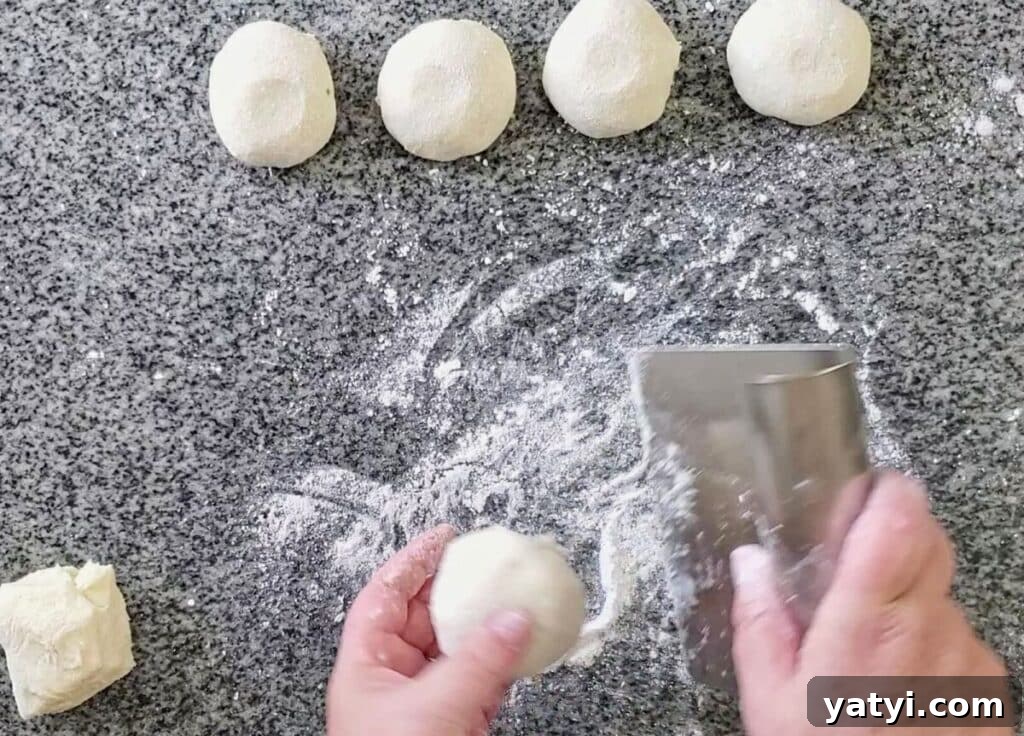
- Divide the dough into 8 equal pieces, about 95 grams each for uniform 6-inch pitas.
- Shape each portion into a smooth round dough ball.
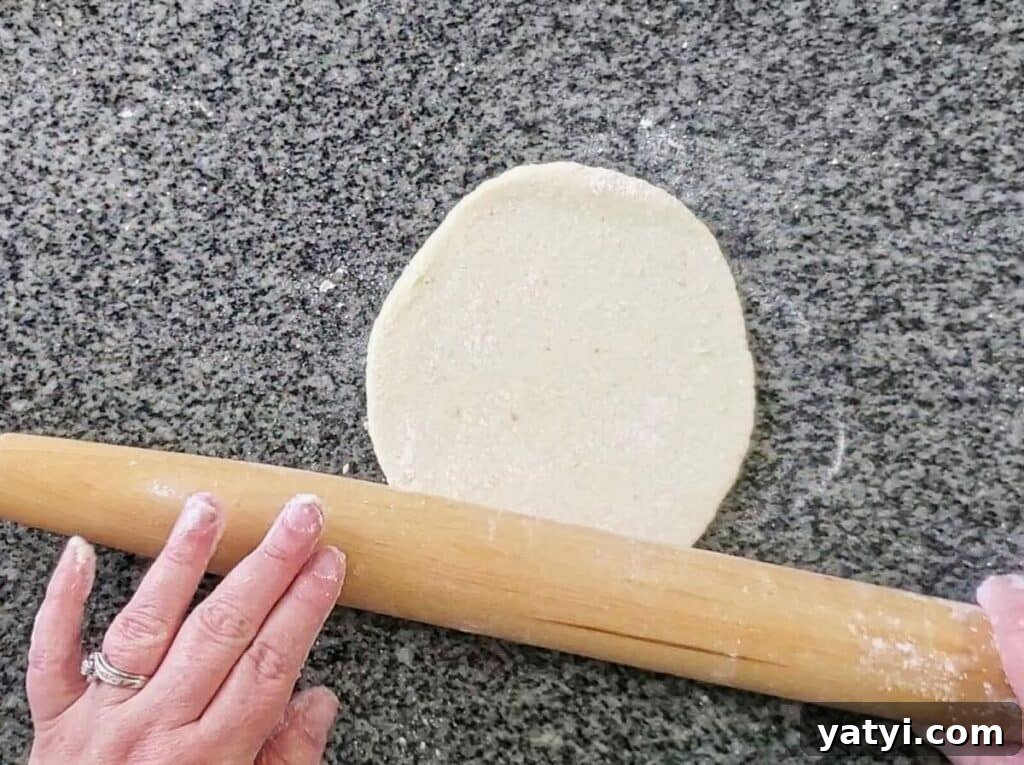
- Generously dust each ball with gluten-free bread flour and roll it out to a 6-inch diameter. Keep the dough moving and dust well to prevent sticking; the thickness should be about 1/4 inch for best puffing.
- Place two rolled pitas on a piece of parchment and slide them onto the preheated steel or stone. Bake for 2 minutes, then flip each pita with a spatula and bake 2–3 more minutes until puffed and lightly browned.
- Transfer the baked pitas to a paper towel-lined sheet, brush with butter, and cover with another paper towel and a dish towel to keep them soft while you finish the rest.
- Repeat with the remaining dough, serving the pitas warm.
FAQs
No, traditional pita bread contains gluten. To make it gluten-free, use a gluten-free bread flour blend in the dough.
Yes. A skillet may not always produce a full puff, but the pitas will still be tasty and can be opened or cut where they didn’t puff.
Roll the dough to an even thickness—about 1/4 inch. Uneven or too-thick rolling is the most common reason for poor puffing.
Replace the whey protein isolate in the flour blend with a dairy-free protein as suggested in the flour blend notes, use a non-dairy milk, and brush the finished pitas with dairy-free butter.
Tips for success
- Use cold water and cold milk when mixing. Cold liquids slow fermentation so the dough proofs slowly in the fridge and puffs better when baked.
- Weigh each dough ball for consistent size and baking times.
- Roll each pita to an even thickness to help them puff uniformly.
Make it a meal
Pita makes an excellent handheld base for many meals. Try these serving ideas:
Stuff a pita pocket with chicken salad for an easy lunch.
Fill pitas with falafel and a simple salad of greens, tomato, and cucumber for a satisfying vegetarian meal.
Make a meatball sandwich by placing hot gluten-free meatballs on a whole pita, topping with marinara or pizza sauce and shredded mozzarella, then folding it for a handheld sub.
Grill chicken and stuff into pita halves with romaine, parmesan, and Caesar dressing for an easy portable salad.
These pitas also work well warmed on the grill for summer cooking when you don’t want to use the oven.
How to store homemade pita
Store pitas in an airtight container or zip-top bag at room temperature for up to 5 days. For longer storage, wrap each pita individually in plastic wrap and place them in a freezer bag for up to 3 months.
To reheat, wrap a stack in foil and warm at 350°F for 5–10 minutes. Alternatively, warm directly over a gas flame with tongs, flipping frequently, or heat in a covered cast-iron skillet over medium heat until warmed through.
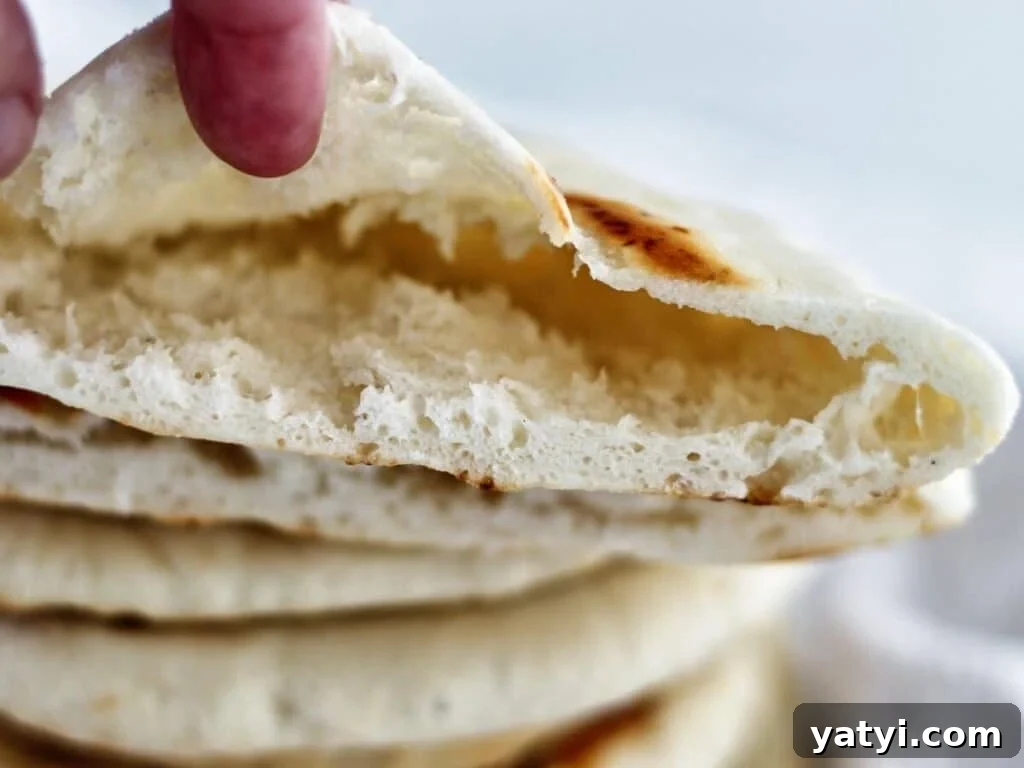
Give these gluten-free pitas a try—even if you think you don’t like pita. The texture and flavor often convert skeptics into fans.
How to Make Gluten Free Pita Bread
Ingredients
- 150 grams COLD water
- 150 grams COLD milk
- 56 grams olive oil (canola or vegetable oil may be substituted)
- 385 grams Kim’s gluten free bread flour blend
- 2 teaspoons instant yeast
- 2 teaspoons sugar
- 10 grams kosher salt
- 5 grams whole psyllium husks (or 1½ teaspoon psyllium husk powder)
- butter for brushing (dairy-free butter may be substituted)
Instructions
- Place ingredients in the mixing bowl in the order listed. Using the dough hook, knead on medium speed for 5 minutes. If using a handheld mixer or dough whisk, mix vigorously to achieve the same texture.
- Cover and refrigerate the dough for at least 24 hours and up to 4 days.
- When ready to bake, set the oven rack to the lowest position and place a baking steel, stone, or overturned sheet on the rack. Preheat oven to 450°F.
- Knead the dough on a well-floured surface until smooth. Divide into 8 equal pieces (about 95g each) and form smooth balls.
- Coat a dough ball with gluten-free bread flour and roll to a 6-inch diameter (no more than 1/4 inch thick). Place two pitas on parchment and repeat for the rest.
- Slide two pitas at a time (on parchment) onto the hot baking surface and bake 2 minutes. Flip and bake 2–3 more minutes until puffed and lightly golden.
- Remove to a paper towel-lined sheet, brush with butter, cover with another paper towel and a dish towel to keep soft. Repeat and serve warm.
How to Grill Pita
- Preheat grill to high heat. Adjust as needed—gas grills work well; some grills may be too hot and burn quickly.
- Place rolled pita on the grates over direct heat, close the lid, and cook 2–3 minutes. Some may not puff fully but will still be delicious.
Notes
Pita will keep well in an airtight container or zip-top bag at room temperature for up to 5 days. For longer storage, freeze individually wrapped in plastic and stored in a freezer bag.
*If not using psyllium husks, decrease the water to 100 grams.
Inspired by Helen Rennie’s “Pita That Puff”.